That means, "We like food!" in Japanese... Hi! Our names are Ayako and Keiko. We are two sisters living in Kyoto, Japan. After reading an article called Nutrient News in a magazine called New Moon we decided we also have a lot to say about food! That's because we love to eat and our mother, Tomoko, is a great cook (and our personal nutritionist!). Here we would like to introduce some of our Japanese foods, and some of the interesting foods Japanese people eat for health purposes. Some of these are difficult to describe because they are probably only found in Japan. It is important to know that Japanese people eat with the seasons so we eat different foods at different times of the year. We can't list every kind of Japanese food here so we decided to tell you a few of our favorites.
 The first is called Maitake Miso. Miso is a soup made of fermented soy beans which is a staple protein for we Japanese. This dish is prepared with special mushrooms called Maitake. We also like Yama-imo, or mountain potato. This potato is usually rather long and hairy. It is peeled and grated to form a sticky soup which is poured over soba (buckwheat noodles) or rice with soy sauce. Our mother also cuts it up into thin strips to make it into a very nutritious salad seasoned with Nori (black seaweed) and soy sauce. We were surprised to see that they sell nori in some shops in the USA.
Nabe is also a great Japanese food mostly eaten in the winter. It is very healthy and creates a good family atmosphere. Sometimes we make this for parties too since it's not only delicious but fun to eat too! The word "nabe" means "pot" and what this dish is, essentially, is a pot of hot vegetables cooked and served on a burner that is set in the middle of the table. We put a big piece of dried konbu (seaweed) in a ceramic pot and start heating it. When the flavor of the konbu is set, we start adding all kinds of chopped vegetables, tofu (soybean curd), noodles and sometimes thin strips of meat. We pull the pieces out with our chopsticks as they finish cooking, dip them into a tangy sauce, and eat! It is a great way to stay warm in the winter too!
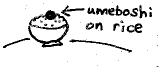
Can you say natto, konnyaku, hijiki, and umeboshi? (nah-toe; cone-nyah-koo; hee-jee-kee; oo-meh-boh-shee) These are some other very unique and nutritious Japanese foods. Natto is a sticky type of fermented soy bean that is eaten as an easily digestible source of protein and iron. We usually put it on top of a bowl of rice, and add egg, soy sauce, and chopped green onions. People say that natto is good "brain food," and that it prevents blood clots in the brain and heart. It helps the blood flow smoothly and reduces blood pressure too. Konnyaku is a strange kind of food. We use it in all kinds of cooking. It is a paste made from the root of the devil's tongue plant (a starchy potato-like plant) and is said to have no calories and to be good for cleansing the intestinal tract. Hijiki is another kind of seaweed we eat with rice. It contains lots of vitamins and calcium (when simmered for a long time). Umeboshi is the sour Japanese pickled plum. In the USA we heard "an apple a day keeps the doctor away," but here people suggest "an umeboshi a day" for good health. The pickling process is also very special and locks in the nutritional value of the plum.
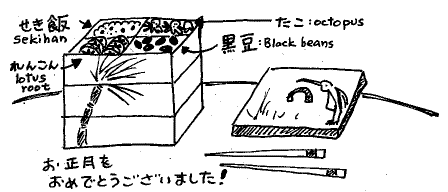
 Lastly, Osechi-Ryori is the traditional food prepared and eaten to celebrate each New Year. A variety of foods are carefully prepared and served in beautiful lacquer boxes that stack up. Each of the foods has special meaning for the year ahead. For example, Renkon (lotus root) has holes to look through and see the future; Kuromame (black beans) are eaten because the word "mame" means both "bean" and "diligent" in Japanese -- so if we eat these we can be diligent in the year ahead! Sekihan (white rice with red adzuki beans cooked in it) is eaten because of its colors: red and white, which are the colors for celebrations here in Japan. There are many more foods in the boxes too. Nowadays some families tend to order Osechi-Ryori from stores rather than take so much time to make it all at home. Even so, there is still a lot of preparation involved because in the end, it must all look and taste terrific! That is another aspect of Japanese cooking: everything must be presented in a nice way.
It's been fun looking into the different foods of our culture. We actually became hungry looking through our mother's cookbooks for ideas and information. We have only introduced a few dishes here but if you have any questions, why not write to us? We wonder how kinds in other countries would like the food here. Some of it is undoubtedly sort of strange!!
Ayako and Keiko Egawa
Kyoto, JAPAN
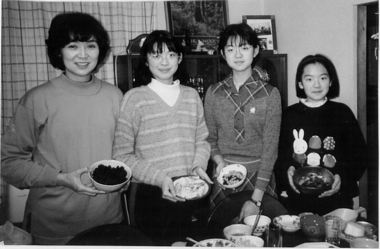 Here we are: our mother, Tomoko, Keiko, Ayako, and our little sister, Atsuko. We are all holding a different Japanese dish
|
Front cover
Mustard Seeds Library / Activity Room
Tabemono ga Suki by Ayako and Keiko from Kyoto, Japan
Poetry Page
How to make "Roti"
Let's Make Carrot Cake by Aparupa Biswas
Earthday celebrations
20 Summer Ideas
Culture Share
Book Review