| Few beekeepers in Malta use their colonies specificaly for pollination. Generally either a beekeeper is asked to put a hive or two in a greenhouse to pollinate crops such as melons, water melons, marrows and flowers but not the big business we see in the US. But pollination is also important. Statistics show that when bee colonies dwindled, agricultural produce also decreased. Bumble bees are used to pollinate tomatoes in greenhouses as these type of bees use the technique called buzz pollination on flowers. This is when the bumble bee holds onto the anthers of the flower and move their flight muscles rapidly, that results in the anthers to vibrate and dislodge the pollen on them. |
 |
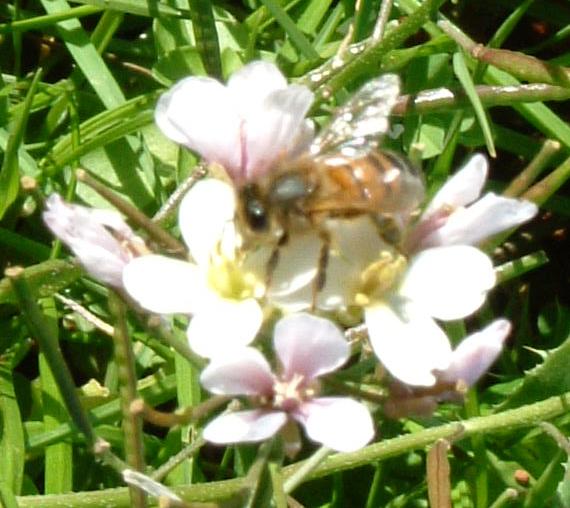
| Pollination is the most important phase for most of the floweing plants so seeds can be produced. It is the transfer of pollen grains (containing the male part), to the plant carpel which conatins the ovule (the female part). This transfer is important as most flowering plants will not develop and produce fruit or seeds which end in our plates. An unbalance in pollination means an unbalance in food production. |
| Pollination |
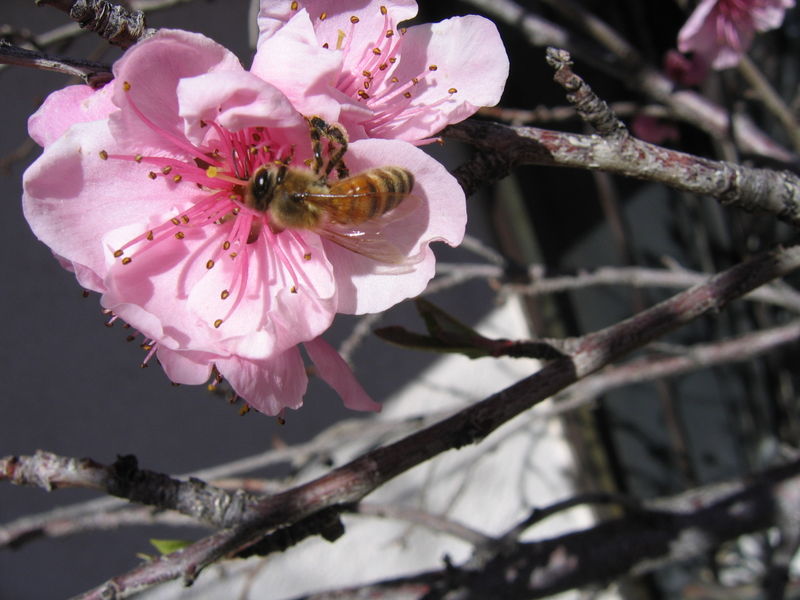
| Wind helps with pollination of about 20% of plants and the rest is done by insects. These include ants, birds, butterflies, wasps, and bees. The honey bee is the most used insect for pollination of foodstuffs and annimal fodder. It is becaouse of their quantity, as a single colony can have up of 60,000 bees and also can be transported around easily where pollination is needed. |
 |
 |
 |
|
 |
|
|
|
|
|
|
| Pollination |
|
|
|
   |
|
|
|
| Beekeepers abroad specifically use bees for pollination management. These beekeepers use their colonies only for pollination. They manage their colonies to be built up in the flowering period of the required crop to be pollinated. Around the world bees are transported on large trailers to pollinate different types of trees and crops. Types of trees are peaches, apricots, apples, citrus trees and almonds. Crops comprise a wide range of vegtables like many types of squash, melons, beans strawberies and cucumbers. |
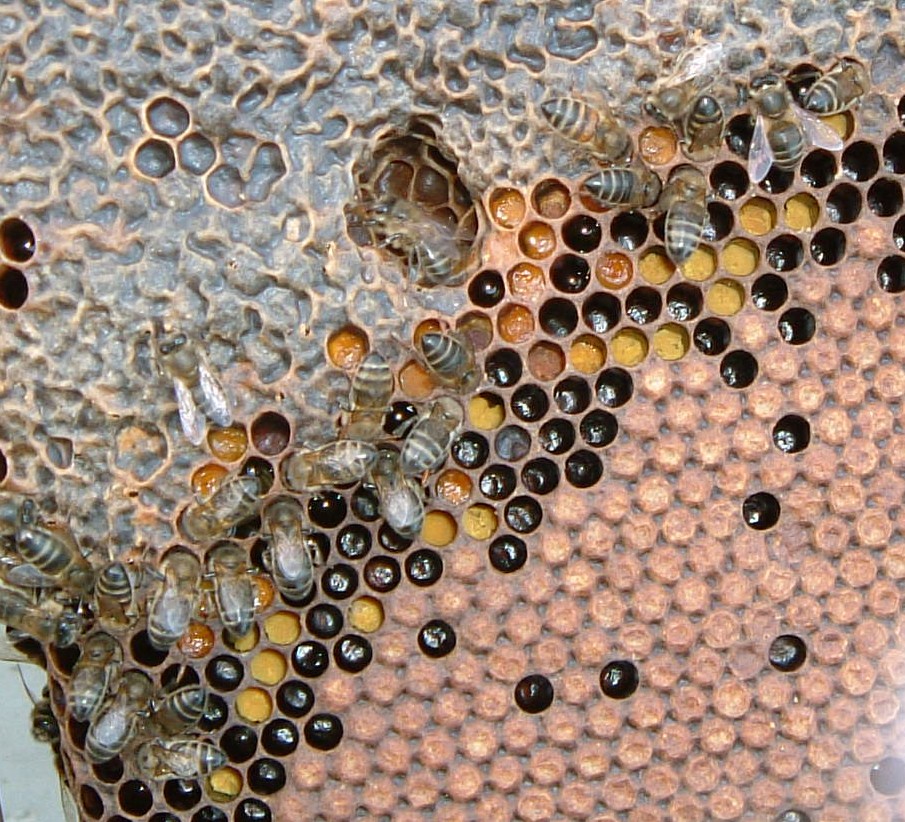 |
| A current problem caused by Colony Collapse Disorder is badly effecting pollination . This is becaouse monoculture (when one type o crop is grown on a vast land) depends heavily on honey bee pollination, especially for almond production which in 2006 it's crop value was at $1.5 billion. In year 2000 the estimation of crop value dependant on honey bee pollination exceeded $15 billion in the U.S. alone. Pesticide use has a great toll on bee colonies which are poisoned especially by trees and crops which are sprayed when they are in blossom. Pollen contains high protein and is the main food for honey bees and larvae. Bees collect pollen from flowers and store it in honeycomb. After the pollen is pressed in the cells the bees put a drop of honey on it so mould cannot grow on it. This can be seen when pollen looks shiny in the comb. |
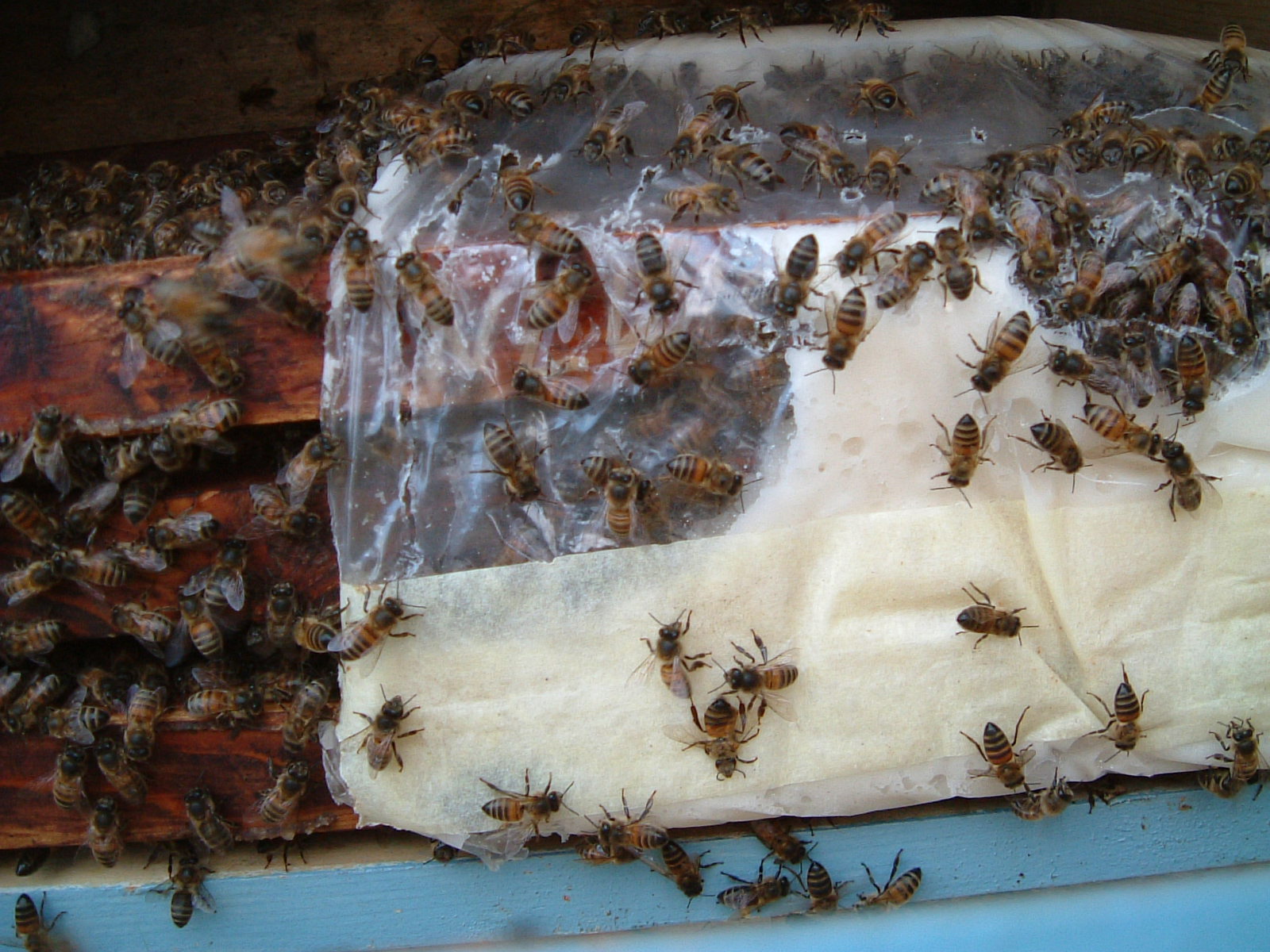
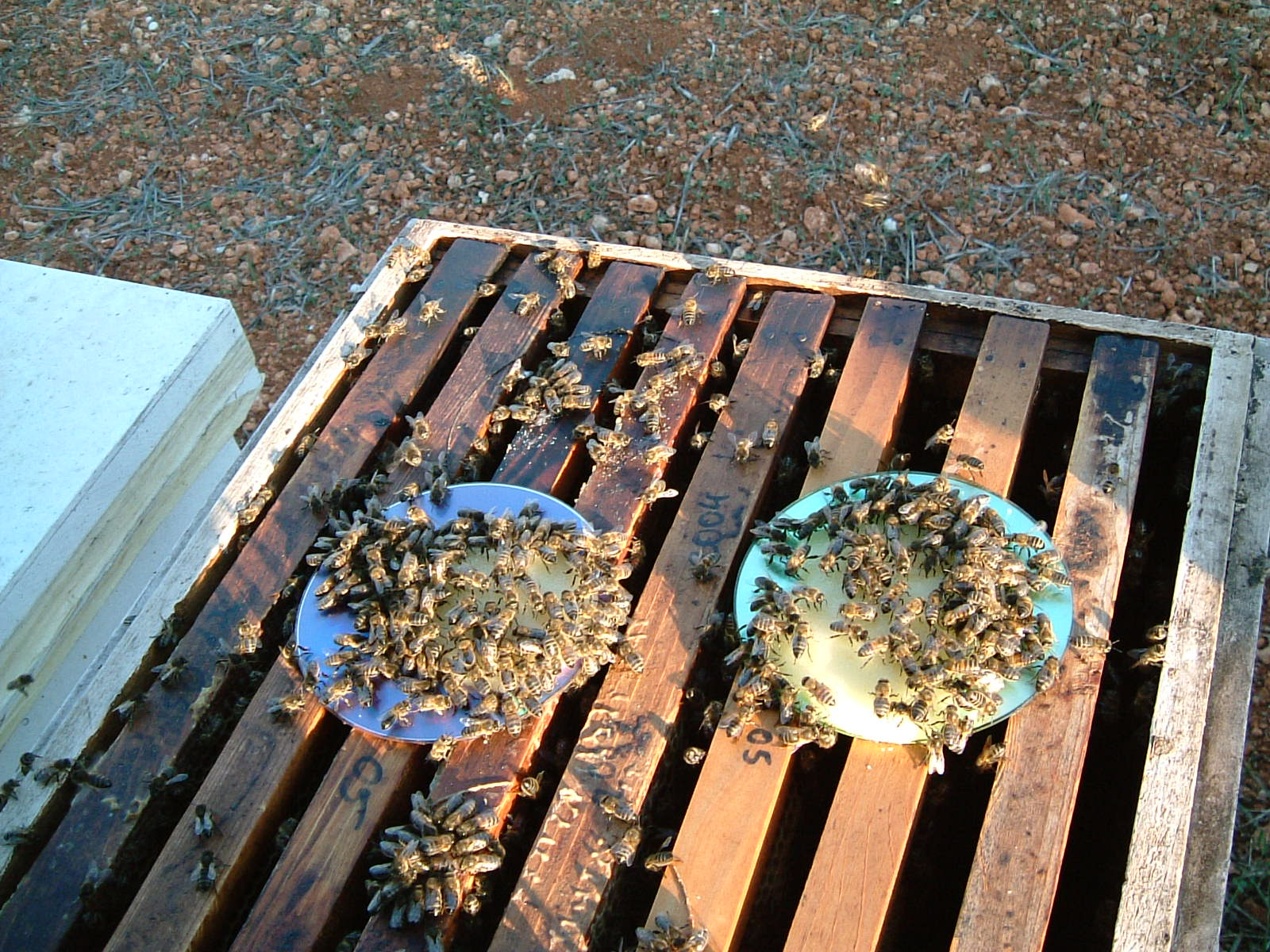
| Pollen is mostly needed by the colonies when they are building up. Pollen substitute is sometimes given by the beekeeper when there is not enough pollen from where the bees can collect. This either can be found commercially or done at home. These are given in the form of patties. A recipe for pollen substitute is : 1) Prepare a 2:1 ratio of sugar to water solution 2) Add 1 1/2 cup of soya flour to 1/2 cup of yeast 3) Add with the sugar solution to form a patty. 4) Put this patty on the frames between 2 grease proof paper so bees can feed from the sides. It can be put in a plastic bag or on damaged computer CD's and it will have the same result. In some places pollen is collected commercially. This is by the use of various types of pollen traps. CAre must be taken when using these traps as these should leave bees to gather some pollen thus stimulating the bees to continue to fetch for more pollen. Sometimes a pollen trap should be removed the hive will need to collect all that pollen. There is no official study showing that pollen is necessary for humans but some experiments show that it can be a nutritional supplement. Care should be taken if persons have allergy to pollen, where it is not recomended at all. |
 |
|
|
|
|
|
|
|
|
|
|
|
| Pollination |
|
|
|
|
|
|
|
|
|
|
 |