|
|
||
|
England News |
2003 Spring issue |
|
|
|
||
|
Shrewsbury
|
||
|
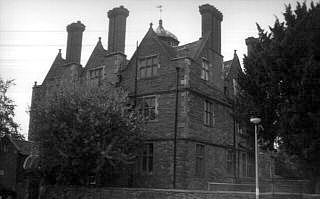
Whitehall - Shrewsbury |
Whitehall, on Monkmoor Road, near Shrewsbury town, was where my grandmother lived before she married Robert Madeley from Long Lane at Sleap. |
|
|
For more pictures of Whitehall click here |
||

|
|
||
|
From Whitehall we went over the River Severn on the English Bridge and through town to my old school, the Lancasterian Secondary Modern. The school is also known as the Dana School. |
|
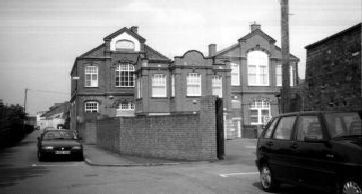 The Lancasterian School - Shrewsbury
Incidentally, it was the school of the Madeley family before the Great War 1914-1918, and my aunt remembered using slates and chalk for lessons instead of paper. Olive Madeley, my mother's sister, was 5 in 1912 when she was there. |
|
|
||
|
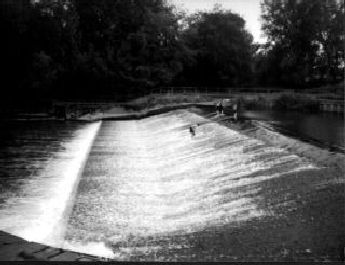
Shrewsbury Weir |
In Castlefields we turned right at bottom of John Street where the church hall still stands, and where we had to walk in crocodile formation for our dinner each day from the Dana school. By the old vicarage the road sloped down and opened out down to the River Severn. As we approached I felt as though I had been whisked back in time fifty years. It still looked the same as it did all those years ago. Children on the weir, couples walking, fishermen, and beautiful white swans. Then, the Summers always seemed hot and long. It was a special place that local children spent most Summer days. We had tea at 4pm and the sun was still hot. |
|
|
More pictures of the weir here |
||
|
|
||
|
This picture is by Swan Island at Castlefields
taken looking upstream to the Weir.
This is was where to stand to skim a flat stone across the river. I had to have a go just as I had as a boy. I did and I managed twelve bounces in only two goes. After all I was the local champion. Ahem! The willows, a common tree by the Severn banks, set the perfect picture for me on such a perfect sunny scene.
|
|
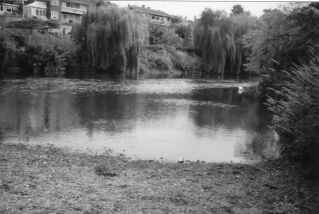 Looking upstream towards the Weir |
|
More pictures of Swan Island here |
||
|
|
||
|
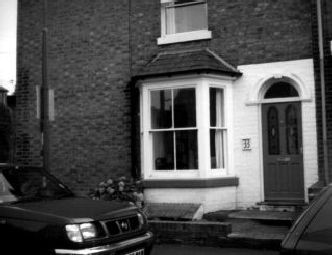
My Home 1946-1969 |
After tea at Swan Island we set off to go to Pontesbury. Just up the road from the Weir we passed my old home. The people of No. 33 have kept it lovely. hat made me happy. The coal hole in the front path had been filled in. There was many a day when I was a lad of 7 I had to enter the house down the coal chute because I did not have a key. I had to change and wash off the coal dust before my father came home though. Later a key was left in the outside toilet for me to get in after school. |
|
|
I
remember that we had gas lighting in our house and in the street. The street lighting man came each night and hooked the chain pulls that lit the tall gas lights by using a very long rod, and pulled it out in the morning. The lamppost is still outside converted now to electric. It used to shine into my sisters' bedroom each night. |
||
|
|
||
|
From Castlefields we passed the old flax mill in Castle Foregate, designed by Charles Bage who designed my old school. |
|
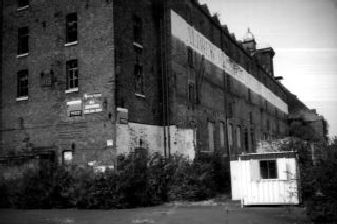 Shrewsbury Flax Mill
It’s not the oldest, or the biggest, or the most beautiful, but is has been proved that it is the birthplace of the skyscraper. |
|
|
||
|
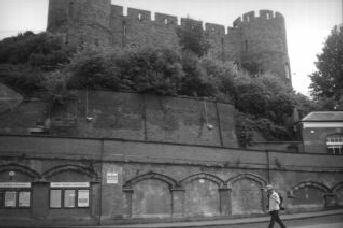
Shrewsbury Castle |
Going into town from Castle Foregate, the Shrewsbury Castle remains dominant since Edward I rebuilt it during his reign 1272-1307. In 1663, Charles II granted the castle to Sir Francis Newport of High Ercall. It remained in private hands until 1924 when the Shropshire Horticultural Society bought it and gave it to the borough. I remember climbing up the outer walls to the top of the tower when I was a lad. Quite a feat just to look into the castle grounds.
|
|
|
As we passed through the town, it was good to see the old familiar places: My old firm, Salopian Designs, when I was an apprentice draughtsman before I joined the Royal navy, The old Tudor buildings, And the old Rowley's Mansion Museum where I spent many a rainy day as a boy. Now it was time to travel to Pontesbury.
|
||
|
|
||