
Today, the periodic table lists the elements by atomic number and increasing mass. It didn't always do that. It was an invention of the late 19th century. The present day table also includes the deluded scientific belief that electrons orbit the nucleus and form electron shells. The table is divided into rows and columns. Each vertical column is called a Group and refers to the electrochemical illusion of highest possible valency, or ability to bond. It will be noted that every elements will form exceptions to this rule. Over the years the names of certain elements have changed, so the current name and symbol is used for each element. To examine the development of the table is very interesting, for it highlights the fact that Chenistry has survived in spite of its theories.
In 1872, the structure of the periodic table was not realized. This did not stop chemists grouping the elements into some resemblance of order, based on the element's valency and reactivity. Still in use today, many of these terms describe the type of reaction and the material as metal or non-metal, spreading the notion that chemical reactions exclusively work between non-metals and metals.
From H.Watt's "Manual of Chemistry" (1872) p 230, the chemical notations of the time and the accepted atomic weights, allow the following table to be compiled. Some of the chemical weights have changed. To add some excitement to this quest of tracing errors back to their sources, other elements were refered to under different names. This will make it problematical for the researcher to identify the particular elements being refered to, such as Silicium and Silicon, Glucinium and Beryllium, Tungsten and Wolfram. Some elements cannot be identified by weight or name, because they have been found to be chemicals!
The nomenclature used in 1872 denoted six major chemical groupings as denoted by the valency, but then chemists drew a distinction between the more active and less active elements in each group, juggling the order about. This meant that some chemicals were incorrectly located. These groupings do not refer to any charge.
The table of Elements defined the chemical name, atomic mass and symbol according to their bonding classification. The symbols are not listed in this version.
Monads..... |
Dyads............ |
Triads........ |
Tetrads.......... |
Pentads........ |
Hextads.......... |
| Hydrogen | 1 | Oxygen | 16 | Boron | 11 | Carbon | 12 | Nitrogen | 14 | Sulphur | 32 |
| ------------- | --------------- | ------------ | Silicium | 28 | Phosphorus | 31 | Selenium | 79.4 | |||
| Fluorine | 19 | Calcium | 40.0 | Gold | 197 | Titanium | 50 | Vanadium | 51.2 | Tellurium | 128 |
| Chlorine | 36 | Strontium | 87.6 | ------------ | Tin | 118 | Arsenic | 75 | --------------- | ||
| Bromine | 80 | Barium | 137 | Indium | 113.4 | --------------- | Antiminony | 122 | Chromium | 52.2 | |
| Iodine | 127 | ---------------- | Thallium | 204 | Aluminium | 27.4 | Bismuth | 210 | Molybdenum | 96 | |
| ------------- | Glucinium | 9.4 | ------------ | Zirconium | 89.6 | --------------- | Tungsten | 184 | |||
| Lithium | 7.0 | Yttrium | 61.7 | Thorinium | 204 | Niobium | 94 | Uranium | 240 | ||
| Sodium | 23.0 | Lanthanium | 93.6 | Tantalum | 182 | ||||||
| Potassium | 39.1 | Didymium | 95.0 | Rhodium | 104.4 |
| Rubidium | 85.4 | Erbium | 112.6 | ---------------- | Ruthernium | 104.4 | |
| Caesium | 133 | ---------------- | Palladium | 106.5 | |||
| ------------- | Magnesium | 24 | Platinum | 197.6 | |||
| Silver | 108 | Zinc | 65.2 | Iridium | 198 | ||
| Cadmium | 112 | Osmium | 199.2 | ||||
| -------------- | --------------- | ||||||
| Copper | 63.4 | Lead | 207 | ||||
| Mercury | 200 | --------------- | |||||
| Manganese | 55 | ||||||
| Iron | 56 | ||||||
| Cobalt | 58.8 | ||||||
| Nickel | 58.8 | ||||||
| Cerium | 92 |
Table A-1-1 The list of known elements in 1872. Italics are used to show non-metal elements.
There seems to be little or no order in the chaos, that such a grouping would cause.It is interesting to compare the crystalline form, the isomorphic structures because this convoluted the chaos. These same elements as displayed in Graham's "Elements of Chemistry" Second edition vol.i., p175.
Isomorphism allows similar chemicals to form or exist in similar structures where one element can exactly replace another element in the crystalline form without altering the geometric shape of the crystal.
This concept of isomorphism is not picture perfect, for minor changes do occur in the crystal shapes where a similar element is substituted in the structure. The angle between the crystal surfaces does change, even though the crystals bear a similar structure. One could look at Carbon and Boron-Nitride as being isomorphic, because Boron Nitride forms crystal structures identical to both graphite and diamond. There are eight main families of isomorphic crystals.
(1) |
(3) |
(6) |
| ============= | ============= | ============= |
| Sulphur | Barium | Sodium |
| Selenium | Strontium | Silver |
| Tellurium | Lead | Thallium |
| Gold | ||
| Potassium | ||
(2) |
(4) |
Ammonium |
| Magnesium | Platinum | |
| Calcium | Iridium | (7) |
| Manganese | Osmium | Chlorine |
| Iron | Iodine | |
| Cobalt | (5) |
Bromine |
| Nickel | Tin | Fluorine |
| Zinc | Titanium | Cyanogen |
| Cadmium | Zirconium | |
| Copper | Tungsten | (8) |
| Chromium | Molybdenum | Phosphorus |
| Aluminium | Tantalum | Arsenic |
| Glucinium | Niobium | Antimony |
| Bismuth | ||
| Vanadium |
With the uncertainty of many atomic weights and chemical names, imagine the complex situation faced by Dimitri Mendeléeff when he attempted to create the first periodic table. Back then, his ideas were not immediately accepted. When Newlands suggested "The law of octaves" in 1867, it was considered a scientific folly, so much so that he was lampooned and ridiculed for suggesting "musical chemistry". As a scientific heretic, he established the basis for Mendeléeff to use this natural structure to make his predictions. Newlands was right, but at the same time, very wrong, for there for there was a missing group. Mendeléeff noted the absence of this group and several other elements, predicting their discovery.
Within a few years, many of his predictions would be realized, however far too many new elements were being found. The complexity of Mendeléeff's table grew, as two boxes were the home to 28 elements, and the nine group 8 elements shared three boxes.
Prior to WW II, the periodic table had folded-in-on-itself to take on a chess-board structure with active and non-active sub-groups. The active group, sharing the same group as the non-active elements. The following table is drawn from Alexander Boden's 1944 edition of "A Handbook of Chemistry" page 493. In the text, Boden mentions in passing the 15 rare earth metals, but leaves them out of the table, yet, he includes them in the table of atomic weights as at 1939. Please note that the last three elements Th, Pa and U were accepted in Groups 4, 5 and 6, the wrong boxes!
Group--> |
I |
Ia |
II |
IIa |
III |
IIIa |
IV |
IVa |
V |
Va |
VI |
VIa |
VII |
VIIa |
VIII |
0 |
Period |
||||||||||||||||
1 |
H |
H |
He |
|||||||||||||
2 |
Li |
Be |
B |
C |
N |
O |
F |
Ne |
||||||||
3 |
Na |
Mg |
Al |
Si |
P |
S |
Cl |
A |
||||||||
4 |
K |
Ca |
Sc |
Ti |
V |
Cr |
Mn |
Fe Co Ni |
||||||||
Cu |
Zn |
Ga |
Ge |
As |
Se |
Br |
Kr |
|||||||||
5 |
Rb |
Sr |
Y |
Zr |
Nb |
Mo |
Ma |
Ru Rh Pd |
||||||||
Ag |
Cd |
In |
Sn |
Sb |
Te |
I |
Xe |
|||||||||
6 |
Cs |
Ba |
La* |
Hf |
Ta |
W |
Re |
Os Is Pt |
||||||||
Au |
Hg |
Ti |
Pb |
Bi |
Po |
? |
Rn |
|||||||||
7 |
? |
Ra |
Ac |
Th |
Pa |
U |
| * Rare Earths | La | Ce | Pr | Nd | Pm | Sn | Eu | Gd | Tb | Dy | Ho | Er | Tm | Yb | Lu |
Table A-1-3 The Checker-board Periodic table
There are many other strange exceptions to note in this periodic table and still much is missing. The radioactive halide Astatine is not yet discovered. Element 43 (Tc Technetium) bears the name Masurium and is given the symbol Ma. To define the reasons, the chemists of the day explained away the problem using an inverted "Y" or tree structure, having a powerful side and a weak side. To the left is powerful, as illustrated in group 1 with potassium (K) existing with Copper (Cu)
| Group
|
I |
II |
III |
IV |
V |
VI |
VII |
|||||||||||||
| 1 | H |
Be |
B |
C |
N |
O |
||||||||||||||
| 2 | Li |
Mg |
Al |
Si |
P |
S |
Cl |
|||||||||||||
3a.. |
Na |
/ . \ | / . \ | / . \ | / . \ | / . \ | / . \ | |||||||||||||
3b .. |
/ . \ | . Cs | \ | . Sc | \ | . Ti | \ | . V |
\ | Cr |
\ | Mn |
\ | |||||||
4a .. K |
\ | | |
Zn | | |
Ga | | |
Ge | | |
As | | |
Se | | |
Br | |||||||
4b .. | |
Cu | . Sr | | |
Y |
| |
. Zr |
| |
. Nb | | |
Mo | | |
Ma | | |
|||||||
5a..Rb |
| |
| |
Cd | | |
In |
| |
Sn |
| |
Sb | | |
Te | | |
I |
|||||||
5b .. | |
Ag | . Ba | | |
. La | | |
. Hf | | |
. Ta | | |
W |
Re | |||||||||
6a.. Cs |
| |
Hg | | |
Tl | | |
Pb | Bi | | |
||||||||||||
| 6b.. | Au | / | \ | . Th | U |
||||||||||||||||
/ |
| |
\ | ||||||||||||||||||
| + 5b | Ce | Pd | Nd | |||||||||||||||||
| Sn | Eu | Gd | ||||||||||||||||||
| Tb | Dy | Ho | ||||||||||||||||||
| Er | Tm | Yb | Lu |
Table A-1-4 Group structures
For nearly 40 years, the mistakes in the table were considered as exceptions to the periodic law, not as errors. Group VIII as a block is typically referred to without sub-categories. In each of Mendeléeff's horizontal boxes exist three elements Fe, Co, Ni, then Ru, Rh, Pd and finally Os, Ir, Pt. This inherent design fault led to an extraordinary collection of valency theory exceptions, because theory was accepted above Nature.
To agree more closely to the periodic law, it should have been argued that since the inert gasses are found together, then these would be the "a" version of group VIII.
With both world wars, great in-roads were occurring in the material sciences. Prizes were offered to encourage scientists to discover new atoms. At the start of the twentieth century, J.J. Thomson introduced the mass spectrograph, a device that could accurately determine the atomic weights and distribution of both the elements and their isotopes. This took a great deal of the uncertainty out of the puzzle.
With Niels Bohr accepting Rutherford's atomic model, came a more refined structure in the periodic table. This was more through direct reasoning and logic, rather than understanding Nature. Due to his acceptance of Rutherford, and the convoluted nature of Chemical theory, Quantum theory was born, linking atomic electron shells to the atoms in a kind of uncertain way.
The reasons for and the very structure of the periodic table remained a mystery, for there seemed no rhyme or reason for the strange fortress-like structure. It is like a castle, with a rook on each side of the battlements, with two motes to cross, the Lanthanides and the Actinides.
Group |
I |
II |
IIIa |
IVa |
Va |
VIa |
VIIa |
<-- |
VIII |
--> |
Ib |
IIb |
III |
IV |
V |
VI |
VII |
0 |
H |
H | He | ||||||||||||||||
Li |
Be |
B |
C |
N |
O |
F |
Ne |
|||||||||||
Na |
Mg |
Al |
Si |
P |
S |
Cl |
A |
|||||||||||
K |
Ca |
Sc |
Ti |
V |
Cr |
Mn |
Fe |
Co |
Ni |
Cu |
Zn |
Ga |
Ge |
As |
Se |
Br |
Kr |
|
Rb |
Sr |
Y |
Zr |
Nb |
Mo |
Tc |
Ru |
Rh |
Pd |
Ag |
Cd |
In |
Sn |
Sb |
Te |
I |
Xe |
|
Cs |
Ba |
-a- |
Hf |
Ta |
W |
Re |
Os |
Ir |
Pt |
Au |
Hg |
Tl |
Pb |
Bi |
Po |
At |
Rn |
|
Fr |
Ra |
-b- |
*-a-Lanthanides
* |
La |
Ce |
Pr |
Nd |
Pm |
Sn |
Eu |
Gd |
Tb |
Dy |
Ho |
Er |
Tm |
Yb |
Lu |
*-b-Actinides
* |
Ac |
Th |
Pa |
U |
Np |
Pu |
Am |
Cm |
Bk |
Cf |
Es |
Fm |
Md |
No |
Lw |
Table A-1-5 The Modern Periodic Table
In most published version of this table, the elements increase in mass from left to right across and progressively down the table in both atomic number and weight, with Hydrogen's double appearance in groups I and VII. Generally footnoting each element, most tables carry what is believed to be the nucleus-centric electron cloud structure. Missing from the published tables altogether are some very important properties of matter which should not be ignored, information that should be of benefit to all chemists.
Period 1.
Group |
I |
II |
IIIa |
IVa |
Va |
VIa |
VIIa |
<-- |
VIII |
--> |
Ib |
IIb |
III |
IV |
V |
VI |
VII |
0 |
H |
H |
He |
||||||||||||||||
| Number | 1 |
1 |
2 |
|||||||||||||||
Mass |
1 |
|
|
|
|
|
|
|
|
|
|
|
|
|
|
|
1 |
4 |
1st Ionz. |
13.6 |
|
|
|
|
|
|
|
|
|
|
|
|
|
|
|
13.6 |
24.6 |
Activity |
2.2 |
|
|
|
|
|
|
|
|
|
|
|
|
|
|
|
2.2 |
--- |
Period 2
Group |
I |
II |
IIIa |
IVa |
Va |
VIa |
VIIa |
<-- |
VIII |
--> |
Ib |
IIb |
III |
IV |
V |
VI |
VII |
0 |
|
Li |
Be |
B |
C |
N |
O |
F |
Ne |
||||||||||
Number |
3 |
4 |
|
|
|
|
|
|
|
|
|
|
5 |
6 |
7 |
8 |
9 |
10 |
Mass |
7 |
9 |
|
|
|
|
|
|
|
|
|
|
11 |
12 |
14 |
16 |
19 |
20 |
1st Ionz. |
5.4 |
9.3 |
|
|
|
|
|
|
|
|
|
|
8.3 |
11.3 |
14.5 |
13.6 |
17.4 |
21.6 |
Activity |
1.0 |
1.6 |
|
|
|
|
|
|
|
|
|
|
2.0 |
2.6 |
3.0 |
3.4 |
4.0 |
--- |
Period 3
Group |
I |
II |
IIIa |
IVa |
Va |
VIa |
VIIa |
<-- |
VIII |
--> |
Ib |
IIb |
III |
IV |
V |
VI |
VII |
0 |
Na |
Mg |
|
|
|
|
|
|
|
|
|
|
Al |
Si |
P |
S |
Cl |
A |
|
Number |
11 |
12 |
|
|
|
|
|
|
|
|
|
|
13 |
14 |
15 |
16 |
16 |
18 |
Mass |
23 |
24 |
|
|
|
|
|
|
|
|
|
|
27 |
28 |
31 |
32 |
36 |
40 |
1st Ionz. |
5.1 |
7.6 |
|
|
|
|
|
|
|
|
|
|
6.0 |
8.15 |
10.5 |
10.4 |
13.0 |
15.7 |
Activity |
0.9 |
1.3 |
|
|
|
|
|
|
|
|
|
|
1.6 |
1.9 |
2.2 |
2.6 |
3.2 |
--- |
Period 4
Group |
I |
II |
IIIa |
IVa |
Va |
VIa |
VIIa |
<-- |
VIII |
--> |
Ib |
IIb |
III |
IV |
V |
VI |
VII |
0 |
|
K |
Ca |
Sc |
Ti |
V |
Cr |
Mn |
Fe |
Co |
Ni |
Cu |
Zn |
Ga |
Ge |
As |
Se |
Br |
Kr |
Number |
19 |
20 |
21 |
22 |
23 |
24 |
25 |
26 |
27 |
28 |
29 |
30 |
31 |
32 |
33 |
34 |
35 |
36 |
Mass |
39 |
40 |
45 |
48 |
51 |
52 |
55 |
56 |
59 |
59 |
63 |
65 |
70 |
73 |
75 |
79 |
80 |
84 |
1st Ionz. |
4.3 |
6.1 |
6.5 |
6.8 |
6.7 |
6.8 |
7.4 |
7.9 |
7.9 |
7.6 |
7.7 |
9.4 |
6.0 |
7.9 |
9.8 |
9.7 |
10.6 |
14.0 |
Activity |
0.8 |
1.0 |
1.4 |
1.5 |
1.5 |
2.2 |
1.6 |
1.8 |
1.9 |
1.9 |
1.9 |
1.6 |
1.8 |
2.0 |
2.2 |
2.0 |
3.0 |
--- |
Period 5>
Group |
I |
II |
IIIa |
IVa |
Va |
VIa |
VIIa |
<-- |
VIII |
--> |
Ib |
IIb |
III |
IV |
V |
VI |
VII |
0 |
|
Rb |
Sr |
Y |
Zr |
Nb |
Mo |
Tc |
Ru |
Rh |
Pd |
Ag |
Cd |
In |
Sn |
Sb |
Te |
I |
Xe |
Number |
37 |
38 |
39 |
40 |
41 |
42 |
43 |
44 |
45 |
46 |
47 |
48 |
49 |
50 |
51 |
52 |
53 |
54 |
Mass |
85 |
88 |
89 |
91 |
93 |
96 |
99 |
101 |
103 |
106 |
108 |
112 |
115 |
119 |
122 |
128 |
127 |
131 |
1st Ionz. |
4.2 |
5.7 |
6.2 |
6.9 |
6.8 |
7.1 |
7.4 |
7.4 |
7.5 |
8.3 |
7.6 |
9.0 |
5.8 |
7.3 |
8.6 |
9.0 |
10.5 |
12.1 |
Activity |
0.9 |
0.9 |
1.2 |
1.3 |
1.6 |
2.2 |
1.9 |
2.2 |
2.3 |
2.2 |
1.9 |
1.7 |
1.8 |
2.0 |
2.0 |
2.1 |
2.7 |
--- |
Period 6
Group |
I |
II |
IIIa |
IVa |
Va |
VIa |
VIIa |
<-- |
VIII |
--> |
Ib |
IIb |
III |
IV |
V |
VI |
VII |
0 |
|
Cs |
Ba |
-a- |
Hf |
Ta |
W |
Re |
Os |
Ir |
Pt |
Au |
Hg |
Tl |
Pb |
Bi |
Po |
At |
Rn |
Number |
55 |
56 |
* |
72 |
73 |
74 |
75 |
76 |
77 |
78 |
79 |
80 |
81 |
82 |
83 |
84 |
85 |
86 |
Mass |
133 |
137 |
* |
178 |
181 |
184 |
186 |
190 |
192 |
195 |
197 |
200 |
204 |
207 |
209 |
210 |
211 |
222 |
1st Ionz. |
3.9 |
5.2 |
* |
? |
7.9 |
8.0 |
7.9 |
8.7 |
? |
9.0 |
9.2 |
10.4 |
6.1 |
7.4 |
? |
? |
? |
? |
Activity |
0.8 |
0.89 |
* |
1.3 |
1.5 |
2.4 |
2.2 |
2.2 |
2.2 |
2.3 |
2.5 |
2.0 |
2.0 |
2.3 |
2.0 |
2.0 |
2.2 |
--- |
*Elements 57 through to 71
* |
La |
Ce |
Pr |
Nd |
Pm |
Sn |
Eu |
Gd |
Tb |
Dy |
Ho |
Er |
Tm |
Yb |
Lu |
Number |
57 |
58 |
59 |
60 |
61 |
62 |
63 |
64 |
65 |
66 |
67 |
68 |
69 |
70 |
71 |
Mass |
139 |
140 |
141 |
144 |
145 |
150 |
152 |
157 |
159 |
162 |
165 |
167 |
168 |
173 |
175 |
1st ionz. |
5.5 |
? |
? |
? |
? |
? |
? |
? |
? |
? |
? |
? |
? |
? |
? |
Activity |
1.3 |
1.1 |
1.1 |
1.1 |
1.2 |
1.2 |
1.2 |
1.2 |
1.2 |
1.2 |
1.2 |
1.2 |
1.2 |
1.1 |
1.3 |
Period 7
Group |
I |
II |
IIIa |
IVa |
Va |
VIa |
VIIa |
<-- |
VIII |
--> |
Ib |
IIb |
III |
IV |
V |
VI |
VII |
0 |
|
Fr |
Ra |
-b- |
|
|
|
|
|
|
|
|
|
|
|
|
|
|
|
Number |
87 |
88 |
* |
104 |
105 |
106 |
107 |
108 |
109 |
110 |
111 |
112 |
113 |
114 |
115 |
116 |
117 |
118 |
Mass |
223 |
226 |
* |
|
|
|
|
|
|
|
|
|
|
|
|
|
|
|
1st Ionz. |
? |
5.3 |
* |
|
|
|
|
|
|
|
|
|
|
|
|
|
|
|
Activity |
0.7 |
0.9 |
* |
|
|
|
|
|
|
|
|
|
|
|
|
|
|
|
*Elements 89 through to 103
* |
Ac |
Th |
Pa |
U |
Np |
Pu |
Am |
Cm |
Bk |
Cf |
Es |
Fm |
Md |
No |
Lw |
Number |
89 |
90 |
91 |
92 |
93 |
94 |
95 |
96 |
97 |
08 |
99 |
100 |
101 |
102 |
103 |
Mass |
227 |
232 |
231 |
238 |
237 |
242 |
243 |
245 |
245 |
248 |
255 |
252 |
256 |
? |
? |
1st Ionz. |
? |
7.5 |
? |
6.2 |
6.2 |
5.7 |
? |
? |
? |
? |
? |
? |
? |
? |
? |
Activity |
1.1 |
1.3 |
1.4 |
1.4 |
1.3. |
1.3 |
1.3 |
1.3 |
1.3 |
1.3 |
1.3 |
1.3 |
1.3 |
1.3 |
1.3 |
As the periodic table is a flat construct of a mechanical sphere, a sphere made from spheres, each element's position represents a unique point of mechanical stability. Many hidden factors can be deduced from simple mathematics. The inclusion of the element's electronegativity (or activity) and first ionization energy (1-ionz.), produce a powerful scientific tool, second to none.
Atomic stability depends on the atom's ability to transfer energy through itself, but this is hindered by the atom's internal packing and sorting mechanism. Each atom has a standing state energy. As both the electronegativity and first ionization energy reflect this energy, even though they are different energy-forms, then one can extrapolate through mathematics, the various and hidden atomic functions, factors that will conclusively identify numerous errors in both the Quantum and electrochemical theory.
The mathematical results identify certain precise atomic structural changes caused by the development and destruction of coterie structures. It is possible to predict the properties of many undiscovered heavy elements (that is providing one could maintain atomic stability long enough to measure them).
From the atom's electronegativity, the velocity factor could be approximated by the square root of the electronegativity. A computer spread sheet program is a bonus here in carrying out laborous calculations.
Enters the atomic number, atomic mass and a more realistic value of the electronegativities (to two or three decimal places). As a rough approximation, merely use the graph-option to graph the square root results against the increasing atomic number. This graph will reveal many hidden secrets of the periodic table. Such a graph of the velocity factor across the periodic table must reveal evidence of electron shells and sub-orbitals if that theory were true, but no such evidence is found.
From the activity series, it is possible to determine the effect of neutron drag deep within the atom. To indicate this effect, one must attribute all the energy as a function of the atomic number, that is the number of elprons in the atom giving rise to a cumulative magnetic field, devoid of all neutrons in the first calculation. Because this energy is distributed over the entire mass, a second calculation and a simple subtraction is needed to yield a result which can be graphed.
The actual mass of matter in grams is of no concern at the atomic level, for here a fundamental particle has a diameter of one has a mass of one. As everything is assumed to be built from these discrete building blocks or balls, then as the size of the atom increases, the atomic density must decrease with each new level. As the atom grows through fusion, be it impact or pressure, a failure zone will limit the atom's size, as a consequence of the battle holding the atom together against the forces ripping the atom apart.
Obviously when the rotational inertia prevents a rapid and uniform change throughout the atom's structure, the energy transfer mechanism enters the region of mechanical instability where fission eventuates.The velocity factor graphs indicates that the current atomic structure has reached this limit. As the velocity decreases, the force holding the atom internally together decrease. However, the molecular structure surrounding an atom will change this boundary. Chemical combinations will increase the longevity of the most unstable atom.
Due to the nature of the periodic table's flat representation of a spherical construct, the following extension can be deduced. Very few isotopes above position #83 will form stable elements. There are only three known stable elements above this level, Thorium, Protactinium and Uranium. Although denoted as elements, those underlined (including Radium) and numbered are all isotopes because they are unstable configurations without a stable component. Some elements (like Copper and Gold) can have two or more stable configurations. This is examined in Appendix Two.
This image file may be copied using the mouse (right click and copy to file function).
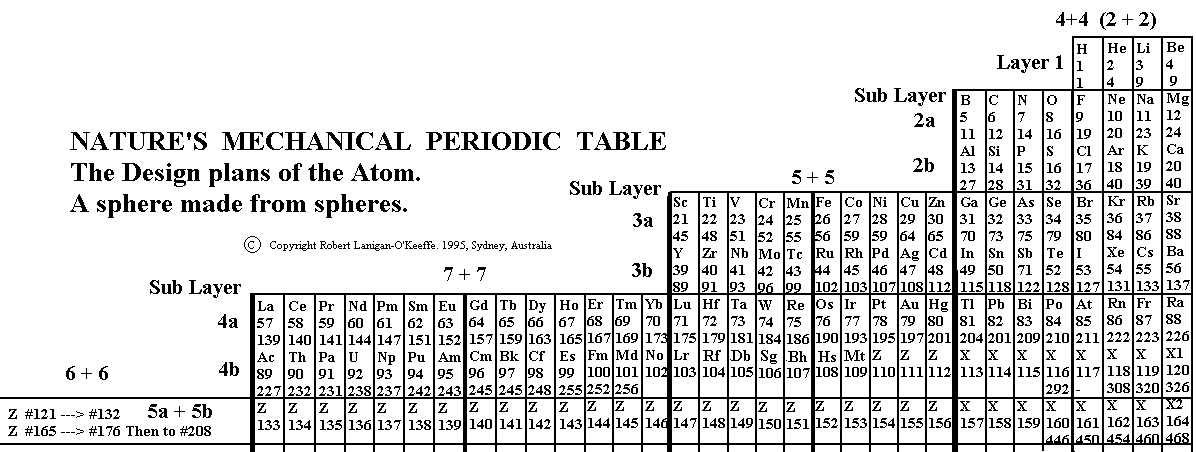
Table A-1-7 208 elementary positions of the spherical 5 layer periodic table
Each layer is composed of a lower and an upper sub-layer or level, denoted as a and b. .
End of Appendix 1
As a footnote:
Consider the problem of nuclear waste and all the methods used by mankind to dispose of both the waste and the problem. Some opt to bury it in the ground while other want to dump it in some deep ocean trench. Some believe that putting the rubbish in space is the only answer The Soviet government dumped entire reactors in Arctic bays because they considered this region as unpopulated and worthless. Spent Uranium is recycled and then used by the US military in bullets. Years after the Gulf War, people are ill with radiation sickness.
Mankind is wasting the resources of tomorrow. Even low level atomic radiation can be used to generate considerable quantities of electricity very cheaply, but such is at logger-heads with government regulation, corporate policy and by certain mindless followers of the green movement who do not understand the potential risks they place the planet in by causing havock.
Money and profit rules, so is the opinion is that the problems of the future belong to the future and are not of concern today. Fear, restrictions and regulation prevent researchers developing a one litre reactor capable of powering the family car. Regulations have been introduced because busnesses face a lose of profits. Unwittingly, they have introduced a knowledge virus through propaganda that is accepted as truth and is today out-of-control.
Surely, if the waste were to be made safe through chemical means, then it would not take much for future generations to refine these raw materials to meet their energy needs.
Once locked in lubricating chemical bonds, the stability of the atomic structure would keep those atoms pristine until such time when the energy is needed. A lubricating chemical bond is one where the magnetic forces holding the molecule together, maintain a pressure on the unstable atom at the correct location/s to give the atom longevity as a stable atom.
Nature kept amazing quantities of Uranium this way since the continental shields were deposited before the Pre-Cambrian period of geological history. Refining the ore reinstates the natural atomic instability. It is necessary to think of the future and to respect Nature today. The current situation needs a total re-think from the design of a reactor to the storage and use of waste products. Equally, there is an argument for other chemical reactions to promote nuclear instability in reasonably stable heavy atoms. Such materials would be seen as dangerously unstable explosives, for a minor nuclear event could spontaneously trigger the total chemical decomposition of the explosive material.
----- end of appendix one ----
