
3 HOW TO PRESENT AN SoE REPORT ON THE INTERNET
Chapter 2 defined the structure and audience of a typical SoE report. It also addressed the rising popularity and necessity of presenting the information on the environment on the Internet and in other electronic forms of communication. SoE reporting on the Internet is different from conventional reporting in many ways. The hierarchy of presentation, amount of text, way of writing, as well as placement of explanatory notes and reference pages are some aspects of an SoE report which should be treated in a different way when presenting a report on the Internet. The purpose of this chapter is to introduce a possible structure of an electronic SoE report and to point out some typical problems in building a Web site. Further, it examines and compares the existing SoE reports for 13 CEE countries on the Internet in order to show some positive and negative trends in their presentation. Finally, in the last section, a possible solution in the form of an experimental Web site is presented.
3.1 A Possible Structure of an SoE Report on the Internet
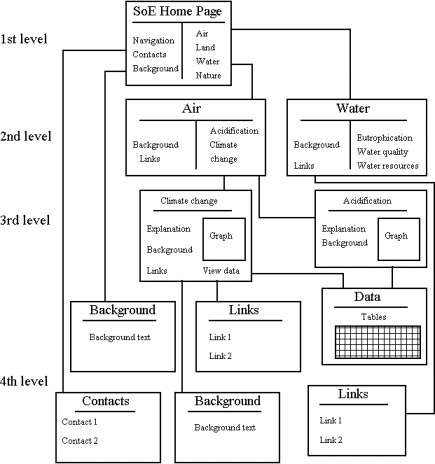
A possible way of organizing a Web site containing the SoE information is shown in Figure 3. It was suggested by the GRID Arendal in 1998 (UNEP/GRID-Arendal 1998). In their example, the information is structured in 4 levels. The first level has only one page, the first one that opens to the audience, or home page. It contains the main title, chapter titles or links to issues, and other useful links, such as contacts, navigation help, general background information, and explanations.
The second level consists of more pages, sometimes as many as issues presented on the first one. These pages introduce and explain the main problems connected with issues, and also contain links to background information on them. They are linked to the third level, which is represented by pages containing the main indicators and information on the state of the environment in form of graphs, maps, or pictures, with brief and clear description of main states and trends, and also provide links to more detailed information, background, data, and other useful sites.
Finally, the fourth level contains details, more text, tables with data, methodological explanations, and references. These pages can contain specialized information that is appropriate only for environmental experts and specialists, but the other three levels should not. In this way, it is possible to have an SoE report which can satisfy the needs of all its audiences, without discouraging or favoring any of them.
It is also very important to ensure easy navigation between pages. Each page, therefore, has to contain buttons which always provide an easy way back to the level above and to the home page.
As already mentioned at the end of Chapter 2, the potential which Web offers is not utilized in many cases. The present section showed how an SoE report on the Internet should be structured. The following section will introduce some ideas of what should and should not be done when presenting information on the Internet, and then using this experience, examine and compare the electronic SoE reports for 13 CEE countries.