Le Cafe Singe Bleu
Serving generous portions of history and mystery
from our monthly menu
Volume 1, Issue 2: February 1, 2003

BOOK REVIEWS


Earl Derr Biggers

Charlie Chan's Hawaii
A Proverb for Every Occasion
Dragnet: Earl Derr Biggers and Charlie Chan

Reviews: Earl Derr Biggers
The House Without A Key
The Chinese Parrot
Behind That Curtain
The Black Camel
Charlie Chan Carries On
The Keeper of the Keys

Reviews: Others
Charlie Chan Returns
The Pawns of Death
The Temple of the Golden Horde

Earl Derr Biggers
by Dot Emm and Edogawa Ranpo
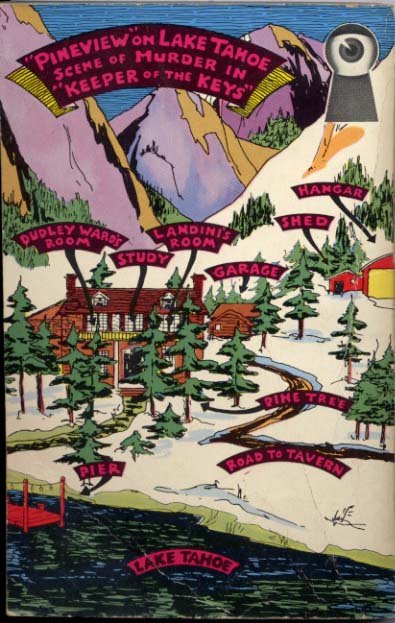

Back cover of Keeper of the Keys
Dell Books, 1932

Earl Derr Biggers was born in Warren, Ohio on August 26, 1884, to Robert J. Biggers and Emma E. Derr Biggers. He died of a heart attack in Pasadena, California on April 5, 1933, just a few months short of his forty-ninth birthday.

He left behind a wife, Eleanor, and a son, Bob. Biggers had dedicated The House Without A Key to his parents and Behind That Curtain to the only critic he loved - his wife. To Bob he dedicated Keeper of the Keys.

Biggers attended Harvard University. While still in college, and a member of the 'Advocate' and the 'Lampoon,' he also sold short stories to popular magazines. He graduated in 1907 at the age of 23. Biggers worked very briefly at the Cleveland Plain Dealer and at the publishing firm of Bobbs-Merrill before settling in as a drama critic for the Boston Traveller. He continued to contribute to magazines and attempted plays.

His first play If You're Only Human, was produced in 1912, but was not successful.

His first success was Seven Keys to Baldpate, a mystery and adventure story published in 1913. It was turned into a hit play by George M. Cohan shortly thereafter. In 1914, he finished a second novel, ''Love Insurance,'' which became the successful play, ''See-Saw.'' For the next twelve years Biggers continued to write fiction and plays.

In 1919, Biggers took a vacation to Hawaii. Five years later, in 1924, he was contemplating a mystery set in tropical Honolulu. Leafing through a stack of Honolulu newspapers to refresh his memory, the writer came across a small story about Chinese detective Chang Apana and an opium arrest. Immediately, Biggers hit on the idea of a good-guy Chinese character for his mystery.

"Sinister and wicked Chinese were old stuff in mystery stories, but an amiable Chinese acting on the side of law and order had never been used up to that time," he told an interviewer in 1931.

This first Charlie Chan story,The House Without A Key was published in book form in 1925, after having been serialized in the Saturday Evening Post from January 24 to March 25, 1925.

In 1925, Biggers and family moved to Pasadena, where he continued to write Charlie Chan novels. The 'Saturday Evening Post' paid $25,000 to serialize the third Chan book, Behind That Curtain, and Biggers sold the film rights to Fox for 'a very gratifying sum.'

Altogether Biggers wrote six full-length novels with Chan as the chief character. All of the stories were serialized in 'The Saturday Evening Post' before appearing in book form. Many of them were translated into foreign languages. All of them, except for The Keeper of the Keys were turned into movies before Biggers' death.

Earl Derr Biggers returned to Hawaii in 1932, when he decided to observe the filming of the movie The Black Camel, starring Warner Oland and with Bela Lugosi as Tarneverro. He presented Chang Apana with an autographed copy of the book.

Shortly before Bigger's death Charlie Chan became a radio character, and a few months after his death in 1933, Charlie Chan made his bow on the legitimate stage with Keeper of the Keys.

Described by his friends as ''short, round and dark'' and by his wife (Eleanor Biggers, nee Ladd) as ''a Middle West product with a Boston complex,'' Earl Derr Biggers loved food, travel and golf. He also loved writing, and the black camel knelt at his gate all too soon.

Publication History [IN PROGRESS]:

The House Without A Key


facsimile, first edition
Bobbs and Merrill, 1925
Serialized in the Saturday Evening Post from January 24 to March 25, 1925
Published in hardback by Bobbs and Merrill in 1925

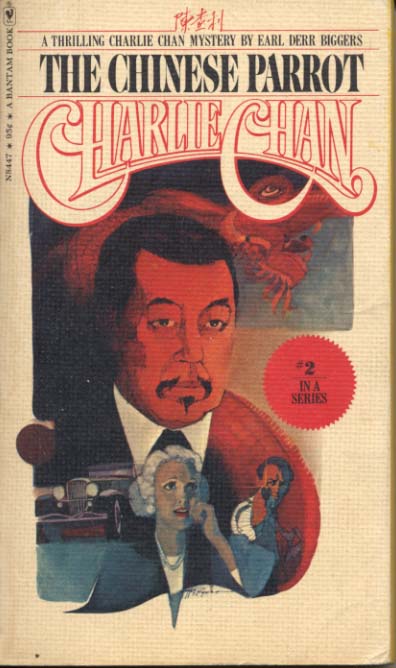
The Chinese Parrot


Bantam Books, 1974

Serialized in the Saturday Evening Post from June 26 to July 31, 1926
Published in hardback by Bobbs and Merrill in 1926

Bantam Books (paperback)
1st printing - June 1974

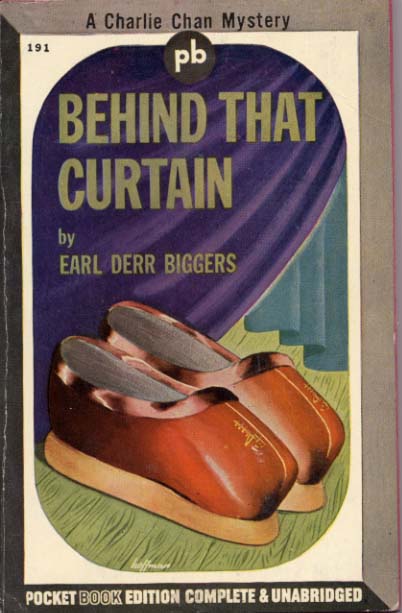
Behind That Curtain


Pocket Books, 1942

Serialized in The Saturday Evening Post from March 28 to May 5, 1928

Bobbs-Merrill editions
1st printing - April 1928
2nd printing - April, 1928 3rd printing - May, 1928
4th printing - july, 1928
5th printing - August, 1928
6th printing - November, 1928

Grosset and Dunlap Popular Copyright editions
1st printing - March, 1929
2nd printing - June, 1929
3rd printing - July, 1929
4th printing - November, 1929
5th printing - April, 1930
6th printing - December, 1930
7th printing - November, 1931
8th printing - September, 1932
9th printing - January, 1933
10th printing - November, 1933
11th printing - March, 1935
12th printing - December, 1936
13th printing - October, 1937
14th printing - Frruary, 1940

Grosset and Dunlap Madison Square edition
1st printing - January, 1942

Pocket Books edition
1st printing - December 1942

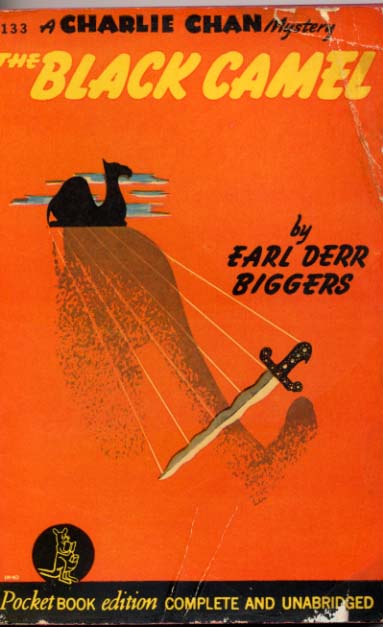
The Black Camel


Pocket Books, 1941

Serialized from May 18 to June 22, 1929 in The Saturday Evening Post.

Bobbs-Merrill edition
1st printing - May, 1929
2nd printing - June, 1929
3rd printing - June, 1929
4th printing - July, 1929
5th printing - August, 1929

Grosset and Dunlap edition
1st printing - March, 1930
2nd printing - December, 1930
3rd printing - May, 1931
4th printing - November, 1931
5th printing - January, 1932
6th printing - November, 1933
7th printing - March, 1935
8th printing - January, 1937
9th priinting - January, 1939

Madison Square edition
1st printing - January, 1941

Pocket Books edition
1st printing - November, 1941

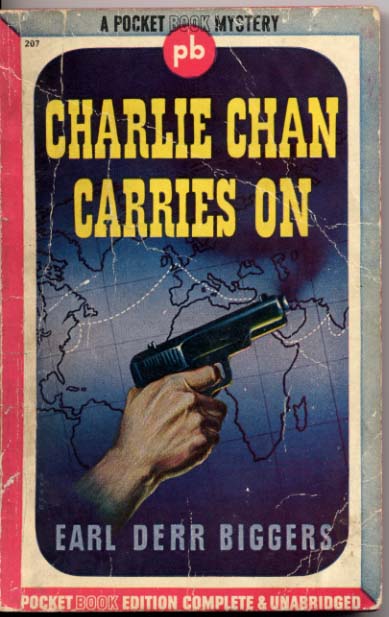
Charlie Chan Carries On


Pocket Books, 1945
Seriazlied from August 9 to September 13, 1930 in The Saturday Evening Post.
Bobbs-Merrill editions:
1st printing August, 1930
2nd printing September, 1930
3rd printing September, 1930
4th printing September 1930
5th printing October, 1930

Popular Copyright editions:
1st printing March 1931
2nd printing June 1931
3rd printing February 1932
4th printing January 1933
5th printing March 1935
6th printing January 1936
7th printing March 1937
8th printing February 1939
9th printing May 1940
10th printing March 1942

Madison Square Edition
1st printing April 1942

Pocket Books edition
1st printong March 1943
2nd printing September 1943
3rd printing November 1943
4th printing February 1944
5th printing July 1944
6th printing November 1944
7th printing January 1945
8th printing March 1945
9th printing May 1945
10th printing June 1945

The Keeper of the Keys


Dell, 1932
Bobbs-Merrill (hardback)
1st printing - 1932

Dell (paperback)
1st printing - 1932

Charlie Chan: Five Complete Novels


Avenel Books, 1981
Avenel books (hardback)
1st printing - 1981

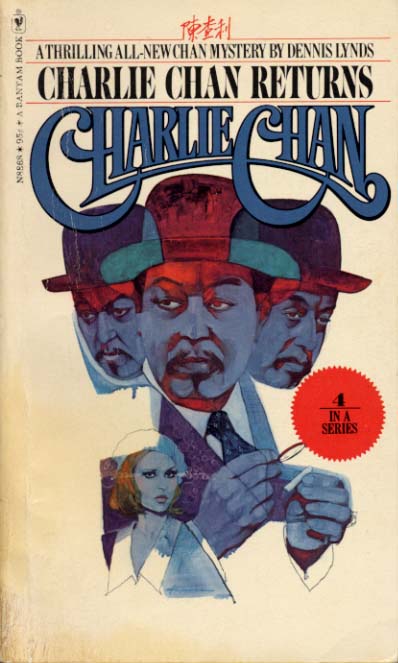
Charlie Chan Returns
by Dennis Lynds


Bantam Books, 1974
Bantam Books (paperback)
1st printing - November 1974 (called #4th in a series, the rest of the series were reprints of the Biggers books)
Charlie Chan in
The Pawns of Death

by Bill Pronzini


Wildside Press, 2003
Charlie Chan's Detective Magazine, Reknown Publications, 1974

Wildside Press edition (hardback)
1st printing - December 2002

Wildside Press edition (paperback)
1st printing - August 2003

Charlie Chan in
The Temple of the Golden Horde

by Michael Collins (aka Dennis Lynds)


Wildside Press, 2003
Charlie Chan's Detective Magazine, Reknown Publications, 1974

Wildside Press edition (hardback)
1st printing - March 2003


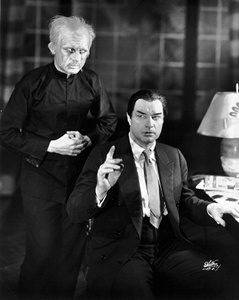
Charlie Chan on stage in Keeper of the Keys
Dwight Frye as Ah Sing.
Unknown actor as Charlie Chan.

Sources:
Brief Biggers biography from Charlie Chan Carries On , June 1945 edition
A Charlie Chan Chronology from the external Charlie Chan Family website
Earl Derr Biggers: Brief Life of a Popular Author: 1884-1933, by Barbara Gregorich, 'Harvard Magazine', March-April 2000


Thank you so much

Hosted by www.Geocities.ws

1