 |
Le Cafe Singe Bleu Serving generous portions of history and mystery from our monthly menu Volume 1, Issue 2: February 1, 2003 |
BOOK REVIEWS
Charlie Chan Carries On
Earl Derr Biggers
1930
Detective: Charlie Chan
Location: Around the world
Time: 1930 (Contemporary)
Should you read this book? Borrow it from the Singe Bleu library. Don't buy it.
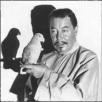
Warner Oland as Chan in Charlie Chan's Courage
adapted from The Chinese Parrot>/i>
Buy Charlie Chan books from used book sellers at www.abe.com
Reviewed by Dot Emm
The Young Man
Mark Kenneshaw - Harvard graduate, he wants to see the world
The Young Woman
Pamela Potter - granddaughter of the first victim, she wants to see justice done.
The Victims
Hugh Morris Drake - he was murdered for one reason, and one reason only
Walter Honeywood - a theatrical producer, why is he so afraid?
Sybil Conway - a singer, she double-crossed the wrong man.
The Suspects
Max Minchin - a Chicago gangster, he's retired now
Sadie Minchin - Maxie's wife
John Ross - a lumber man from Tacoma, Washington
Patrick Tait - old, and subject to heart problems
Captain Ronald Keene - a wastrel
Dr. Lofton - conductor of the round-the-world tour. He wouldn't sabotage his own business, would he?
Elmer Benbow - owner of a movie camera, he's determined not to see his vacation until he gets home
Mrs. Benbow - his wife
Mrs. Hamilton Luce - an old, seasoned traveller. Murder doesn't frighten her.
Norman Fenwick - a bossy little man
Laura Fenwick - his sister
The Police
Chief Inspector Duff
Welby - he goes incognito, to his doom
Inspector Charlie Chan
Kashimo - Chan's incompetent assistant
Opening lines
Chief Inspector Duff, of Scotland Yard, was walking down Picadilly in the rain. Faint and far away, beyond St. James Park, he had just heard Big Ben on the Houses of Parliament strike the hour of ten. It was the night of February 6, 1930. One must keep in mind the clock and the calendar where chief inspectors are concerned, although in this case the items are relatively unimportant. They will never appear as evidence in court.
Though naturally of a serene and even temperament, Inspector Duff was at the moment in a rather restless mood. Only that morning a long and tedious case had come to an end as he sat in court and watched the judge, in his ominous black cap, sentence an insignificant, sullen little man to the scaffold. Well, that was that, Duff had thought. A cowardly murderer, with no conscience, no human feeling whatever. And what a merry chase he had led Scotland Yard before his final capture. But perseverance had won - that, and a bit of the Duff luck. Getting hold of a letter the murderer had written to the woman in Battersea Park Road, seeing at once the double meaning of a harmless little phrase, seizing upoin it and holding on until he had the picture complete. That had done it. All over now. What next?
Hugh Morris Drake is one of sixteen travellers on a round-the-world tour, led by Dr. Lofton. The party has just arrived in London after a boat trip from New York, and are staying at the famous Broome's Hotel. On their first night in the city, Drake is murdered, strangled by a luggage strap. A deaf, harmless old man, there is no reason why anyone would want to kill him.
And it transpires that, indeed, he was murdered by accident, for he had switched bedrooms for the night with another guest at the hotel, who was disturbed by someone reading aloud in the room adjacent his.
Inspector Duff of Scotland Yard (whom we met at the end of Behind That Curtain, when he comes to America to help track down the killer of Sir Frederic Bruce) is put in charge of the case. He cannot prevent the many suspects from continuing on their round the world trip. Then, quite rapidly, two other murders take place. Duff is even present at one of them, but cannot prevent it.
The world travellers continue their journey. There are no police officals with them (except one in disguise as a cabin steward, and we are not privy to his thoughts, and he's killed, anyway) - we learn what happens on the trip by uninformative letters written to Duff from Pamela Potter.
By this time, Duff knows the reasons for the killings, and the name, if not the identity, of the murderer, and journeys to Honolulu, Hawaii, where the travellers are due to make a final stop on their cruise back to San Francisco. There, he intends to enlist the aid of Charlie Chan. However, an unknown hand strikes him down.
Charlie Chan intends to avenge his friend and joins the passengers on their cruise back to San Francisco, and when he reaches that city he is ready to hand over the criminal to the authorities.
Charlie solves the crimes in his own inimitable style, and we get a foreshadowing of the humor that will soon be present in the movie series as the incompetent Kashimo aids and abets Chan in his investigations, similar to the incompetent Jimmy Chan of Sidney Toler's installements.
Biggers also does not lose an opportunity to speak up for the Chinese immigrant:
''The Chinese are the aristocrats of the East,'' Mrs. Luce went on. ''In every city out there - in the Malay States, in the Straits Settlements, in Siam - they are the merchants, the bankers, the men of substance and authority. So clever and competent and honest, carrying on among the lazy riffraff of the Orient. A grand people, Mr. Chan. But you know all that.''
Charlie smiled. ''All I know, I do not speak. Appreciation such as yours makes music to my ears. We are not highly valued in the United States, where we are appraised as laundrymen, or maybe villains in the literature of the talkative films. You have great country, rich and proud, and sure of itself. About rest of world - pardon me - it knows little, and cares extremely less.''
Charlie Chan Carries On is an interesting misfire. One receives the impression that Biggers was trying to write a 'straight' mystery, and that pressure from his publisher caused him to insert Charlie Chan into the mix. The result is a disjointed narrative that sags very much in the middle, with no Inspector Duff and no Charlie Chan on the scene and the detective work left to a girl who seems more interested in flirting with Mark Kennaway than finding her grandfather's murderer. It's worth reading because it's part of the Chan series, and there are some good set pieces, but over all, an unsatisfacory entry.
It is of interest to those who like to compare books to their movie adaptions. The first adaption, Charlie Chan Carries On (1931) and Warner Oland's first time in the role, is unfortunately lost. But script continuities for it exist, as well as much newspaper criticism, so one gets an idea of what it contained. It seems to have followed the book pretty closely. The critics of the time seemed to like it.
Charlie Chan's Murder Cruise (1940) starring Sidney Toler improves on the book tremendously, for it starts immediately in Hawaii with Inspector Duff being struck down, and the entire film consists of Charlie Chan doing the detective work. Elements from other Chan movies are incorporated into this version as well, but the essential plot remains the same.
Go to the review forThe Keeper of the Keys, 1933
This review uploaded January 5, 2003.

Thank you so much
| Charlie Chan Carries On Earl Derr Biggers 1930
Detective: Charlie Chan
Should you read this book? Borrow it from the Singe Bleu library. Don't buy it.
| Warner Oland as Chan in Charlie Chan's Courage adapted from The Chinese Parrot>/i> Buy Charlie Chan books from used book sellers at www.abe.com |
|
Reviewed by Dot Emm
The Young Man
The Young Woman
The Victims
The Suspects
The Police
Hugh Morris Drake is one of sixteen travellers on a round-the-world tour, led by Dr. Lofton. The party has just arrived in London after a boat trip from New York, and are staying at the famous Broome's Hotel. On their first night in the city, Drake is murdered, strangled by a luggage strap. A deaf, harmless old man, there is no reason why anyone would want to kill him. And it transpires that, indeed, he was murdered by accident, for he had switched bedrooms for the night with another guest at the hotel, who was disturbed by someone reading aloud in the room adjacent his. Inspector Duff of Scotland Yard (whom we met at the end of Behind That Curtain, when he comes to America to help track down the killer of Sir Frederic Bruce) is put in charge of the case. He cannot prevent the many suspects from continuing on their round the world trip. Then, quite rapidly, two other murders take place. Duff is even present at one of them, but cannot prevent it. The world travellers continue their journey. There are no police officals with them (except one in disguise as a cabin steward, and we are not privy to his thoughts, and he's killed, anyway) - we learn what happens on the trip by uninformative letters written to Duff from Pamela Potter. By this time, Duff knows the reasons for the killings, and the name, if not the identity, of the murderer, and journeys to Honolulu, Hawaii, where the travellers are due to make a final stop on their cruise back to San Francisco. There, he intends to enlist the aid of Charlie Chan. However, an unknown hand strikes him down. Charlie Chan intends to avenge his friend and joins the passengers on their cruise back to San Francisco, and when he reaches that city he is ready to hand over the criminal to the authorities. Charlie solves the crimes in his own inimitable style, and we get a foreshadowing of the humor that will soon be present in the movie series as the incompetent Kashimo aids and abets Chan in his investigations, similar to the incompetent Jimmy Chan of Sidney Toler's installements. Biggers also does not lose an opportunity to speak up for the Chinese immigrant:
Charlie Chan Carries On is an interesting misfire. One receives the impression that Biggers was trying to write a 'straight' mystery, and that pressure from his publisher caused him to insert Charlie Chan into the mix. The result is a disjointed narrative that sags very much in the middle, with no Inspector Duff and no Charlie Chan on the scene and the detective work left to a girl who seems more interested in flirting with Mark Kennaway than finding her grandfather's murderer. It's worth reading because it's part of the Chan series, and there are some good set pieces, but over all, an unsatisfacory entry. It is of interest to those who like to compare books to their movie adaptions. The first adaption, Charlie Chan Carries On (1931) and Warner Oland's first time in the role, is unfortunately lost. But script continuities for it exist, as well as much newspaper criticism, so one gets an idea of what it contained. It seems to have followed the book pretty closely. The critics of the time seemed to like it. Charlie Chan's Murder Cruise (1940) starring Sidney Toler improves on the book tremendously, for it starts immediately in Hawaii with Inspector Duff being struck down, and the entire film consists of Charlie Chan doing the detective work. Elements from other Chan movies are incorporated into this version as well, but the essential plot remains the same. Go to the review forThe Keeper of the Keys, 1933
This review uploaded January 5, 2003. |
|
Thank you so much |