 HOME
HOSPITAL
SERVICES & FACILITIES
COMMUNITY OUT-REACH
PATIENT GUIDE
PROCEDURES
HOME
HOSPITAL
SERVICES & FACILITIES
COMMUNITY OUT-REACH
PATIENT GUIDE
PROCEDURES
PUBLIC RELATIONS
EYE BANK
FEES & CHARGES
REPORTS
COURSES
LOCATION
CONTACT US
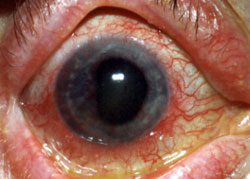
Uveitis :
What is Uveitis?
The eye is shaped like a tennis ball with three different layers. The outer layer is the sclera, the innermost is the retina, and the middle layer is the uvea. Uveitis is inflammation of the uvea - the middle layer of the eye.
What is the importance of Uveitis?
The Uvea, like a mother, nourishes the eye with blood vessels. Disease of the uvea thus affects nutrition of vital structures: the cornea, lens, retina and vitreous. Uveitis may be sight threatening and more serious than other common eye disorders.

 What are the symptoms of Uveitis?
Symptoms of Uveitis include :
1. Light sensitivity
2. Blurring of vision
3. Pain
4. Redness of the eye
What are the causes of Uveitis?
1.Systemic inflammatory diseases like multiple joint pains.
2.Systemic diseases like T.B., Syphilis, Leprosy etc.
3.Trauma or injury to the eye.
4.Virus, fungal or bacterial illness of the eye.
5.Idiopathic Uveitis - unknown causes
What are the types of Uveitis?
There are different types of Uveitis depending on which part of the eye is affected :
1.When the uvea is inflamed near the front part of the eye it is called anterior uveitis,
which usually has a sudden onset and may last for 6-8 weeks.
2.If the uvea is inflamed in the middle of the eye, it is called intermediate uveitis,
which affects the muscle that focuses the lens.
3.Inflammation in the back of the eye is called posterior uveitis,
which has a slower onset and may last longer.
4.When the inflammation affects anterior intermediate and osterior zones it is called Panuveitis.
Acute Presentation :
Certain types of uveitis start suddenly and patients may suffer from severe pain redness and defective vision. With treatment, uveitis can disappear.
Chronic Presentation :
Present for years, certain cases can be cured with treatment, while others can only be controlled.
Diagnosis of Uveitis :
A careful examination of the whole body and eye by an ophthalmologist is extremely important when symptoms occur. Inflammation can affect sight or even lead to blindness, if not treated. Since uveitis can be associated with disease in other parts of the body, your ophthalmologist will want to know about your overall health. He/She may want to consult your primary care physician or other medical specialists.
Treatment of Uveitis :
Uveitis is a serious eye condition that may cause permanent scars. Immediate and adequate treatment is the secret of success. Treatment with steroids and pupil dilating eye drops with or without systemic medications is needed.
Uveitis - Special Problems :
1.Uveitis is underestimated as a cause of blindness in most blindness surveys.
2.Accurate treatment of uveitis is possible only when an etiological diagnosis is made.
3.The conventional treatment of uveitis of unknown origin with systemic corticosteroids can be harmful in areas where for instance, HIV, tumberculosis and leprosy are endemic.
4.Uveitis is not only associated with visual disability but also with systemic diseases and therefore with increased morbidity. 5.Recent development in the diagnosis of uveitis has shown that an etiological diagnosis can be established in 70% of
uveitis patients. Increasing awareness of uveitis, proper workup and treatment may bring down the incidence of blindness
due to uveitis.