 HOME
HOSPITAL
SERVICES & FACILITIES
COMMUNITY OUT-REACH
PATIENT GUIDE
PROCEDURES
HOME
HOSPITAL
SERVICES & FACILITIES
COMMUNITY OUT-REACH
PATIENT GUIDE
PROCEDURES
PUBLIC RELATIONS EYE BANK FEES & CHARGES REPORTS COURSES LOCATION CONTACT US
HOME
HOSPITAL
SERVICES & FACILITIES
COMMUNITY OUT-REACH
PATIENT GUIDE
PROCEDURES
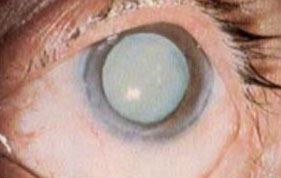 What is the cataract?
1) Hereditary or Birth Cataract or Congenital Cataract : As the name suggests, this form of cataract is present at birth, but cataracts developed within the first year are also included. They can be either associated with inborn errors of metabolism or caused by an infection of the mother during pregnancy. 2) Cataract associated with systemic diseases : This type of cataract develops in those patients who are suffering from some other diseases such as diabetes, certain skin diseases, liver diseases, high blood pressure etc. 3) Traumatic Cataract : Eye injuries can cause cataract in patients of any age. A hard blow or perforating injuries can damage the lens and lead to opacification. 4) Cataract due to radiant or other energy : Most type of radiant energy such as heat, X-rays, electric current can induce lens opacity or cloudiness. 5) Secondary cataract or cataract due to other eye diseases : Certain eye disease may induce opacification of the lens. Glaucoma, iritis, iridocyclitis, retinitis pigmentosa are examples of this category. 6) Drug induced cataract : Local or systemic treatment with steroids for long periods can sometimes lead to opacification of lens. 7) Senile cataract or age related cataract : This type of cataract is most common type of cataract. Statistics reveal that around or over 90% operated cases account for this type of cataract. Senile cataract occurs in persons usually around 50 years of age. Both men and women suffer equally. It is normally the result of ageing process, which causes transparent protein fibers of the lens to harden and become opaque or cloudy gradually. This progress is almost always slow to involve entire lens.
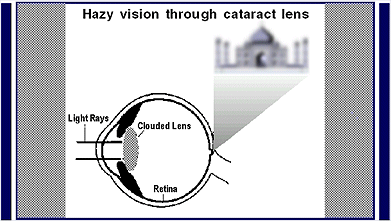 What are the symptoms of cataract?
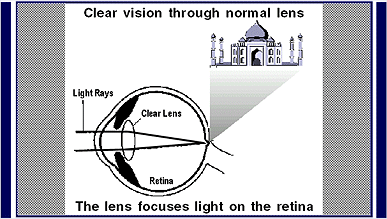 How is cataract treated?