Quick Kills
Part 3
Of course, patzers aren't the only victims of the accelerated assassination. Even grandmasters can be suspect to this early failure. It helps when your opponent's last name is Kasparov...and his first name is Garry.
Huebner,R (2630) - Kasparov,G (2790) [D45]
Cologne TVm2 Cologne (2), 1992
[Castro]
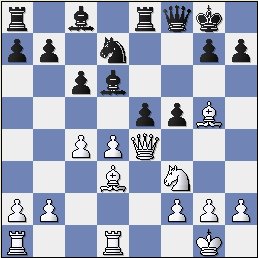
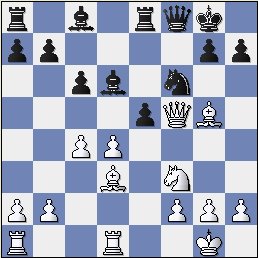
1.d4 d5 2.c4 e6 3.Nc3 c6 4.Nf3 Nf6 5.e3 Nbd7 6.Qc2 Bd6 7.Be2 0-0 8.0-0 Re8 9.Rd1 Qe7 10.e4 Nxe4 11.Nxe4 dxe4 12.Qxe4 e5 13.Bg5 Qf8 14.Bd3 White's simple threat is mate on h7. 14...f5!? Diagram
|
|
Here are some tips to increase your chances of scoring a quick kill:
- Study the common opening traps in your favorite openings. If you have a database program such as Chessbase with a sizeable database of games, look up games in your selected opening which ended decisively which is less than 15 moves long. See where the mistake was made and keep it in your memory banks. If this mistake was made by a master, the more likely that it might be made by one of your less masterly opponents.
- Study tactics! Amazing how the study of tactics plays a factor in every single phase of the game. The opening is no different. Understanding how to build up an attack and take advantage of common tactical devises such as forks, skewers, pins, and discovered attacks will increase the chance of you spot this opportunity in your games.
- Understand why every move in your opening is made. This way, when your opponent deviates, you may understand why this would be a mistake and thus take advantage of it. Of course, this may lead to more a positional advantage, but decisive tactics often occur when your opponent makes an inferior move in an opening which you understand.
Here are some tips on how to avoid being destroyed in a short amount of time:
- Don't fall asleep! I think one easy way to avoid being quickly swept off the board is simply to realize that tactics can happen in the opening. I think may people have the misconception that with so many pieces on the board, even if a bad move is played, it can be compensated for later. Your opponent might not give you a later chance to make up for your mistake, so avoid making it in the first place.
- When you are faced with a novel position in the opening, try to assess what your plans and what the plans of your opponent should be. Don't just make a developing move without seeing how this move will fit into the big picture. You may find that when you "simply develop" you will simply get crushed!
- When it looks too good to be true, it often is! Check out the tactical implications of your response when winning material in the opening. Check your opponent's possible checks and captures after your intended response. Then double check.
- When you are in unfamiliar waters in the opening, be careful when developing a piece to a square that leaves it hanging. Be wary of forks or double attacks which may put your pieces in danger. Also, check what you "left" behind by moving the piece. Did you leave a key square or pawn unprotected by moving your piece.
These are some simple ways to improve this aspect of your chess. Good luck and happy hunting!
For the previous part of this article, check out Part 2.
For the beginning of this article, you can read Part 1
I welcome comments on this and other articles I have written. E-mail me at [email protected].
