|
Quick Kills
Recently, I have had a couple quick victories based on inaccuracies that my opponent had in the opening. These were during standard time control games, so I thought it would be interesting to see if there were any common trends in these types of games. So I looked through my games and saw which ones were either won or lost in 15 moves or less. I analyzed the games and found a couple things which I think might help you take advantage when your opponent makes a mistake or to avoid making mistakes in the opening which can cause your expedient demise.
In our first example, my opponent ignores basic opening principles by launching an one-move attack on a piece. This allows me to counter with my own decisive attack led off by a nice bishop sacrifice.
bscastro (1821) - PublisherKing (1823) [B21]
ICC 15 5 Internet Chess Club, 24.04.2003
[Castro]
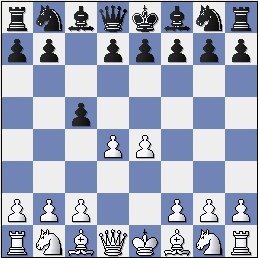
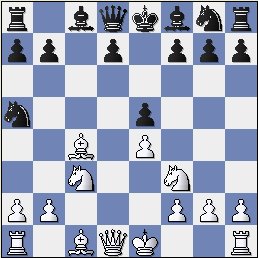
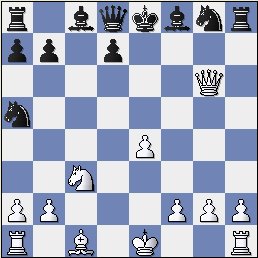
1.e4 c5 2.d4 Diagram The Smith-Morra Gambit. As readers of my website know, I'm a big fan of this opening, because it teaches you many things about tactics and initiative. In addition, when your opponent doesn't know the opening and plays illogically, good things often happen.2...cxd4 3.c3 dxc3 4.Nxc3 Nc6 5.Nf3 e5?! This move is unusual. It is here that I started to think that maybe a quick kill might be in store. [ 5...e6 is a usual move here, blocking the a2-g8 diagonal and opening lines for the dark-square bishop.] 6.Bc4 Notice how it is now difficult to prevent White's aim at f7. 6...Na5? Diagram A premature attack. As any beginning book of chess will say, you must develop your pieces. In this case, combined with Black's earlier more subtle error, White has the opportunity to strike.7.Bxf7+! I calculated a few promising lines, but even without extended calculation, White's lead in development (Black's only developed piece is out of the picture on a5) and open lines almost begs for this move. 7...Kxf7 [ Declining the sacrifice allows the simple skewer of king and queen. 7...Ke7 8.Bg5+ winning the queen.] 8.Nxe5+ Continuing the attack. 8...Ke8 9.Qh5+ White's pieces swarm around Black's king like a army of ants onto a muffin left over at a picnic. 9...g6 10.Nxg6! hxg6 [ 10...Nf6 declining the knight sacrifice. 11.Qe5+ Be7 12.Nxh8 winning the rook. White is up an exchange and a pawn and has a continued attack on Black's king.] 11.Qxg6+ Diagram Black resigned because he saw mate on the next move. [ 11.Qxg6+ Ke7 12.Nd5#] 1-0
For another example, check out Part 2.
| |