![[Under Construction]](images/undercon.gif)
Phillips UcD 180w power amplifier

INTRODUCTION
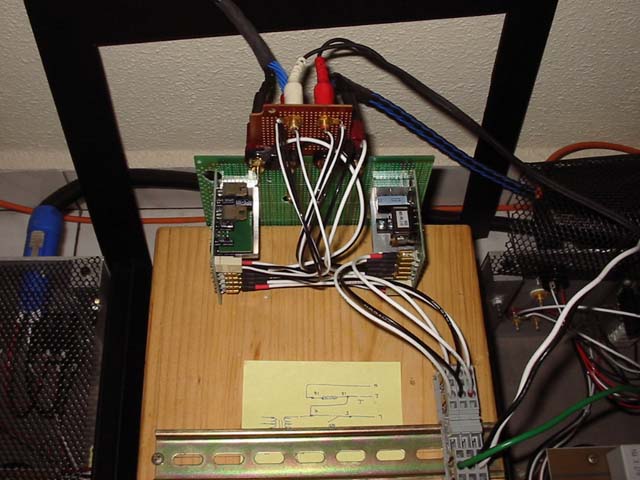
This amplifier utilizes a pair of UcD180 class D modules. The technology was originally created by Phillips , and is licensed to Hypex. The modules are incredibly small and efficient, giving off little heat in use. No exotic parts were used in building this amplifier, just quality components and a bit of common sense :)
There are variations to what UcD stands for, but the most common ones are "Ultimate class D" and "Universal class D".
DESCRIPTION
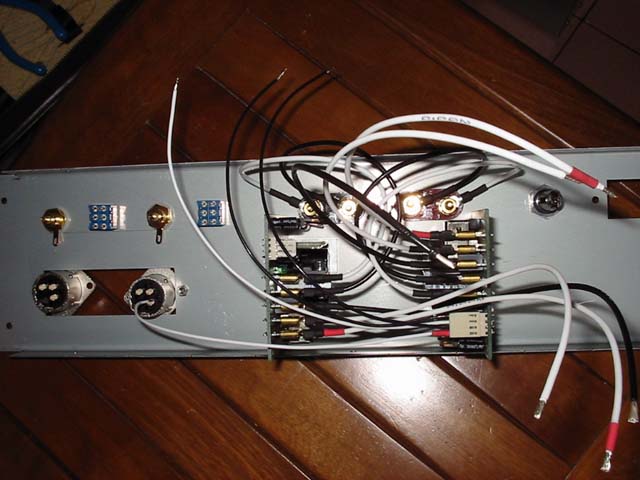
As Hypex and Phillips are very secretive towards this module, I had to make do with the ridiculous information they gave. The specs given are: +/-40v supply, 180wrms into 4Ω, input impedance 100kΩ, output impedance 0.01Ω. There are spade connectors on board for the power supply, input, and output. There's even a trigger to turn off the output stage for fancy µP control. The good news is the amp accepts balanced inputs, but the bad news is the amp itself is single-ended.
My first prototype was on a chopping board(!) Initial results were not very pretty, with noticible high frequency hissing and poor sound quality.
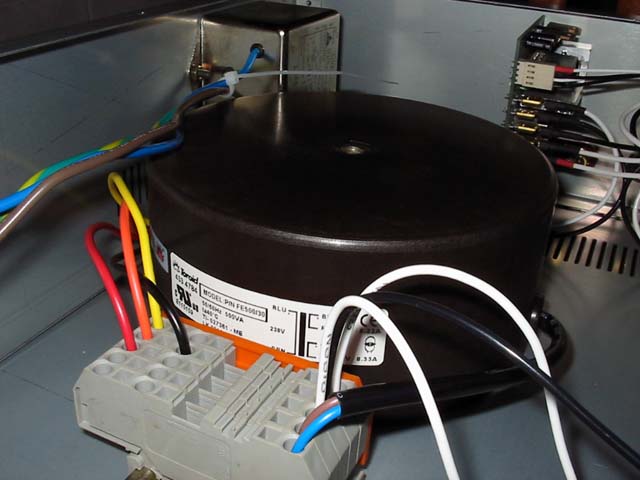
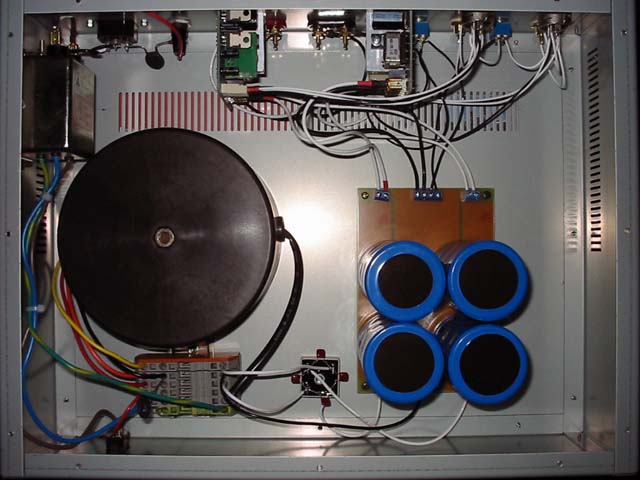
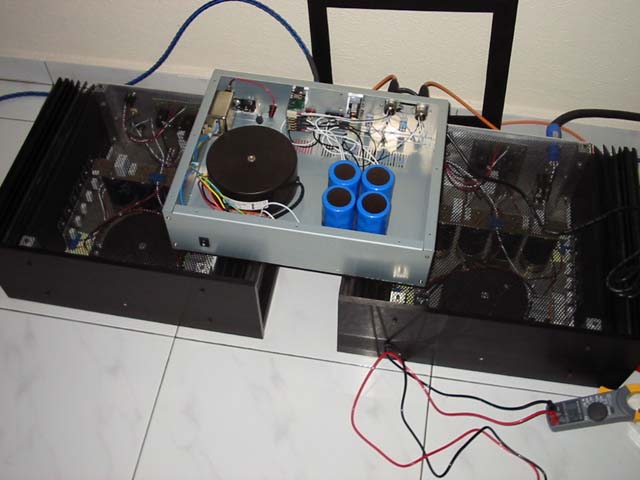
I used a 500VA toroid, with 2*30vac windings at 8.3A each. This would give a theoretical ~130wrms continuous per channel (4Ω), which should be about adequate. Following this is a standard 35A bridge rectifier. I used 4*10000µF low ESR caps from BC components for the reservoir. Due to the low heat dissipation of the modules, they are mounted directly to the back panel of the casing.
To counter some of the interference I heard earlier, I inserted a 10A line filter before the transformer, and 0.1µF snubbers across the bridge rectifier. No exotic high speed rectifiers for this amp! I used different gauges of my favourite silver plated teflon cable to wire up everything. Fuses, thermistors, connecters etc. complete the amp.
This amp is really energy efficient. It takes less power than a VCR. I can leave it on 24/7 with no damage at all (physically & financially). The casing is stone cold in operation, only the area near the modules is mildly warm to the touch. A quick check on the scope shows a disturbing 500kHz sawtooth wave riding on the signal, the switching frequency perhaps?
SOUND QUALITY
With everything properly mounted in the casing, the hissing is finally gone. Didn't imagine the modules are so susceptible to RF interference, or have low power supply rejection. How to tell? No specs given!!
Overall the sound was plenty satisfactory, with a few minor gripes. The claimed ultra low output impedance did not really manifest into a tight bass performance. I have to discount the fact that my speakers (maggies) are a difficult load, but in this respect the Tripath amp managed this feat better. The midrange is a little recessed, as with my impression of Class D amplifiers in general. The highs seem a little detached, though very smooth generally, sound progressively compressed toward higher volumes. Soundstage is properly sized, but lacking in depth. Adding 1µF bypass per rail did not improve things much, as the main caps were already very good.
CONCLUSION
The lackluster sound and no option for modification means that a designer does not have much choice for improvement. Mind you, the sound is respectable, but in the world of high end where only the best is acceptable, OEM modules like this do not have much chance of succeeding.
PICTURES