 Our Lady
of
Our Lady
of
NCM101 –
Human Behavior
Definition of terms:
The behavior of people (and other organisms
or even mechanisms) falls within a range with some behavior being common, some
unusual, some acceptable, and some outside acceptable limits. The acceptability
of behavior is evaluated relative to social norms and regulated by various
means of social control.
Hygiene is the maintenance of healthful practices. In modern terminology, this
is usually regarded as a particular reference to cleanliness.
Neurosis in psychoanalytic theory, is an
ineffectual coping strategy that Sigmund Freud suggested was caused by emotions
from past experience overwhelming or interfering with present experience. For
example, someone attacked by a dog as a toddler may have a phobia or
overwhelming fear of dogs.
There are many different specific neuroses and
many of them are named: pyromania, obsessive-compulsive disorder, anxiety
neurosis, and an endless variety of phobias.
Everyone has some neurotic symptoms and
defense mechanisms which more or less successfully deal with anxiety. Defense
mechanisms which result in difficulties in living are termed neuroses and are
treated by psychoanalysis, counseling or psychiatric techniques.
Anxiety is a complex combination of the feeling of fear,
apprehension and worry often accompanied by physical sensations such as
palpitations, chest pain and/or shortness of breath. It may exist as a primary
disorder or may be associated with other medical problems including other
psychiatric disorders.
A chronically recurring case of anxiety
that has a serious affect on your life may be clinically diagnosed as an
anxiety disorder. The most common are Generalized Anxiety Disorder, Panic
disorder, phobias, Obsessive-Compulsive Disorder, and Post-Traumatic Stress
Disorder (PTSD).
A defense mechanism is an
unconscious way to protect the personality from unpleasant thoughts which may
cause anxiety. This can work well in small doses; however, a defense mechanism
can also lead to a neurosis if it causes a person to adopt ineffectual or
inappropriate coping strategies.
A panic
attack is a period of intense fear or discomfort, typically
with an abrupt onset and usually lasting no more than 30 minutes. Symptoms
include trembling, shortness of breath and sensations of choking or smothering.
The disorder is strikingly different from other types of anxiety in that panic
attacks are very sudden, appear to be unprovoked, and are often disabling.
Fear is an
unpleasant feeling of perceived risk or danger, real or not. Fear also could be
described as a feeling of extreme dislike to some conditions/objects, such as:
fear of darkness, fear of ghost, etc. It is one of the basic emotions.
Emotion is used to describe a state of a
person.
The basic
eight emotions are:
- fear (or terror, shock, phobia)
- anger (or rage, which can be directed to the self or others)
- sorrow (or sadness, or grief or depression)
- joy (happiness, glee, gladness).
- disgust
- acceptance
- anticipation
- surprise
Motivation is the driving
force behind all actions of an organism.
Health - "A state
of complete physical, mental and social well-being, and does not consist only
of the absence of disease or infirmity.” - WHO
Mental Hygiene – care of the mind; prevention of serious
maladjustments and promotion of sound mental health.
Importance of Mental Hygiene:
a.
explains the mechanics of human motivation and behavior
b.
direct & guide the behavior and attitudes of the youth as they go through
different stages of growth
c.
person understand oneself better, realizes self-worth and better equipped to
asses other people’s feelings, motivations, and emotions
d.
can suggest preventions as well as remedies regarding social problems such as
delinquencies, alcoholism, drug addiction
Aspects of Mental Hygiene:
a.
Preventive aspects – concerned with staying away from mental disturbances that
may lead to real psychoses; prophylactic hygiene
b.
Therapeutic Aspects -
c.
Curative Aspects – the oldest and most technical approach to behavior problem;
also called supportive approach; involves the detection and correction of
serious maladjustment problems
Early Signs of Failing Mental Health:
a.
Anxiety
b.
Depression
c.
Sudden Change
d.
Poor Performance
Q: Anxiety as a subjective individual experience is
described as:
a.
predominant feelings of fearfulness or apprehensions.
b.
loss of interest in usual activities
c.
inability to experience pleasure
d.
predominant feeling of hopelessness and despair
Theories:
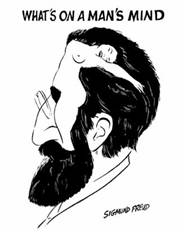
A. Psychoanalytical Theory
Sigmund
Freud
Levels
of Awareness
1.
conscious
mind is what you are aware of
at any particular moment, your present perceptions, memories, thoughts,
fantasies, feelings, what have you.
2.
Working closely
with the conscious mind is what Freud called the preconscious,
what we might today call "available memory:" anything that can easily
be made conscious, the memories you are not at the moment thinking about but
can readily bring to mind. But Freud suggested that conscious and preconscious
are the smallest parts!
3.
The largest
part by far is the unconscious. Not easily available to
awareness, including many things that have their origins there, such as our
drives or instincts, and things that are put there because we can't bear to
look at them, such as the memories and emotions associated with trauma. It is
the source of our motivations.
The
Structure of the Mind
2.
Ego - relates the organism to
reality by means of its consciousness, and it searches for objects to satisfy
the wishes that id creates to represent the organisms needs. This
problem-solving activity is called the secondary
process. Conscious, that is hooked up to the world through the senses. The
ego, unlike the id, functions according to the reality principle, which says "take care of a need as soon as
an appropriate object is found." It represents reality and, to a
considerable extent, reason.
3.
Superego - presented our conscience
and counteracted the Id with a primitive and unconscious sense of morality. Stands in opposition to the
desires of the Id. More on socially acceptable behavior, sometimes to the point
of individual deprivation. Superego itself part of the unconscious mind.
There
are two aspects to the superego:
Conscience - which is an internalization of punishments and
warnings.
Ego ideal - It derives from rewards and positive models
presented to the child.
Q: Freud stresses that the function of the ego is:
a.
distinguish between things in the mind and things in external world.
b.
moral arm of the personality, serifs for perfection rather than pleasure
c.
reservoir of instincts and soure of all drives
d.
controls the physical needs and instincts
Freud’s Stages
of Personality
1. The oral stage lasts from birth to about 18
months. The focus of pleasure is, of course, the mouth. Sucking and biting are
favorite activities.
2. The anal stage lasts from about 18 months to
three or four years old. The focus of pleasure is the anus. Holding it in and
letting it go are greatly enjoyed.
3. The phallic stage lasts from three or four to
five, six, or seven years old. The focus of pleasure is the genitalia.
Masturbation is common.
4. The latent stage lasts from five, six, or
seven to puberty, that is, somewhere around 12 years old. During this stage,
Freud believed that the sexual impulse was suppressed in the service of
learning. I must note that, while most children seem to be fairly calm,
sexually, during their grammar school years, perhaps up to a quarter of them
are quite busy masturbating and playing "doctor." In Freud's
repressive era, these children were, at least, quieter than their modern
counterparts.
5. The genital stage begins at puberty, and
represents the resurgence of the sex drive in adolescence, and the more
specific focusing of pleasure in sexual intercourse. Freud felt that
masturbation, oral sex, homosexuality, and many other things we find acceptable
in adulthood today, were immature.
Q: Perlita, a 6 y/o came in because of bruises.
According to Freud, the psychosexual development of Perlita is:
a.
phallic.
b.
oral
c.
anal
d.
genital
B. Human Need Theory
Abraham
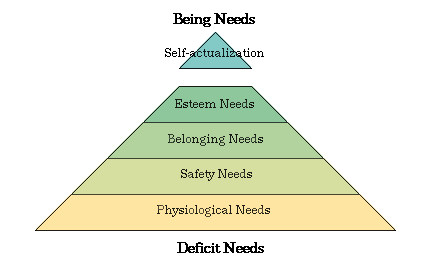
Maslow – hierarchy of needs
1. The
physiological needs. oxygen, water, protein, salt, sugar, calcium,
and other minerals and vitamins, needs to be active, to rest, to sleep, to get
rid of wastes (CO2, sweat, urine, and feces), to avoid pain, and to have
sex.
2. The
safety and security needs. When the physiological needs are largely
taken care of, this second layer of needs comes into play. You will
become increasingly interested in finding safe circumstances, stability,
protection. You might develop a need for structure, for order, some
limits.
Looking at it
negatively, you become concerned, not with needs like hunger and thirst, but
with your fears and anxieties. In the ordinary American adult, this set
of needs manifest themselves in the form of our urges to have a home in a safe
neighborhood, a little job security and a nest egg, a good retirement plan and
a bit of insurance, and so on.
3. The
love and belonging needs. When physiological needs and safety needs
are, by and large, taken care of, a third layer starts to show up. You
begin to feel the need for friends, a sweetheart, children, affectionate
relationships in general, even a sense of community. Looked at
negatively, you become increasing susceptible to loneliness and social
anxieties.
In our day-to-day
life, we exhibit these needs in our desires to marry, have a family, be a part
of a community, a member of a church, a brother in the fraternity, a part of a
gang or a bowling club. It is also a part of what we look for in a
career.
4. The esteem
needs. Next, we begin to look for a little self-esteem. This
refers to the valuation given to oneself by other people. Maslow noted two
versions of esteem needs, a lower one and a higher one. The lower one is
the need for the respect of others, the need for status, fame, glory,
recognition, attention, reputation, appreciation, dignity, even
dominance. The higher form involves the need for self-respect, including
such feelings as confidence, competence, achievement, mastery, independence,
and freedom. Note that this is the “higher” form because, unlike the
respect of others, once you have self-respect, it’s a lot harder to lose!
5. Self-actualization
- While other needs can be met fully,, self-actualization is seen as
"growing", i.e. as a continuing driving force. is the instinctoid need of a human to make the
most of their unique abilities. Maslow described it as:
A musician must make
music, the artist must paint, a poet must write, if he is to be ultimately at
peace with himself. What a man can be, he must be. This need we may call
self-actualization.
Q: Situation: Man is a biopsychosocial and spiritual
being.
1. Maslow’s need theory
provided conceptual framework for:
A. Diagnosing
client’s problems.
B. Using the
nursing process to meet client’s needs
C.
Prioritizing level of client’s wellness
D. Achieving optimum
health status of client
2. Which statement abouth
the heirarchy of basic human needs is incorrect:
A. Hospitalized clients
have basic needs that are actually not met
B. Needs not met places
individual at risk of illness
C. Priorities to basic
needs are the same for all individuals.
D. Social factors
influence ability to meet needs
3. What factor most
influence prioritization of client’s needs:
A. Dictates of the family
B. Perception of comfort
C. Perception of needs.
D. Number of client
problems
4. These are characteristic
of individuals who have achieved self-actualization, except:
A. Solves own problems
B. Readily accepts
suggestions from others
C. Enjoys privacy
D. Selects friends.
a.
Erik Erikson – psychosocial stages
additional reference - Erikson
|
Stage (age) |
Psychosocial crisis |
Significant relations |
Psychosocial modalities |
Psychosocial virtues |
Maladaptations & malignancies |
|
I (0-1) -- |
trust vs mistrust |
mother |
to get, to give in return |
hope, faith |
sensory distortion -- withdrawal |
|
II (2-3) -- |
autonomy vs shame and doubt |
parents |
to hold on, to let go |
will, determination |
impulsivity -- compulsion |
|
III (3-6) -- |
initiative vs guilt |
family |
to go after, to play |
purpose, courage |
ruthlessness -- inhibition |
|
IV (7-12 or so) -- |
industry vs inferiority |
neighborhood and school |
to complete, to make things together |
competence |
narrow virtuosity -- inertia |
|
V (12-18 or so) -- |
ego-identity vs role-confusion |
peer groups, role models |
to be oneself, to share oneself |
fidelity, loyalty |
fanaticism -- repudiation |
|
VI (the 20’s) -- |
intimacy vs isolation |
partners, friends |
to lose and find oneself in a |
love |
promiscuity -- exclusivity |
|
VII (late 20’s to 50’s) -- middle adult |
generativity vs self-absorption |
household, workmates |
to make be, to take care of |
care |
overextension -- rejectivity |
|
VIII (50’s and beyond) -- old adult |
integrity vs despair |
mankind or “my kind” |
to be, through having been, to face not being |
wisdom |
presumption -- despair |
According to Erickson’s theory
on Personality Development of a school age child is:
A.
Identity vs. role confusion
B.
Industry vs inferiority
C.
Autonomy vs. doubt
D.
Initiative vs. guilt
According to Erickson, the
major issue of the adolescent years is the:
A.
Resolution of the crisis of personal identity
B.
Formation of romantic relationship
C.
Establishment of a career
D.
Achievement of independence
Course Outline: prelims | midterm | finals
Handouts: week1 | week2
| week3 | week4
| week5 | week6 | week7 | week8 | week9 | week10 | week11 | week12 | week 13 |
week 14
Grades: Monday |
Tuesday | Wednesday | Thursday | Friday | Saturday