DISCO Disco, the dance fad, which dominated the pop charts
for the second half of the 1970s, was not so much about music as it was about
lifestyle. Disco is a form of dance music popular during the 1970s in which the
melodic content was generally considered to be subservient to the beat. Although it had grown out of the vibrant black dance culture of the
soulful 1960s, by the time it had filtered through the white gay club scene it
was not a genuine musical movement but more of a fashion statement. The gay
clubs that sprang up in every city in Europe and the US in the early 1970s as a
result of a more liberal society. They were not so hot on the music as the black
dance DJs and they still needed to feed their turntables as they couldn't afford
to hire live bands to play through the night. So their demand created a market
for formula white funk.
Many of the disco artists were anonymous session
musicians or failed soul singers who knew just enough to get a good groove going
but could offer little in the way of melody or lyrics to make their tracks
distinctive. For that reason, one could be forgiven for thinking that all disco
music sounded the same and that it was only the critical bpm (beat-per-minute)
rating that enabled the dancers to differentiate between the records. In fact,
it quickly got to the point where disco records had the number of beats per
minute printed on the label so that DJs could segue from one to another without
the dancers noticing that the record had changed!
Disco was strictly for dancing. No one actually
listened to it as music because it had a minimal musical merit. Until the film
Saturday Night Fever (1977) brought disco to the mainstream record buyers, the
main customers for disco records had been the club DJs. The club goers were just
happy to have something that kept a steady pulse for as long as their legs would
last.
REGGAE /
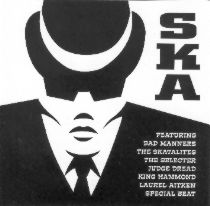
SKA Reggae, the popular music of Jamaica, was the only
non-American music form to have a significant and lasting impact on post-war
popular music. It began in the 1950s when the island's youth adapted
the boogie piano style of American R&B artists such as Fats Domino to the
electric guitar. But in doing so, they accentuated the second and fourth beats
to arrive at the "offbeat chop", that is the main characteristic of reggae.
Initially, it wasn't called reggae but "Ska", an onomatopoeic name,
which was intended to convey the distinctive clipped rhythm.
The pioneers of the new sound were the record
producers and label owners such as Leslie Kong and dance-hall DJs like Clement
Seymour "Sir Coxsone" Dodd. The DJs soon became producers themselves
as they were desperate to have exclusive sides for their sound systems. The DJs
were in fierce competition with each other to the extent where one would
instinctively draw a gun on a rival. This gun-toting, ganja (cannabis) smoking
outlaw culture was reflected in the lyrics, as was the island's volatile
political scene about which the artists and producers philosophized with
passion.
In the early years, the market was exclusively for
singles. It was only when the records were exported in quantity in the early
1970s and started to impact on the European pop charts that the labels could
afford to make the major investment needed to manufacture and ship LPs. Kong discovered reggae's first international star
Jimmy Cliff, while Dodd's label, Studio One, had a varied roster which include
such influential artists as Alton Ellis, Marcia Griffiths, Ken Boothe, John
Holt, Burning Spear, the Maytals and the wailers.
By the time the Wailers had become a backing band for
Bob Marley, Jamaica's first and only superstar, Dodd was facing fierce
competition from this one-time apprentice Lee "Scratch"
Perry. It was
Perry who prepared Bob Marley for the fame he would find with Island Records, an
English label who were largely responsible for introducing reggae to the rest of
the world. Incidentally, Island's first international hit was with Willie
Small's innocuous "My Boy Lollipop" in 1964 on which a young Rod
Stewart blows a mean harmonica. It was to be another 4 years before reggae made
a real impact with Desmond
Dekker's international hit single
"Israelites", which saw the style accepted as more than a mere novelty
dance style.
But before the music could be marketed to
predominantly white mainstream music buyers abroad, it had to have the rough
edges buffed to a sophisticated sheen. Between 1964 and 1967 Ska became less
frantic and adopted the heavier rock sound from the American groups. It also
changed it's name to "Rude Boy" music after the street gangsters whose
exploits with the law were often portrayed in the lyrics. Prime examples of this
style were Prince Buster's "Judge Dread" and the Slickers'
"Johnny Too Bad" and "Rudy, A Message To You. The last named
mentioned became a staple sound of the English Skinhead subculture of the early
1970s and a decade later provided a hit for Coventry band The Specials who
recorded it during the 1980s Ska revival - one of the most inexplicable fads in
pop history.
When the violence that was endemic in Jamaica's
shanty towns died down in the late 1960s, Reggae slowed to a more sensual
shuffle beat and was given a descriptive title "Rock Steady". When it
speed up again in the early 1970s, it retained the emphasis on the offbeat, but
acquired a lilt and a bass-heavy sound. This version was termed reggae to
reflect the regular rhythm (reggae means regular). In time it became the voice
of the Rastafarians, a peaceful religious sect who worshipped the Ethiopian
emperor Haile Selassie as God on Earth and who became a moderating influence on
Jamaican life. Part of Bob Marley's appeal was the quiet dignity and sincerity
underlying his music, which was an expression of his Rasta beliefs.
From the late 1970s, reggae was in danger of becoming
simply another strand in the diverse fabric of pop as white acts such as The
Police, Culture Club and even The Clash assimilated reggae rhythms into their
own music. The acquisition of electronic keyboards and even drum machines by
some of the groups in a vain effort to make the music more fashionable put a
dampener on the once incendiary spark and rendered it less vital.
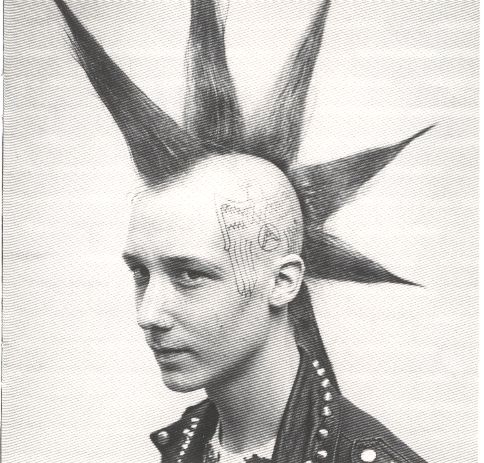
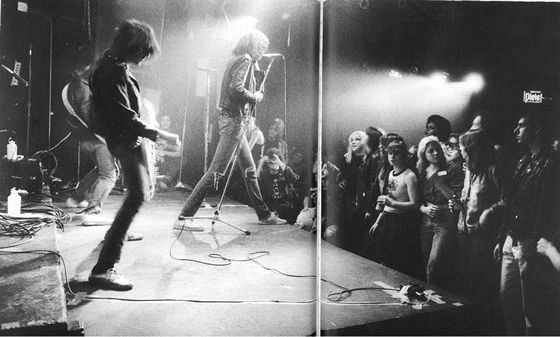
PUNK ROCK Punk rock, the often crude expression of a young, inarticulate and
disaffected working class, was born kicking and screaming in the back room of CBGB
OMFUG's, a fashionable hangout in the run-down Bowery district of New York in
1976. The club's name was an abbreviation of Country, Bluegrass and Blues Other
Music For Uplifting Gormandizers,
although there was not a trace of any of these prehistoric forms in the violent
nihilistic three-chord thrash, perpetuated by the likes of The
Ramones, Patti
Smith and the aptly named Richard Hell. Punk was a phenomenon of the late
1970s, although it did have a tenuous link to the garage bands in the mid-1960s,
in which any song had more than three chords or ran for more than three minutes.
It's credo was "Don't bore us, get to the chorus", which had been the
motto of the New York Dolls, a band of "also runs" at the fag end of
glam rock, who can now be seen as the broken link between the garage bands and
the punks. Punk was a reaction to what its creators and fans saw as the
monopolization of popular music by multi-national corporations and the mass
media. By the mid-1970s, rock music was big business and as such record
companies tended to sign only those acts, which they thought would have
international appeal. Boredom and "no Future" became the key slogans
of punk, although there was a very lucrative future to be had for those bands
who had good tunes and were prepared to compromise as punk was inevitably
absorbed into the mainstream at the end of the decade. It's anti-establishment
statements (spiky and colored haircuts, ripped T-shirts held together by safety
pins, tie-dyed and ripped jeans, 12-holes Dr. Marten's Boots and slogans printed
from clipped-out newsprint in the style of ransom demands), became fashion items
to be purchased off-the-peg from the high-street chain stores, rather than
motifs of a genuine musical movement.
Punk might have remained a cult in New
York City had it not been for an enterprising businessman with an eye for the
main chance. Malcolm Mclaren had at one time been the manager of the New York
Dolls and when they split in 1976, he returned to London to run a bizarre
bondage clothes boutique in the fashionable King's Road which he named Sex with
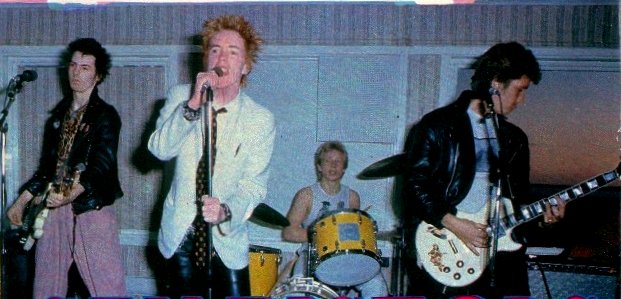
his usual characteristic subtlety. Still burning to manage a rock band, he
encourage four of the most sullen adolescents that he could find to form a group
which he dubbed the Sex
Pistols.













 The pioneers of the new sound were the record
producers and label owners such as Leslie Kong and dance-hall DJs like Clement
Seymour "Sir Coxsone" Dodd. The DJs soon became producers themselves
as they were desperate to have exclusive sides for their sound systems. The DJs
were in fierce competition with each other to the extent where one would
instinctively draw a gun on a rival. This gun-toting, ganja (cannabis) smoking
outlaw culture was reflected in the lyrics, as was the island's volatile
political scene about which the artists and producers philosophized with
passion.
The pioneers of the new sound were the record
producers and label owners such as Leslie Kong and dance-hall DJs like Clement
Seymour "Sir Coxsone" Dodd. The DJs soon became producers themselves
as they were desperate to have exclusive sides for their sound systems. The DJs
were in fierce competition with each other to the extent where one would
instinctively draw a gun on a rival. This gun-toting, ganja (cannabis) smoking
outlaw culture was reflected in the lyrics, as was the island's volatile
political scene about which the artists and producers philosophized with
passion.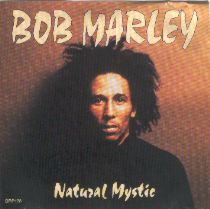 By the time the Wailers had become a backing band for