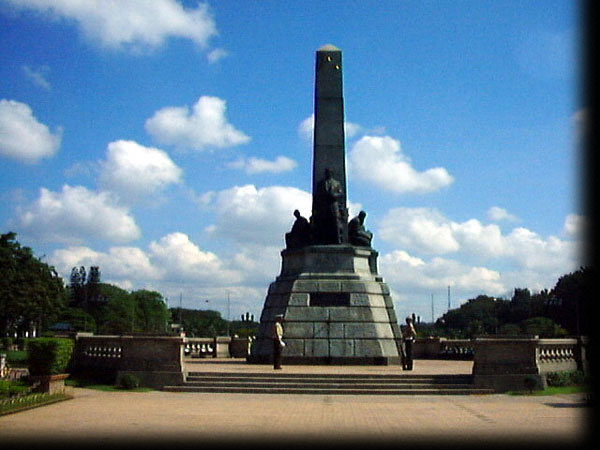
An archipelago of 7,107
islands, the Philippines stretches from the south of China to the northern tip
of Borneo. The country has over a hundred ethnic groups and a mixture of foreign
influences which have molded a unique Filipino culture.
Before
the Spanish explorers came, Indo-Malays and Chinese merchants had settled here.
In 1521 the Spaniards, led by Ferdinand Magellan, discovered the islands. The
Spanish conquistadores established a colonial government in Cebu in 1565. They
transferred the seat of government to Manila in 1571 and proceeded to colonize
the country. The Filipinos resisted and waged Asia's first nationalist
revolution in 1896. On June 12, 1896, Emilio Aguinaldo declared the Philippines
independent from Spain and proclaimed himself president. After ruling for 333
years, the Spaniards finally left in 1898 and were replaced by Americans who
stayed for 48 years. On July 4, 1946, the Americans recognized Philippine
independence.
The Philippines is the third largest
English speaking country in the world. It has world-class facilities and
services such as excellent accommodations, superb restaurants, modern shopping
centers and communication services, efficient Congress and exhibition
organizers, and reliable tour operators.
The country
is divided into three geographical areas: Luzon, Visayas, and Mindanao. It has
15 regions, 77 provinces, and 65 cities. Its capital is Manila.
The
Philippines is readily accessible from the travel capitals of the world.
Traveling time to Manila from Hong Kong is 1 hour and 50 minutes; from
Singapore, 3 hours and 10 minutes; Bangkok, 3 hours and 50 minutes; Tokyo, 4
hours and 15 minutes; Sydney, 10 hours and 20 minutes; London, 20 hours and 45
minutes; Paris, 21 hours and 15 minutes; San Francisco, 20 hours and 15 minutes;
Los Angeles, 15 hours and 20 minutes; and New York, 25 hours and 20 minutes.
CALABARZON
(CAVITE, LAGUNA, BATANGAS, RIZAL AND
QUEZON) Near Manila are places of interest
which are easily accessible for day or overnight excursions.
Angono,
in Rizal Province, is the hometown of National Artist Carlos "Botong"
Francisco, renowned for epic murals and oil paintings that celebrate country
life. Angono is the site of an Artists Village where visitors can witness
painting demonstrations by the town's artists.
Cavite
offers fine beach resorts such as Puerto Azul and Marbella Marina. Its popular
attraction is the Aguinaldo Shrine in Kawit where Philippine Independence was
proclaimed on June 12, 1898.
Tagaytay
City rises on a ridge overlooking Taal Volcano, a volcano within a lake.
Batangas
Province, a two-hour drive from Manila, offers excellent diving in Anilao,
culture and history in Taal town, and a full-activity resort in Calatagan.
Laguna
is known for adventure-filled rides down river rapids, pastoral scenes, and hot
spring resorts in Los Baños. The towns of Majayjay, Liliw and Nagcarlan all
have beautiful churches and scenery.
Quezon
is home to coconut plantations and relaxing resorts. Its most celebrated
festival is the colorful "Pahiyas" which is held in the towns of
Sariaya and Lucban.
Cebu
City Cebu, the country's oldest city, is
often called the "Queen of the South." As the birthplace of
Christianity in the Philippines, Cebu's rich historical past is reflected in its
age-old relics and stone-built churches.
The
city is the capital of Cebu Province which lies at the center of the Visayan
Region, 587 kilometers south of Manila. Its strategic location has made it the
focal point of growth and development in southern Philippines.
Aside
from its historical landmarks, Cebu is also famous for its unspoiled white sand
beaches and dive sites.
Points of Interest 1.Plaza Independencia / Fort San Pedro
2. Magellan's Cross
3. Basilica Minore del Sto. Niño
4. Guitar Shops
5. Fuente Osmeña
6. Provincial Capitol
7. Tartanillas
8. University of San Carlos
9. Casa Gorordo Museum
10. Carbon Market
11. President Sergio Osmeña Memorabilia
Tourist
Information Center 12. Department of Tourism
3/F, GMC Plaza Building
Legaspi Street
Davao
City Davao, the largest city in Mindanao,
is one of the country's most progressive commercial, industrial and agricultural
centers. It is famous for Mt. Apo, the country's highest peak (3,144 meters) and
is home to the endangered Philippine Eagle. Davao is alsi known for its tribal
culture, exotic fruits, the exquisite Waling-Waling and other rare orchid
varieties, lush vegetation and tropical forestry.
Points of
Interest 1. San Pedro Cathedral
2. Anda-Rizal Fruit Center
3. Chinatown
4. Muslim Fishing Village
5. Magsaysay Park
6. Madrazo Fruit Center
7. Osmeña Park
8. Bankerohan Public Market / Post Office
Tourist
Information Center 9. Department of Tourism
Door # 7, Magsaysay Park Complex
Sta. Ana District













 The
Philippines is readily accessible from the travel capitals of the world.
Traveling time to Manila from Hong Kong is 1 hour and 50 minutes; from
Singapore, 3 hours and 10 minutes; Bangkok, 3 hours and 50 minutes; Tokyo, 4
hours and 15 minutes; Sydney, 10 hours and 20 minutes; London, 20 hours and 45
minutes; Paris, 21 hours and 15 minutes; San Francisco, 20 hours and 15 minutes;
Los Angeles, 15 hours and 20 minutes; and New York, 25 hours and 20 minutes.
The
Philippines is readily accessible from the travel capitals of the world.
Traveling time to Manila from Hong Kong is 1 hour and 50 minutes; from
Singapore, 3 hours and 10 minutes; Bangkok, 3 hours and 50 minutes; Tokyo, 4
hours and 15 minutes; Sydney, 10 hours and 20 minutes; London, 20 hours and 45
minutes; Paris, 21 hours and 15 minutes; San Francisco, 20 hours and 15 minutes;
Los Angeles, 15 hours and 20 minutes; and New York, 25 hours and 20 minutes.