|
|
||||||
|
About Batik and Processing |
||||||
|
Modern Batik
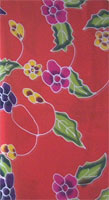
On the modern batik, the motifs are not depending on the certain patterns, in contrast to the classical batik, the modern batik designs could in the form of everything, moreover occasionally used the motif of classical batik and was combined by various shape with colorful dyeing. The modern batik also uses the material and process dyeing follows the material dyeing developments. On the other word, the production process of the modern batik approximately with the classical batik, i.e. handmade process, but its design, dyeing and technical processing depends on the maker and the use of dyeing materials. Furthermore technical of batik processing expanded in case of applying wax and colors, for example on the some areas, the use of the canting is not necessary; they can treat wax with brushes and some dyeing use gauzes directly. With the result that the use of technical processing batik develop in applications of other field of art, as on field of art batik painting and art batik wood. In the other word, the processing of modern batik basically almost same as classical batik processing but on design and dyeing up to art of senses the maker and depend on dyeing materials. The Modern Batik Processing Modern batik processing has same principle as processing of classical batik because modern batik is developing of classical batik variations but different on design or pattern and dyeing technical. Preparation ___ The first step, white cotton fabric (kain) was washed for treatment to render it fit for further processing; this mean in dyeing process batik color can not be influence from other material. Then kain be prepared dry. Design/Pattern ____ Make design direct at kain with pencil or anything write tools what in final processing that design outline can disappear, or design can use patterns that already prepared. After the design finished then applied malam (wax) use canting or brush at the design outline or in the areas which will be covered. In applied malam wax on design must be taken note of areas which will be fill various color depend on required design and color result. Dyeing In this process, the technical dyeing process differ depend on material dyeing and coloring technical will be used. Basically in the first step on dyeing process, the color will be applied first before others are the light colors, because in batik processing the dyeing will be done depend on amount of color will be achieved. Example of dyeing material are Naphtol, Indigo sol, Basis, Procion, etc. In this dyeing process sometimes still use applied wax to cover color which will be achieved in the final process.
After finished the dyeing process then remove wax by melting it in hot water. After all wax removed from fabric then wash it.
Example for technical batik processing and modern batik dyeing technical as mention below.
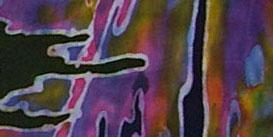
Example of technical processing of batik dyeing use technical of batik pikaso:
1. Applied wax on fabric and finished it based on batik process. 2. Spread out fabric horizontally. 3. Applied Natrium-silikat smoothly. 4. Paint with reactive color material (Remazol, Drimarene) use brush. 5. Let one night to wait reaction of color material and fabric. 6. Dilorod (remove wax) and wash. Example of batik with fabric of lurik Jogja used for Toraja style motif:
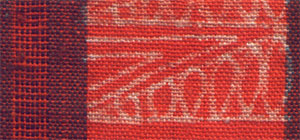
1. Applied malam on white contour use Toraja style motif. 2. On the lurik section (black section) cover it with malam. 3. Dye with orange color use solution per liter recipe: 3 gram ZAT PEWARNA Naphtol AS - OL 1 gram ZAT PEWARNA Naphtol AS 9 gram orange salt GC 1 gram salt GC 4. Dilorod (remove wax).
|