|
|---|
| Home | History | Government | Education | Geography |
|---|
 |
Since 1848 , the Swiss Confederation has been a federal state of relatively autonomous cantons , some of which have a history of confederacy that goes back more than 700 years, arguably putting them among the world's oldest surviving republics . For the time before 1291 , this article summarizes events taking place on the territory of modern Switzerland. From 1291 , it focuses mainly on the fates of the Old Swiss Confederacy , at first consisting of only three cantons in what is now central Switzerland, and gradually expanding until it encompassed the present-day area of Switzerland in 1815 .
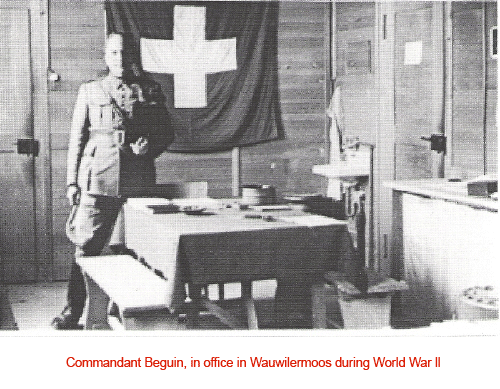
The major powers respected Switzerland's neutrality during World War I , though the Grimm-Hoffmann Affair did come close into calling it into question. During World War II , detailed invasion plans were drawn up by the Germans, but Switzerland was never attacked. Switzerland was able to remain independent through a combination of military deterrence, economic concessions to Germany, and good fortune as larger events during the war delayed an invasion. Attempts by Switzerland's small Nazi party to cause an Anschluss with Germany failed miserably, largely due to Switzerland's multicultural heritage, strong sense of national identity, and long tradition of direct democracy and civil liberties. The Swiss press vigorously criticized the Third Reich, often infuriating its leadership. Under General Henri Guisan , a massive mobilization of militia forces was ordered. The Swiss military strategy was changed from one of static defence at the borders to protect the economic heartland, to a strategy of organized long-term attrition and withdrawal to strong, well-stockpiled positions high in the Alps known as the Réduit . Switzerland was an important base for espionage by both sides in the conflict and often mediated communications between the Axis and Allied powers. |