|
The Orphanage
Building
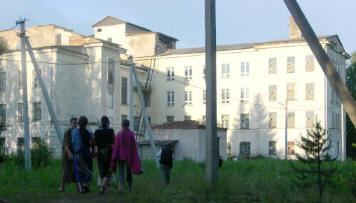 The
orphanage was once a barracks for officers in the Soviet Air Force. It had
large balconies
overlooking the front of the building, which was surrounded by
forest as far as the eye could see. Unfortunately, it has now become a
giant cement The
orphanage was once a barracks for officers in the Soviet Air Force. It had
large balconies
overlooking the front of the building, which was surrounded by
forest as far as the eye could see. Unfortunately, it has now become a
giant cement
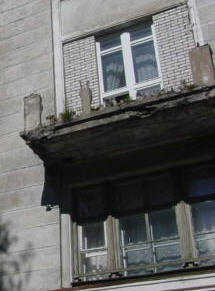 shell, crumbling from age.
Chunks of concrete from the balconies on the front of the
building are literally falling off, but the orphanage cannot afford to have them
removed. The children walk and play under them every day, including the
balcony over the front door. shell, crumbling from age.
Chunks of concrete from the balconies on the front of the
building are literally falling off, but the orphanage cannot afford to have them
removed. The children walk and play under them every day, including the
balcony over the front door.
Although the building has indoor plumbing,
there are only three sinks on each floor for thirty children. The two
working showers
are located underground in what likely was a command bunker at one time.
The water is orange from rust, and there are no water treatment facilities in
the area. The volunteers could not drink the water without boiling it due to the giardia
parasite. Waste is sent directly into the nearby river, which
is where the children swim. The toilets do not have seats, and the supply
of toilet paper (Soviet strength!) is very limited.
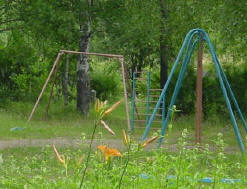 There
is a small playground in front of the orphanage; however, the equipment has not
been fixed in years. There are no swings on the swing set, and all of the
equipment is rusted. The basketball net is located in the middle of a
field, which is now overgrown by weeds and floods whenever it rains. There
is a small playground in front of the orphanage; however, the equipment has not
been fixed in years. There are no swings on the swing set, and all of the
equipment is rusted. The basketball net is located in the middle of a
field, which is now overgrown by weeds and floods whenever it rains.
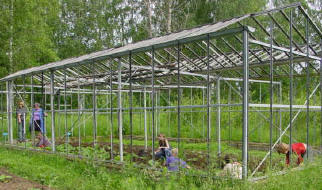
The orphanage has a sizeable garden where the
children grow potatoes. There was a greenhouse, but all of the glass has
been stolen. The growing season this far north is very short (about three
months), so the variety of items that can grow there is limited. Fruits
 and
vegetables are limited in the summer months but are almost non-existent throughout
the long, cold winter. With the assistance of American charities, the food
has improved in the last few years, but the children's diet still consists of kasha (porridge),
soup (with a small amount of meat, often fish), potatoes, and bread. The children receive meat
more often, and there is some money to purchase
vegetables, such as cucumbers and the occasional tomato, thanks to charitable
contributions. But all of the
children are still underweight, and they continue to suffer from a lack of vitamins and
nutrients. and
vegetables are limited in the summer months but are almost non-existent throughout
the long, cold winter. With the assistance of American charities, the food
has improved in the last few years, but the children's diet still consists of kasha (porridge),
soup (with a small amount of meat, often fish), potatoes, and bread. The children receive meat
more often, and there is some money to purchase
vegetables, such as cucumbers and the occasional tomato, thanks to charitable
contributions. But all of the
children are still underweight, and they continue to suffer from a lack of vitamins and
nutrients.
|

