Image of Imbonggu
..the Imbonggu of PNG Highlands..
Out of the twenty provinces in Papua New Guinea, Southern Highlands has the highest number of people [population] in the country. Southern Highlands is made up of eight major districts [electorates]. Imbounggu District is one of these electorates with an estimated population of 33 000 people. The District Office was formerly located in Mendi which had shared archives with the Ialibu/Pangia district. With the introduction of new reforms in 1995, the Imbounggu District office was relocated at Waglume. The new Imbounggu District Office was funded by the then Imbounggu MP, Mr. Peter Peipul and was completed in mid 1998. It now houses the whole bureaucracy and projects of Imbounggu.

Waglume is located along the Highlands Highway ( about 15km from Kaupena)  separating the roads leading to Ialibu town and Mendi provincial headquarter. The land area is generally deposited with vast early ice-age plateaus from the opposing Mt. Giluwe and Mt. Ialibu. Inspite of interests in tracking and site seeing, the most dominated tropical fruit-trees are the Pandanus plants (Screw Pine) which grows to an height of 15 meters or more with butress-like aerial roots and lower dry swamplands are covered with miscanthus.
Boarders of Imbounggu (from Waglume) include Kumin with Mendi district to the southwest, Kisenepoi, Kendagl and Puglupiri areas to the northwest along Mt. Ialibu sharing boarders with Ialibu/Pangia district.  Located to the northeast of Waglume include Piambil, Tona and Kumunge (Kaupena) areas along Kagul River, the provincial boarder with Western Highlands Province.

The historic archaeology, anthoropology and ecology of primitive Imbounggu is unwritten in depth researched versions by early Explorers into this area. Athough there are short documentaries, poems, stories and legends about Imbounggu, vast horizon of it is yet unexplored. To interested visitors in the near future and years to come we recommend you to read the book titled "
The Whiteman will eat you - Anthoropologist among the Imbonggu of New Guinea", by William E. Womsley [ISBN. 0155001965, 1993]. We recommend you that this fascinating book is the latest edition on Imbounggu which provides special insight into the lives of these people. You will learn about the Imbounggus social structure, political process, leadership, social economic exchage and obligations, colourful bridewealth, religion and magic - as well as what it is like to be among the locals.
From legends well over 100 years, most of the individuals of the Karilpoi "Waimbe buluiye"  tribe originated from parts of Western Highlands, especially the east and west ends of Kambia and Nabilyer districts. This comes to reality when the Imbounggu language is spoken with dialects associated with people from the outsketch of Mt. Hagen city, especially the Nabilyer Valley area.
Homepage
SHP
PNG
PNGwomen
PNGpolitics
Some facts on Imbonggu
History of Kariglpoi Tribesmen
Checkback..!!
l
Geography
Literacy
Education
Projects
Culture
People
Kendagl
Piambil
Waglume
Komoli
Kisenepoi
Kumin
2002 Copyright reserved @moksBishop
Main Villages
Kumunge
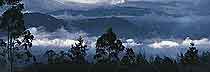
Early morning misty fog in the Highlands of Papua New Guinea
We will take you further into some of the basic insights about lifestyle, tradition, culture and many many more about the people of Imbounggu here as you surf through.. We will nevigate you first to yet another interesting part on how peaceful this particular raise of people are. Their  "bridepricing" or bridewealth is one  of the most valued norms in the Highlands of Papua New Guinea - gaining momentum reputation as one of the most expensive areas in Papua New Guinea to marry a young bride. While you will be bewildered into an interesting net-adventure, you may want to bookmark that Ialibu, Pangia and Imbounggu  areas (nevigation here)  in the Southern Highlands are ever peaceful though internal tribal conflicts can be read or seen.

Imbounggu district is made up of many distinguished tribes. One of these many colourful tribes is Kariglpoi "Waimbe buluiye".  Crossing over Mt. Hagen along Highlands Highway you will enter Imbounggu, through Kariglpoi, the gateway outsketched miles away from the capital (Mendi town) in the Southern Highlands Province. It is located to the southeast of Mt. Giluwe and northeast of Mt. Ialibu, roughly not more than 80 kilometers from Mount Hagen City. Karilgpoi, sometimes called "Waimbe buluiye" (men of snake origin)  is a tribes name that does not possess any meaning in nature. The word "
Karigl" originated from a native oak tree, whereas "Poi" generally means a jungle.

Bumped up by rugged plains and wide grassland valleys, the tribemen smoothly speak the easily understood Imbounggu language. Karilgpoi tribe is made of Mongai clan, Kawe Mokoi/Opeka clan, the Ipuglumai Nnbunumbu clan, Telgi/Kalgi clan, Kurelgai/Narelgai clan, and a migrated minority of Wiru-Mokoi/Apendai clans.  Since the dawn of the great work of the Christian Missionaries, the clans share common morales of leadership through outspoken village elders (still practiced today). They live in great harmony - a norm which stands outright today, though traditional warfares and tribal conflicts in the past are stories of today. They enjoy the great wealths of inter-marriage, exchange "
moka" ceremonies, compensation, pigkilling ceremonies, church activities, social ethics, etc. which are the hereditary of the past.

Land ownership and recognition, (a common norm in PNG), is very important and is automatically passed through paternal hereditary. Every clan knows the traditional land boundaries very well, and jumping into other persons areas lead to internal conflicts. This is observed very closely.

Untill the first Missionaries (the London Missionary Society) landed in Papua New Guinea, no religion was ever practiced then. Men and women lived with strong motivation by praying to their dead ancestors for protection from traditional warfare, wealth, marriage, and defeat from evil. These practices and beliefs were distorted and burried by the great work of the Missionaries, although many tribes still shine up their plumage during "singsings" (show). Since then many people in this area are now Christians. The most dominated religion is PNG Bible Church, formerly Evangilical Bible Mission (EBM) which provide most social services to the people of Kariglpoi. Others include the Catholic Church, Seventh Day Adventist, Lutheran Church, Pantecostal Church, and other indegenous minorities.
t
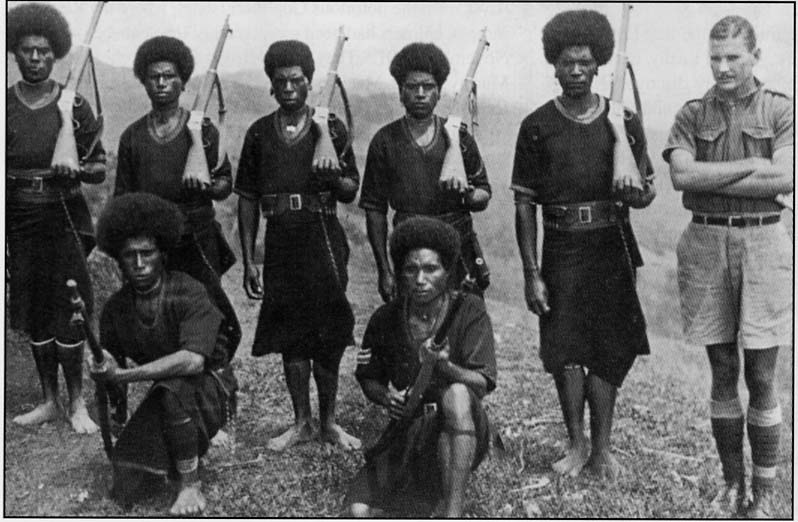
Jack Hides..one of the early explorers into SHP in 1935, with a native contingent.
Hosted by www.Geocities.ws

1