 |
 |

|

|

|

|

|

|

|

|

|

|

|
 |
|
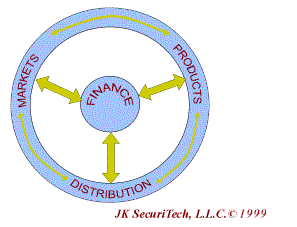
The Results Wheel identifies the four areas of a business where transformational change results can be targeted and measured. It also identifies the process linkages between the operations areas implied by the double arrows around the perimeter of the wheel, and the metric target linkages between the operations and finance areas implied by the double headed arrows in the center of the wheel. The Results Wheel graphically illustrates several business principles. * In order for a business to experience stable growth, the wheel must "roll" smoothly. This can only happen when the wheel is in "balance". Ensuring a balance in capability and capacity among each of the four results areas is a key requirement for achieving sustainable growth. A relative weakness in one or more of the areas will stop the wheel from rolling. * Each result area "touches" the other three results areas, either through process linkage at the operations perimeter, or through metric target linkage in the center. Any decision or action in one result area has an impact on the other three areas. A business dedicated to growth must understand the dependent relationship of the four results areas, and resist the tendency to believe that each of the four results areas can operate in independent "silos". A "silo" orientation breaks the process and metric linkages and prevents the wheel from rolling. * Even though a business must have results area balance, successful growth companies leverage expertise in one of the operations areas to achieve sustainable growth. Examples of this principle include:
IBM leverages its MARKET knowledge of manufacturing businesses to develop computer systems and software. Business customers of IBM actually design their business process structure around the IBM model incorporated in its hardware and software packages. IBM's growth is clearly tied to its manufacturing company MARKET KNOWLEDGE, requiring that IBM know manufacturing companies MIS needs and processes better than its customers.
Intel leverages its PRODUCT knowledge of micro-processor design and manufacture to drive its business. Intel actually designs and introduces the next generation of products, and obsoletes the current generation, before its competition has a chance to compete against the current product generation. Intel's growth is clearly tied to its PRODUCT CAPABILITY of providing higher functionality, at lower cost, faster than its competition.
Walmart and Microsoft leverage their DISTRIBUTION knowledge of who their customers are and how to reach them most effectively to drive their businesses. Neither company claims to provide the "best" products available, but they do ensure that they have cost competitive products immediately available wherever they have customers willing to buy. Walmart and Microsoft's growth are clearly tied to their DISTRIBUTION CAPABILITY of providing products to potential customers better than their competition.
Applying these Results Wheel principles to a client's business is the foundation for JK SecuriTech's business growth modeling.
Copyright©2001 JK SecuriTech, L.L.C. All rights reserved. |