 |
|
|
|
|
|
|
|
|
|
|
|
|
|
|
|
|
|
|
|
|
|
|
|
|
|
|
|
|
|
|
|
|
|
|
|
|
|
|
|
|
|
|
|
|
|
|
HARLEM RENAISSANCE WEBQUEST
(adapted from a webquest by Mary Reiman)
|
|
|
|
ATTENTION NORCO HIGH
STUDENTS
JOIN
THE BLACK STUDENT UNION
(BSU)
MEETINGS ARE HELD AT LUNCH
ALL STUDENTS ARE WELCOME
|
|
|
 |
|
|
|
|
|
|
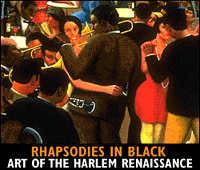
Due to the the racial tensions on campus, a new club, the BSU, has been formed. Students have expressed outrage at administration for allowing such a club on campus. Most of this anger has been born out of ignorance towards the BSU and their goals, to explore and share African American culture. In completing this webquest you will gain a better understanding of African American culture and the founding of organizations that gave birth to the Black Student Union. |
|
|
|
Background Information |
|
|
|
Between 1910 and 1920, in a movement known as the Great Migration, hundreds of thousands of African Americans moved north to our nation's cities in search of jobs. They left the South because of racial violence and economic discrimination. Author and poet, Zora Neale Hurston, documented the departure of some of these African Americans. |
|
|
|
Some said goodbye cheerfully...others fearfully, with terrors of known dangers in their mouths...others in their eagerness for distance said nothing. The daybreak found them gone. The wind said North. |
|
|
|
During the 1920s, African Americans set new goals for themselves, this migration was an expression of their changing attitude toward themselves-an attitude perhaps best captured in a phrase first used around this time, "Black is beautiful." |
|
|
|
 |
|
|
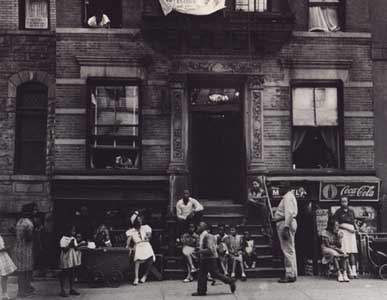
Many African Americans who migrated north moved to Harlem,
a neighborhood on the upper west
side of New York's Manhattan
Island. In the 1920s, Harlem became the world's largest black urban community. Its population soared from about 152,000 to nearly 330,000 as newcomers from the South, West Indies, Cuba, Puerto Rico, and Haiti crowded into the city. The result was a highly diverse mix of cultures. James Wheldon Johnson, described Harlem as the capital of black America. |
|
|
|
|
|
|
Harlem is not merely a Negro colonly or community, it is a city within a city, the greatest Negro city in the world. It is not a slum or a fringe...it has its own churches, social and civic centers, shops, theaters, and other places of amusement. And it contains more Negroes to the square mile than any other spot on earth. |
|
|
|
Like many other urban neighborhoods, Harlem suffered from overcrowding, unemployment, and poverty. But its problems in the 1920s were eclipsed by a flowering of African-American creativity called the Harlem Renaissance, a literary and artistic movement celebrating African-American culture. This movement was led by well-educated, middle-class African Americans caught up in the rebellious spirit of the 1920s. These young writers expressed a new pride in the African-American experience by exploring and celebrating their African heritage and folklore, and writing defiantly about the trials of being black in a white world.
(Taken from The Americans, McDougal Littell ) |
|
|
|
 |
|
EVALUATION |
|
|
|
|
|
TASK |
|
|
|
PROCESS/RESOURCES |
|
|
|
|
|
|
CONCLUSION |
|
|
|
|
|
|
|
|
|
|
|
|
|
|
|
|
|
|
|
|