| home | research | biography | journalism |
 |
|||
| making history | collective memory | remembering today | glossary of links |
|
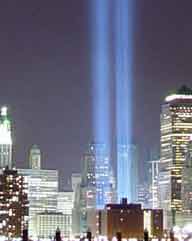
9/11 and a collecive memory The events of September 11th 2001 were critical to the process of commemoration due to the unprecendented scale of destruction seen on american soil. The attack was unique and demanded new methods of commemoration. The national trauma of such a cataclysmic event resulted in the creation of a large amount of commemorative websites - perhaps the largest web-based commemorative movement seen so far in the world. One such site, "The Witness and Response" exhibition, which has since been appropriated by the American Library of Congress for memorialisation purposes, sought to memorialise the tragedy by publishing the accounts of survivors, thus underscoring the intense personal nature of the attack that claimed the lives of over three thousand people. The original artwork showed the multicultural face of America symbolised by a Seihk face surrounded by american flags flanked by a whole cross section of the American public. The image seemed to infer that American people no matter what race or gender went through this tragedy together, promoting a collective history that will be memorialised by future generations. memory and science With the emergence of computer science, the power of memory can reach every home in America, thanks largely to the advent of the world-wide-web. Memory has entered the realm of technology, removing the responsibility of remebering from humans and as a result distancing it from human ability. The internet has made this form of commemoration global but has the paradoxical effect of claiming everyone's and yet noone's memory. It may be a website's accessibility, ironically, that runs the risk of anaesthatising people to the tragedies that they attempt to commemorate. |
 |
||
 |
|||