| home | research | biography | journalism |
 |
|||
| making history | collective memory | remembering today | glossary of links |
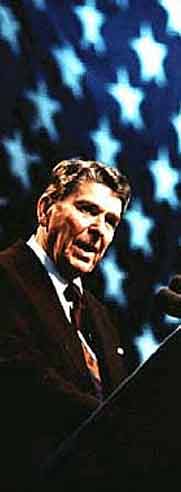
collective memory and memorialising history Czelsaw Milosz, the internationally respected poet and humanitarian, upon accepting the Nobel Prize for literature in 1980, identified a "refusal to remember" as the chief vice of our time. For Milosz, the horrors of history - of Nazi barbarism, Stalinist totalitarianism and the inhumanity of slavery loomed so monstrously over the present that for many people it had become simply easier to 'forget' than to live with the burdens and responsibilities of remembering. The metaphysical terrain of collective memory is ever-evolving, choosing to dote on special memories while simply blot others out. One of Edward Said's essays, US - A Disputed History of Identity, highlights these notions of proteal history with reference to America's 'taming of the west'. Said recalls watching westerns in his youth in which Native Americans were depicted as "Red Devils", however he observes now how Native Americans are depicted in recent times as victims of the expansion of US forces into the West. collective remembrance - 'mnemonic fever' America has been described as possessing a "mnemonic fever" in terms of its dedication to the memorialisation of significant cultural events and its cities are decorated with memorials that number in the thousands. Washington, the nation's capital, contains more monuments than any other city in the world and has spent more money, lavishing millions of dollars to ensure that its citizens never forget those who are commemorated in stone, marble or paper. The Vietnam Memorial Wall in Washington, for example, is perhaps one of the most recognised memorials in the world due to its sheer size and the scale of the loss of life it commemorates. Across the country there are over twenty-one official Jewish Holocaust memorial sites, most notable are those in New York (two), Los Angeles( four) and Washington. America was home for thousands of Jewish settlers long before the brutality of The Holocaust. Over the last three hundred years Jewish immigrants are documented to have emigrated from Europe in three major waves, the first of these mass emigrations occurring before the early nineteenth century from Germany. The second wave transmigrated in the early twentieth century to escape persecution in Russia and the third, and most noted, occurred during Nazi persecution before and during the second World War. A detailed account of these movements can be found by clicking here. After the end of World War 2 and the terrible truth of Nazi Germany emmerged, America set about memorialising the 6 million Jewish lives that were systematically murdered in Nazi death camps and death squads. The results are the numerous museums and memorial sites located across the country today. By commemorating an event in such a profound and dedicated way America has adopted the fundamentally European horror of the Holocaust into part of its own collective memory. collective forgetting - 'national amnesia' Paradoxically however, this 'mnemonic fever' is starkly absent when it comes to commemorating the atttrocities committed during slavery, a period which lasted some one hundred and fifty years, claiming around 50 million lives until it was officially abolished by Abraham Lincoln in 1866. African Americans such as the nobel prize winning author Toni Morrison have attacked this phenomenon of national amnesia by referring to the fact that there exists no adequate sight of memorialisation to atone for or convey the extreme loss of life. She says in her essay A Bench By The Road "there is no place you or I can go ... there is no suitable memorial or wall or park or skyscraper lobby. There is no 300 foot tower [that commemorates slavery]." Indeed there is only one museum in America dedicated to the preservation of the memory of The African American Holocaust. collective memory and american politics For decades politicians have used the shared memories of its target audience as a tool with which to manipulate and convince. The US, as mentioned in the previous section, constructing history, has had to use a relatively small historical timescale within which to draw parallels with its electoral register. This has resulted in the obstruction of, and in extreme cases, the denial of 'incompatible' narratives that do not concurr with the world view of those running for political office. For example, at the 1980 and 1984 Republican National Conventions, Ronald Reagan envoked images of America's past that were criticised for their denial of much of the electoral register's history. Reagan spoke of how "we" landed at Plymouth Rock in 1620 and how "we" tamed the frontiers and expanded westward into California. He also spoke of how "we" won two World Wars and conquered space. During his second inaugural address Reagan used a series of cultural vignettes in which "a general falls to his knees in the hard snow of the valley forge" and "a settler sings a song and it echoes forever into the vast unknowing air." Reagan, by asking his audience to begin their story in 1620 and identify with westward expansion, the conflict of two World Wars and space exploration, envoked the popular history of the United States and presumed that the audience would take it on as their own cultural heritage. By saying these things, Reagan denied and discredited the histories and personal narratives of those Americans who emigrated from Latin America and Asia. He ommited the histories of those Americans who were brought to America in chains from Africa as well as the Chicanos and Native Americans whose land was stolen away from them by "westward expansion". By envoking this version of the history of the USA, Reagan employed a particular political strategy; that of appropriating the history of the state as the history of its people. By targeting this kind of collective memory Reagan hoped that his political stance might better reflect the views of America. As it turned out Reagan succeeded and he remained in power for two terms, however his administration has subsequently been accused of maintaining racist agendas.
|
 |
||
 |
|||
 |
|||