

Ecosystem Processes
Primary Production
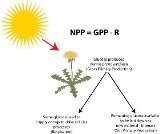 Primary production is the production of organic matter from inorganic carbon sources. Overwhelmingly, this occurs through photosynthesis. The energy incorporated through this process supports life on earth, while the carbon makes up much of the organic matter in living and dead biomass, soil carbon and fossil fuels. It also drives the carbon cycle, which influences global climate via the greenhouse effect.
Energy Flow
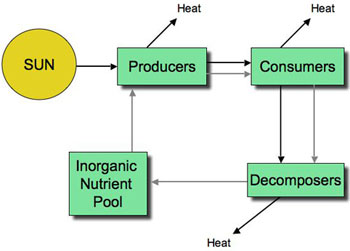 The carbon and energy incorporated into plant tissues (net primary production) is either consumed by animals while the plant is alive, or it remains uneaten when the plant tissue dies and becomes detritus.
Decomposition
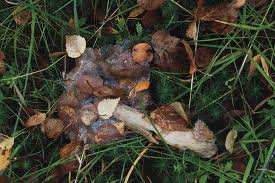 The carbon and nutrients in dead organic matter are broken down by a group of processes known as decomposition. This releases nutrients that can then be re-used for plant and microbial production, and returns carbon dioxide to the atmosphere (or water) where it can be used for photosynthesis. In the absence of decomposition, dead organic matter would accumulate in an ecosystem and nutrients and atmospheric carbon dioxide would be depleted.
Nutrient Cycling
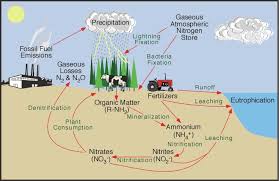 Ecosystems continually exchange energy and carbon with the wider environment; mineral nutrients, on the other hand, are mostly cycled back and forth between plants, animals, microbes and the soil. Most nitrogen enters ecosystems through biological nitrogen fixation, is deposited through precipitation, dust, gases or is applied as fertilizer.


