
History and Development
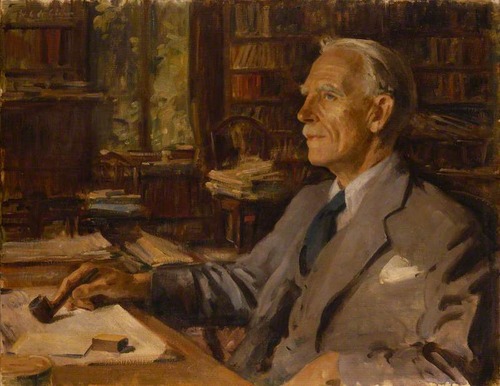 Arthur Tansley, a British ecologist, was the first person to use the term "ecosystem" in a published work. Tansley devised the concept to draw attention to the importance of transfers of materials between organisms and their environment. He later refined the term, describing it as "The whole system, ... including not only the organism-complex, but also the whole complex of physical factors forming what we call the environment". Tansley regarded ecosystems not simply as natural units, but as mental isolates. Tansley later defined the spatial extent of ecosystems using the term ecotope.
William S. Cooper considered Tansley's most influential publications synthesised individual studies into a whole. In 1935 Tansley published "The use and abuse of vegetational terms and concepts" in which he introduced the ecosystem concept. In the 1930s ecological thinking was dominated by the work of Clements, who thought of ecological communities as organisms, and associations as superorganisms. Tansley devised the concept to draw attention to the importance of transfers of materials between organisms and their environment, regarding ecosystems as the basic units of nature.
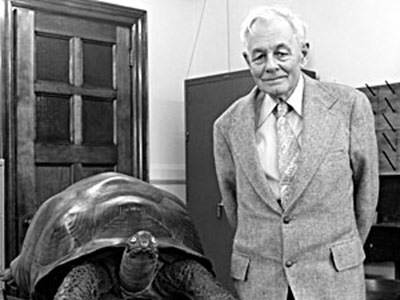 G. Evelyn Hutchinson, a pioneering limnologist who was a contemporary of Tansley's, combined Charles Elton's ideas about trophic ecology with those of Russian geochemist Vladimir Vernadsky to suggest that mineral nutrient availability in a lake limited algal production which would, in turn, limit the abundance of animals that feed on algae. Raymond Lindeman took these ideas one step further to suggest that the flow of energy through a lake was the primary driver of the ecosystem. Hutchinson's students, brothers Howard T. Odum and Eugene P. Odum, further developed a "systems approach" to the study of ecosystems, allowing them to study the flow of energy and material through ecological systems.
There had been studies of the biology of lakes for centuries, but Hutchinson wrote the first major treatise in which the biology, chemistry and geology of lakes were considered extensively in the same work. He thereby essentially established modern limnology, the science of lakes, as an important field. He was the first to use radioactive phosphorus in a lake to demonstrate the rapid utilization of this vital element in natural waters and thus founded another important field, radioecology. Along with his students, particularly Edward Deevey, he pioneered the study of paleolimnology and paleoecology - providing an account of the history of lakes from an examination of the chemistry, and microfossils such as diatoms and pollen from cores taken on lake bottoms. Paleoecology is currently very important in the study of climate change.


