What is Ecosystem?
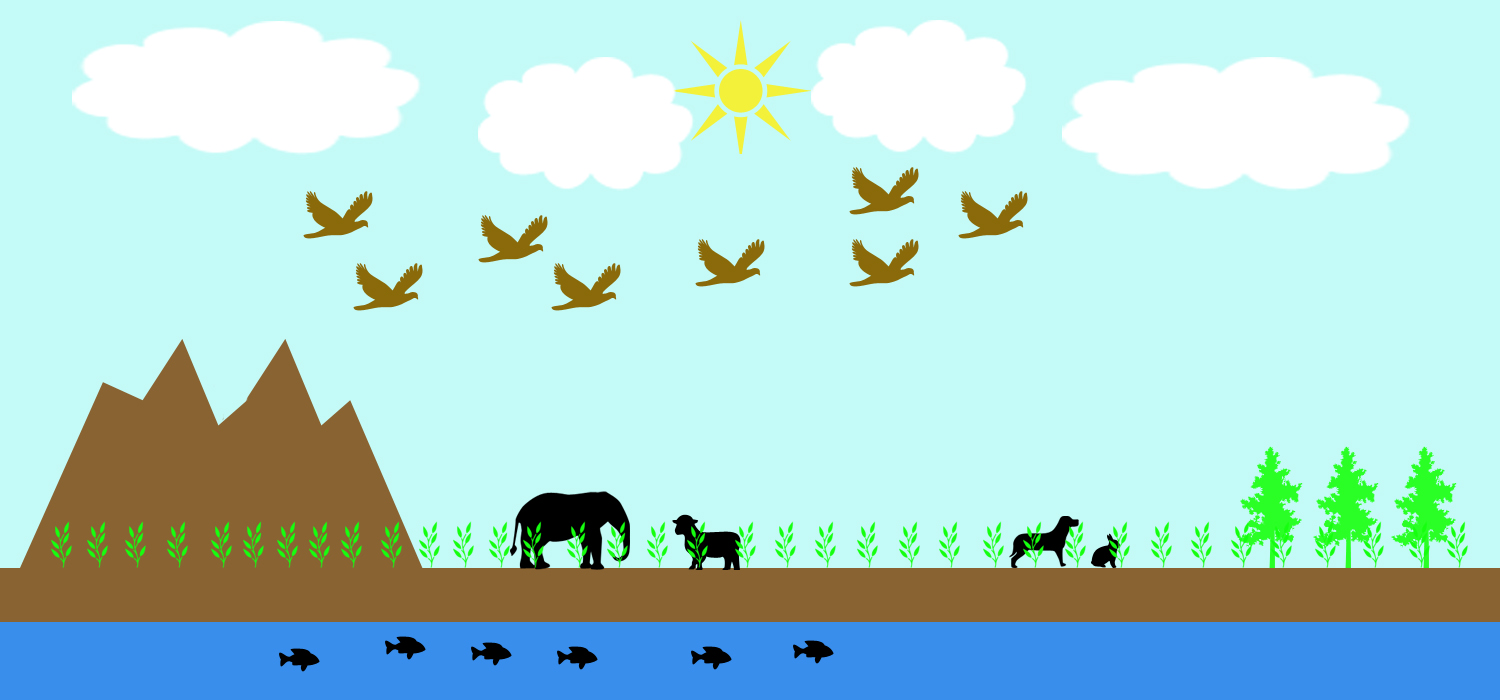
An ecosystem is a community of living organisms (plants, animals and microbes) in conjunction with the nonliving components of their environment (things like air, water and mineral soil), interacting as a system. These biotic and abiotic components are regarded as linked together through nutrient cycles and energy flows. As ecosystems are defined by the network of interactions among organisms, and between organisms and their environment, they can be of any size but usually encompass specific, limited spaces (although some scientists say that the entire planet is an ecosystem).
Energy, water, nitrogen and soil minerals are other essential abiotic components of an ecosystem. The energy that flows through ecosystems is obtained primarily from the sun. It generally enters the system through photosynthesis, a process that also captures carbon from the atmosphere. By feeding on plants and on one another, animals play an important role in the movement of matter and energy through the system. They also influence the quantity of plant and microbial biomass present. By breaking down dead organic matter, decomposers release carbon back to the atmosphere and facilitate nutrient cycling by converting nutrients stored in dead biomass back to a form that can be readily used by plants and other microbes.