 |
Tiger
(Panthera tigris)
Tiger, the charismatic predator of the jungle, delineates its own
territory and lives within that. The territory is marked by urinating
on the trees and rocks along the boundary. Trespass by another male
usually ends up in conflict which turns into a bloody battle sometimes.
The tigresses in a family may have overlapping territories within
the male's territory.
Even though tiger is a powerful predator with plenty of tactics,
it is observed that only one in twenty attempts of hunting is really
successful.
|
 |
King
Cobra (Ophiophagus hannah)
King Cobra is the only snake species which builds its own nest for
laying its eggs and incubating them.
Also it is the only snake that feeds exclusively on other snakes
preferring mostly rat snakes.
In one bite it is capable of pumping in enough highly potent poison
that could kill an adult horse. There is no anti-venom available
presently. However, it is quite a shy and gentle animal which dwells
deep inside the forests where plenty of bamboo and water are available.
|
|
Leopard
or Panther and Cheetah
Leopard and Panther are one and the same and its zoological name
is Panthera pardus.
Black Panther is not a separate species. Blackness, the general
darkening of colour is due to the excessive presence of a substance
called Melanin which intensifies pigmentation. The production of
melanin is increased where there is a combination of high temperature,
humidity and reduced light. Both black and normal-coloured cubs
may be produced in the same litter. They are prevalent in the rain-swept
Equatorial forests south of Malaya.
Cheetah (Acinonyx jubatus) also known as hunting leopard is different
from the ordinary leopard and distinct. The distinguishing features
are small round head, slim waist line, prominent tear marks and
solid close-set individual black spots. They are more common in
Africa. It is supposed to be extinct in India.
|
|
Indian
Wild Dog or Dhole
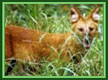
The Wild Dogs (Cuon alpinus) are social animals moving about in
'Packs'. The pack may be one family or aggregation of several families.
In packs they are capable of hunting larger prey and the way of
killing is gruesome. They are capable of eating meat several times
their body weight.
Wild dogs generally communicate with each other with a peculiar
'whistling' cry and they don't bark like the common dogs.
|
|
Primates
(Apes, Monkeys and Lemurs)
'Fur-picking', the universal habit among the apes and monkeys is
not a hunt for lice or fleas. They are naturally remarkably free
from these vermin.
On the contrary it is a means of social communication between members
of the troop (a group of monkeys) and to develop strong social bond.
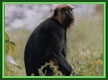
Hoolock Gibbon (Hylobates hoolock) is the only ape found in India.
Rest of the monkeys are all macaques and langurs
|
 |
Elephant
(Elephas maximus)
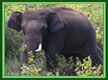
Elephant,
the largest mammal living on land, is facing a threat to its life
from poachers due to the fact that it possesses valuable ivory.
The
ivory of elephant is not a distinct organ but an extension and modification
of its teeth, the upper incisors.
|
|
Mahseer
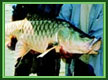
Mahseer
(Tor kudree) is a game fish species that is endangered and endemic
to a few rivers of Kerala including the Chalakkudy river system.
It
has a peculiar breeding behaviour that in adult stage it swims upstream
and lays eggs and attaches them to the rocks in the sandy bottom
at the head of the stream. The young ones (called fries) after hatching
swim downstream along the river course and colonise deep pools.
|
 |
Bison
and Gaur
The
Gaur in our forests are generally wrongly referred to as Bison which
is a misnomer. What we see in Indian forests is Gaur (Bos gaurus)
and not Bison. Gaur is also known as Indian Bison.
Gaur
is a wild relative of our domestic cows and not buffaloes.
|
|
Horns
and Antlers
Horns are different from antlers.
Horns are external in origin. It is hollow sheath covering the bony
core arising from the skull. They persist throughout life. They
may wear and flake off as new horn grows below. Horns are characteristic
of Bovidae, the cows and buffaloes family. Both the sexes sport
horns, the only difference being that horns of male are massive
and that of the females are smaller and less massive.
Antlers are solid horns that are skeletal in origin. They are shed
when old and new antlers grow. Antlers are possessed by Cervids,
members of the deer family. Only the males possess antlers.
|
|
Tarantula
Tarantulas are large bodied spiders more commonly known as 'Tiger
Spider' or 'Puli Chilandi' belonging to Theraphosidae family.
They are mildly poisonous but some species are really colourful
and attractive. Their body is covered by fine hairs that might cause
irritation to human beings.
Tarantulas are not web spinners but live in burrows in soil and
in the trees. However they spin some silk to cover the entrance
of their burrows.
Unfortunately, they are removed from the natural habitat and illegally
sold in the international market for about US $ 200 - US $ 300 for
rearing them as pets. Lets join hands in preventing the illegal
trade of these unsuspecting creatures and stop the bio-piracy of
invaluable genetic resources from our country.
|
|
Cobra
vs Rat Snake - The Love Affair ?!
It is a common belief that a Cobra seeks out a Rat Snake during
mating season and they mate with each other.
Well, it is not true. Cobra and Rat Snake belong to different genera
zoologically and they are not made for each other by nature.
It is always a Cobra with another Cobra and a Rat Snake with another
Rat Snake which is the rule of nature.
|