
Climate and Vegetation
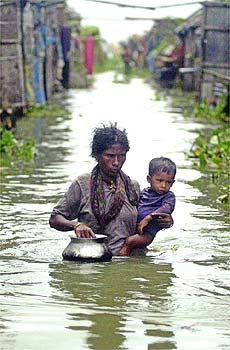
South Asia's climate and vegetation regions are a study in contrasts. Much of the subcontinent lies south of the Trop of Cancer and has tropical climates with diverse vegetation. In the north and the west, however, the climate varies widely, from the highlands of the Himalaya to the deserts around the Indus River, where little vegetation grows.Tropical rain forest climates, with a variety of vegetation, are located along the western coast of India, near the Ganges Delta in Bangladesh, and in southern Sri Lanka. In the path of seasonal rains from the southwest, South Asia's rain forests absorb great quantities of moisture. The rain forests in western Sri Lanka, in southwest India, and in areas north of the Bay of Bengal have ebony trees, lush vines, and orchids. Tropical coniferious and deciduous trees surrounded the rain forests near the Western Ghats. The coldest climate region of South Asia lies along its northern edge. In the Himalayan highlands and karakoram peaks, snow never disappears. At the highest elevetions, little vegetation can survive. Farther down these slopes, however, the climate turns milder and more temperate. In the upper area of this more temperate zone, coniferious and hardwood trees flourish. Grasslands and stands of bamboo cover the lower Himalayan foothills. The Great Indian Desert lies to the east of the Indus. The vegetation there is desert scrub, low, thorny trees, and grasses. In the northwestern India annual rainfall averages less than 20 inches. Much of South Asia experiences three distinct seasons hot, wet, and cool. These periods depend on seasonal winds acalled monsoons. During the cool season, dry monsoon winds blow from then orth and northeast. In the hot season, warm temperatures heat the air, which rises and triggers a change in wind direction. Moist ocean air moves in from the south and southwest, bringing monsoon rains. |
 |
