|
| HOME | TYPE OF MAMMALS | TYPE OF AMPHIBIAN_FROG | TYPE OF REPTILES |
| FROG | |
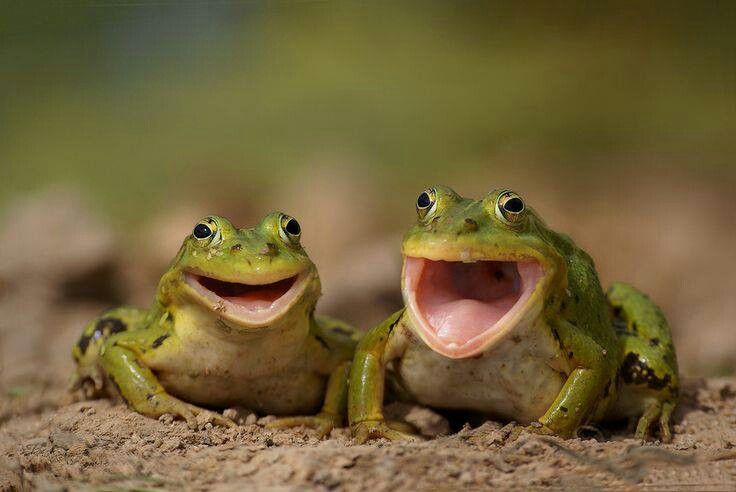 | |
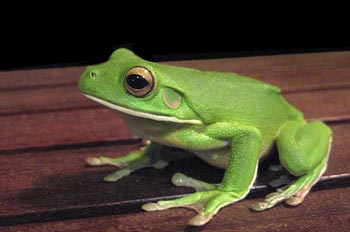
• Frogs are tailless amphibians. Amphibians are cold-blooded vertebrate animals. They differ from reptiles in that they lack scales and most return to water to breed. The frog belongs to the family Ranidae which contains more than 400 species. • Frogs can be found on every continent except Antarctica. Members of the frog family include the bullfrog, common frog, green frog, leopard frog, marsh frog, pickerel frog, and wood frog. Toads can be found everywhere except Australia, polar regions, Madagascar and Polynesia. • All toads are actually frogs. There are more than 300 species of toads. These types of frogs (toads) have stubby bodies with short hind legs for walking instead of hopping. They have warty and dry skin, usually preferring dryer climates. They also have poison glands behind their eyes. • Some records show that in captivity, many species of frogs and toads can live for between 4 to 15 years. The longest lifespan recorded was a European Common Toad. One lived to be 40 years old. | • Frogs have two bulging eyes. They also have strong, long, webbed hind feet that are adapted for leaping and swimming. Frogs can hear using big round ears on the sides of their head called a tympanum. Male frogs make sounds by squeezing their lungs with their nostrils and mouth shut. Air flows over their vocal chords and into their vocal sacs blowing it up like a bubble gum balloon. • Some frogs have tongues that are long and sticky that can be used to catch bugs. Most frogs have a ridge of very small cone teeth around the upper edge of the jaw. They don’t have anything that could be called teeth on their lower jaw, so they usually swallow their food whole. The so-called “teeth” are mainly used to hold the prey and keep it in place till they can get a good grip on it and squash their eyeballs down to swallow their meal. Toads, however, do not have any teeth. • Frogs have very special skin. It not only covers their bodies but they drink and breathe through it. • Frogs get oxygen through their skin when it’s moist, so they need to take care of their skin or they might suffocate. Sometimes you’ll find frogs that are slimy. This is because the frog’s skin secretes a mucus that helps keep it moist. Even with the slimy skin, these frogs need to stay near water. Toads on the other hand have tougher skin that doesn’t dry out as fast, so they can live farther from water than most frogs. |
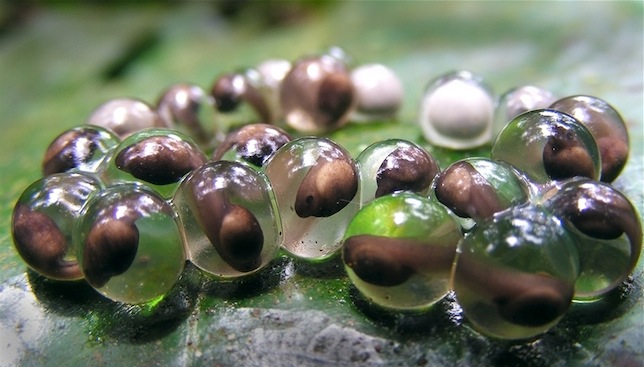  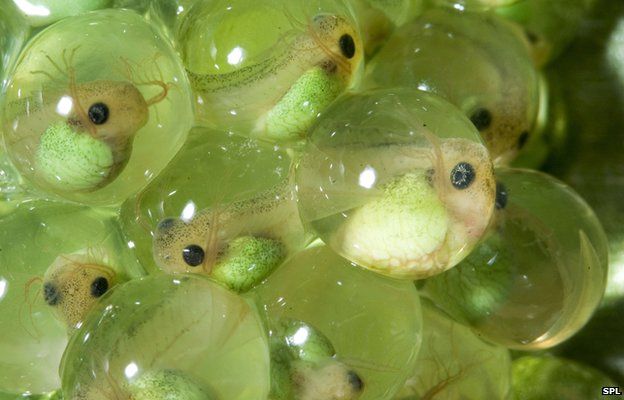 | |
Frogs typically lay their eggs in water. The eggs hatch into aquatic larvae called tadpoles that have tails and internal gills. They have highly specialized rasping mouth parts suitable for herbivorous, omnivorous or planktivorous diets. The life cycle is completed when they metamorphose into adults. A few species deposit eggs on land or bypass the tadpole stage. Adult frogs generally have a carnivorous diet consisting of small invertebrates, but omnivorous species exist and a few feed on fruit. Frogs are extremely efficient at converting what they eat into body mass. They are an important food source for predators and part of the food web dynamics of many of the world's ecosystems. The skin is semi-permeable, making them susceptible to dehydration, so they either live in moist places or have special adaptations to deal with dry habitats. Frogs produce a wide range of vocalizations, particularly in their breeding season, and exhibit many different kinds of complex behaviours to attract mates, to fend off predators and to generally survive. | |