
The SEGA Saturn when released in the summer of 1995 and had the capability to become the machine of choice for the gamer. However during the later stages of development SEGA discovered that Sony were putting a far superior processor into the PlayStation and made a decision that would later become part of the downfall.
Instead of upgrading the main processor in the Saturn, SEGA chose to squeeze in another processing chip, making the machine far more capable theoretically than the PlayStation, and even close enough to rival the Nintendo 64 when it was released. This second chip though was difficult for 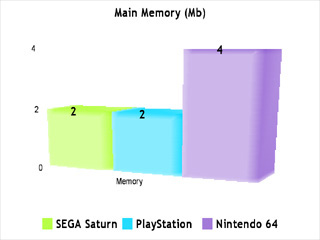 programmers to adjust to, after previously being used to single processor designs of the Super Nintendo and Megadrive, and also like that found in the PlayStation.
Some programming teams, notably those with strong SEGA connections (AM2 and Sonic Team) eventually got to grips with the twin processors and produced some technically and graphically amazing games, but not all development teams had the same resources as the big name teams and began to concentrate their efforts on the PlayStation, as it was easier to program for, therefore quicker to release and investors could reap the rewards sooner. This coupled with some very slick marketing from Sony saw the spotlight move to the PlayStation and SEGA never managed to recapture the magic that the name once had.
Limitations of the graphics chip within prevented the use of transparency effects on the Saturn until very late on, when programmers got round it with some clever tricks but by then it was too late, SEGA Saturn games looked tired when compared to the equivalent PlayStation games, only because all the good effort being put in by SEGA related teams were Saturn exclusives, so all gamers had to compare were quick cash ins by the lazier programming houses. You know who you are... EA!
The SEGA Saturn remains a very capable machine and has a much higher quality game to rubbish game ratio than the Sony PlayStation. The SEGA Saturn was considered the best machine for 2D games by many, but in a 3D world it just wasn't enough!
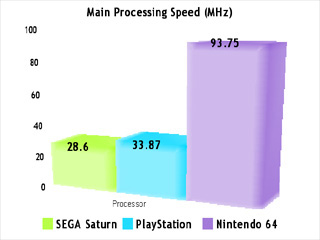
2x Hitachi SH2 28.6MHz 32-bit 28 MIPS (each)
Hitachi SH1 20 MHz 32-bit 20 MIPS
VDP1 (Sprite/Geometry)
VDP2 (Background)
200K Polygons/Sec
5 Parallax Backgrounds
2 Rotating Playfields
24-bit Color
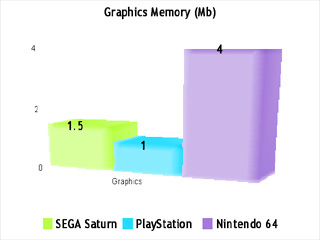
1.5MB Video RAM
Motorola 68EC000
Yamaha FH1 DSP
32 PCM Channels
8 FM Channels
512KB Audio RAM
2MB Main RAM
2x CD-ROM
512KB CD RAM