|
Shifts should be no longer
than 45 seconds.
(tip: when you sub
off, you should be able to carry on a conversation without gasping for
air).
Note:
If a line has been out on the ice for at least 20 seconds and there is
a whistle,
then
a full line change will take place.
 |
-
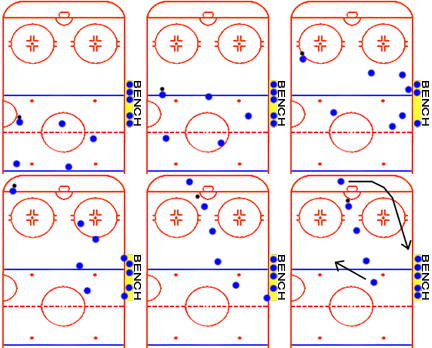
The animation at the left
shows our team approaching the offensive zone during the SECOND
PERIOD.
-
This is the most difficult
time to shift on the fly, because of where our bench is located.
-
The important thing here,
is to sub off while the puck is taken deep into the offensive zone.
-
If we don't do this, then
the other team will have an advantage when they bring the puck out of their
end.
-
Our LW takes the puck
along the boards and carries it deep into the zone (that is below the end
line).
-
Once the other 4 players
recognize that the LW has control and is able to take the puck deep into
the zone, they must begin subbing off. This is difficult because
sometimes the urge to help score will interfere with the need to get off
the ice, even when you are tired.
-
The puck carrier will
control the puck as long as possible.
-
When the LW sees a teammate
to pass to, she does so.
-
Immediately after passing
the puck, the LW will now skate directly to the bench to complete the substitutions.
-
Now the rest of the team
will settle into their proper positions and continue playing.
|
-
The above description
applies during the first and third periods as well.
-
NEVER sub off when the
other team has the puck, wherever that may be.
-
If you feel you can stay
on the ice a little longer, consider the following:
-
it only takes a few seconds
from feeling fine to feeling exhausted at the end of a shift.
-
when you're exhausted
and huffing and puffing on the bench, you won't be recovered in time for
your next shift.
-
this will cause you to
be ineffective for that shift,
-
and will create a situation
that continually depletes your energy until you get ample recovery time,
which may never happen during game.
-
Even if you haven't exerted
yourself at all on a particular shift, then you still need to sub off so
that everyone gets equal playing time.
-
Remember, not every shift
is going to be memorable or exciting.
-
Remember - if you are
tired, your team mates are probably tired too.
-
When to sub off:
-
the puck is in the offensive
zone and we have control of the puck.
-
the puck has been shot
deep into the offensive zone (particularly important in the 2nd period).
-
there is a whistle (don't
be afraid to get a whistle somehow).
-
ice the puck.
-
do an intentional offside.
-
shoot the puck over the
glass or boards (accidentally of course).
-
goalie holds on to the
puck.
-
Once you have decided
to sub off, at the proper moment, you need to ignore the play on the ice
and skate as fast as you can to the bench. Making eye contact and
raising your hand as you skate to the bench will grab the attention of
your substitute and make for a more efficient substitution.
-
The substitute must get
out on the ice before the current player has skated to the bench.
-
Conversely, the player
on the ice must ensure that the substitute gets out on the ice before entering
in to the bench.
|
