|
|

|
HELPING TO PROTECT THE FUTURE
|
|
| Welcome to Help A Whale |
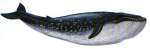
What is a Whale? whale, aquatic mammal
of the order Cetacea, found in all oceans of the world. Members of
this order vary greatly in size and include the largest animals that
have ever lived. Cetaceans never leave the water, even to give birth.
Although their ancestry has been much debated, DNA studies and skeletal
evidence from extinct early whales indicate that whales evolved from the
ancestors of artiodactyls, a group that includes hippopotamuses, cows,
pigs, and deer.
Characteristics and Behavior:
Like other mammals, whales breathe air, are warm-blooded, and produce
milk to feed their young. Their adaptations for aquatic life include
a streamlined form, nearly hairless skin, and an insulating layer of
blubber, which can be as thick as 28 in. (70 cm) in some Arctic species.
The forelimbs of whales are modified into flippers, and the hind legs
are reduced to internal vestiges. Many species possess a dorsal fin.
The tail is flattened into horizontal flukes and is used for propulsion.
The head is very large, with a wide mouth and no external neck. Whales
have one or two nostril openings, called blowholes, located far back on
the top of the head; the nostril valves close and the lungs compress
when the whale dives. Most whales must surface every 3 to 20 min to breathe,
but some, like the sperm whale, can remain submerged for more than an
hour.
|
|
This site is dedicated to saving the world's
whales.
|
|