
Important Figures in the Development of African American Vernacular English
William Labov (1927 - )
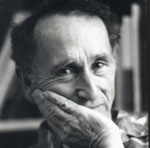 |
William Labov, a professor of Linguistics at the University of Pennsylvania, furthered African American rhetoric in that he supports it as a legitimate form of language. Labov was born on December 4, 1927 in Rutherford, New Jersey. He began his research in African American vernacular English, which he abbreviates AAVE, in the 1970s at Columbia University after he realized the efficient expressiveness of the language among African American youth. His subsequent investigation into the field resulted in his growing support of the language. In his “Can Reading Failure Be Reversed? A Liguistic Approach to the Question” (1995), Labov identifies main features of AAVE and its differences from standard classroom English (SCE), and he argues that the incorporation of this language into educational programs can improve literary skills of African American youth. He believes that through the creation of parallels between AAVE and SCE, one can identify the basic problems AAVE speakers face and seek to correct them, and he feels that shunning the existence of the language form is unproductive. He also references the Bridge program within this essay, a system created by holt and Simpkins to close the gap between vernacular and standard English. Labov made similar claims in his other major works on the subject, which included “Academic Ignorance and Black Intelligence” and “Coexistent Systems in African American English.” He also researched other vernaculars, and he performed research on North American linguistics and its evolution. Through his legitimization of AAVE, this form of speech became more widely accepted and respected as a language rather than as an ignorance.
Lauryn Hill (1975- )
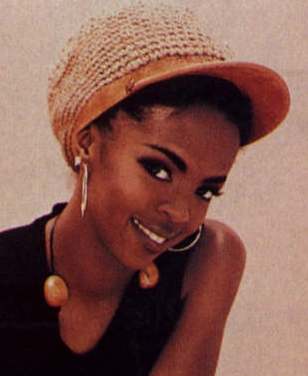 |
Hip-hop and R&B are the most contemporary methods of upholding previous themes of African American music such as solidarity and defiance. These music styles also serve as a voice for the voiceless, and they tell stories, send messages, and create hope for those who listen. Lauryn Hill, often called the “mother of hip hop invention”, embodies the new wave of African American music. After leaving the Fugees, this New Jersey native made her statement with The Miseducation of Lauryn Hill, an album that won her five Grammies and innumerable days at the top of billboard charts. In her lyrics, Hill stresses both the positive and negative aspects of the African American community, including themes such as self-love and a positive relationship with God. Hill also uses fantasy themes, a common element among hip-hop and rap songs that involves the utilization of short myths to get across ideas of some social more. Double meanings are often present in these songs, such as in Hill’s “Forgive them Father”, where connections are made between the plight of the Israelites and that of African slaves in America. Like many hip-hop artists, Hill’s social commentary on her existence as both an American and a black person is clearly evident in her music. Through rhetoric that includes biblical references and colloquialisms associated with African American English vernacular, Hill emanates the idea that language is the spark that fuels the powerful flame that is hip-hop.
Paul Keens-Douglas (1942 - )
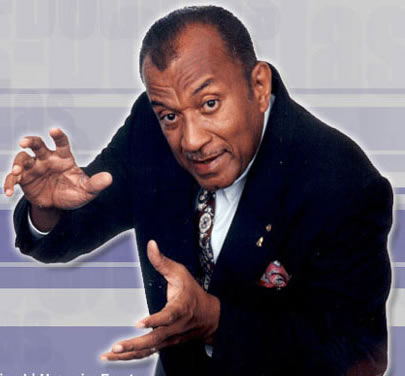 |
African American vernacular English is often unique to the region, with various dialects affecting the tone, intonation, rhythm, and syntax of the language. Paul Keens-Douglas, born in September of 1942 in San Juan, Trinidad, and raised in Grenada, is the most well-known dialect writer of the Caribbean. This orator, writer and performer had composed seven volumes of work, fifteen albums, and three videos. Through his Tim Tim show and Carnival Talk Tent, he has continued oral traditions that are characteristic of our African descendents. Through his use of African American vernacular, humility, and wit, he makes his fictional stories about the Caribbean interesting to people of all age groups, furthering the use and level of acceptance of the dialect.
Thomas Dartmouth Rice (1808-1860)
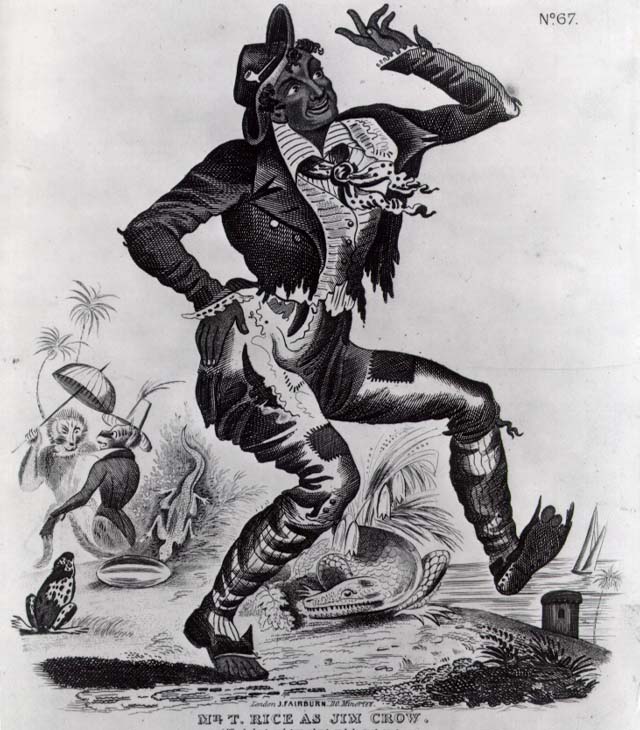 |
The father of the minstrel show, Thomas Dartmouth Rice was born on May 20, 1808 in New York City. Also known as “Jim Crow”, this actor made a name for himself in Louisville in 1828, when he performed a song-and-dance in blackface and pretended to be an old black slave. Although he was not the first person to impersonate an African American in a comedic fashion, his over-the-top parody paved the way for much more shows of this fashion. A minstrel show is defined as one in which white people blackened their faces and portrayed African Americans as buffoonish, lazy, and carefree. They poked fun at slaves, African American emerging musicians, and free blacks who attempted to assimilate in white society. After the Civil War, African Americans began to appear in these shows as well. A key aspect of the minstrel show that Rice created is the speech that the performer utilized while in blackface. The language employed often poked fun at the African American vernacular which, at this point, was rife with ungrammatical constructions that could not yet be recognized as a unique dialect. This use of speech only served to fan the flames of racism, and this set the stage for further subjugation and separation of African American people.
John R. Rickford
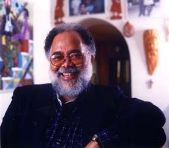 |
John Russell Rickford, Professor of Linguistics at Stanford University, has written many books and papers on the issue of African American vernacular English. His focus is on sociolinguistics, and he concerns himself with the relationship between language and ethnicity, pidgins and creoles, and social class and language style. His “writings on the issue of ebonics” as they are often called, include papers entitled, “The Ebonics Contoversy in My Backyard: A Sociolinguist’s Experiences and Reflections”, “Using the Vernacular to Teach the Standard”, “Suite for Ebonics and Phonics”, and “The Creole Origins of AAVE: Evidence from Copula Absence.” He and Labov have addressed similar issues through their writing. However, what makes Rickfor unique is his concentration on the inherent ties between language and society and his efforts to examine various forms of AAVE based on the region from which it originated. His research in the field impacted African American and non-African American individuals in their cognizance of the ties between their language and many other aspects of their lives.
Barnes, Sandra L. "Ebonics and Public Awareness: Who Knows? Who Cares?" Journal of Black Studies 29 (1998): 17-33. 12 Apr. 2007 <http://www.jstor.org/browse?charset=u&frame=noframe&[email protected]/01cc99332400501bbe50b&dpi=3&config=jstor&viewCitations=1>.
Hevern, Vincent W. "Theorists and Key Figures." Narrative Psychology. 25 Mar. 2004. Le Moyne College. 12 Apr. 2007 <http://web.lemoyne.edu/~hevern/nr-theorists-hijkl.html#labov>.
Labov, William. "Can Reading Failure Be Failure Reversed? a Linguistic Approach to the Question." Literacy Among African American Youth (1995). 18 Apr. 2007 <http://www.ling.upenn.edu/~wlabov/papers.html>.
"About Me." Paul Keens-Douglas. 2007. Keensdee Productions, Ltd. 15 Apr. 2007 <http://www.paulkeensdouglas.com/articles.asp?id=520>.
"Biosketch." John R. Rickford. Stanford University. 15 Apr. 2007 <http://www.stanford.edu/~rickford/biosketch.html>.
"Lauryn Hill Biography." VH1.Com. 2007. MTV Networks. 10 Apr. 2007 <http://www.vh1.com/artists/az/hill_lauryn/bio.jhtml>.
“Minstrel Show." Encyclopædia Britannica. document.write(new Date().getFullYear()); 2007. Encyclopædia Britannica Online. document.write(new Date().getDate()); 18 document.write(mm[new Date().getMonth()][0]); Apr. document.write(new Date().getFullYear()); 2007 <http://www.britannica.com/eb/article-9052889>.
"Paul Keens-Douglas." Caribbean Child. 10 Apr. 2007 <http://berdina.tripod.com/keensdouglasP.htm>.
Palacas, Arthur L. "Liberating American Ebonics From Euro-English." College English 63 (2001): 326-352. 9 Apr. 2007 <http://www.jstor.org/view/00100994/ap020476/02a00050/0>.
Rice, Thomas Dartmouth." Encyclopædia Britannica. document.write(new Date().getFullYear()); 2007. Encyclopædia Britannica Online. document.write(new Date().getDate()); 18 document.write(mm[new Date().getMonth()][0]); Apr. document.write(new Date().getFullYear()); 2007 <http://www.britannica.com/eb/article-9063536>.
Home | History | Important Figures | Criticism | Bibliography | Extra Info| Staff