
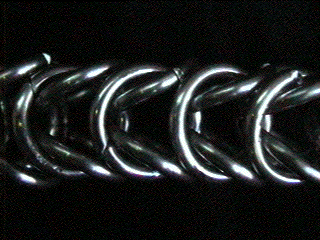
This weave is called boxchain, since it forms
something of a square shaped chain. It is a variation
of European 4-1. Boxchain, like most of the
decorative weaves, can not be used to make
anything of great size, but is excellent as jewelry,
or incorporated into a larger pattern.
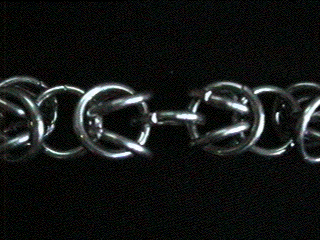
This variation of boxchain is called birdcage.
Small sections of the boxchain weave are
separated by single links. This makes birdcage
visually interesting and easy to make. It is also one
of the weaves most suited to mixing ring size and
color. It is perfect for jewelry applications.
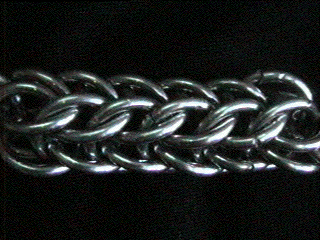
This weave is called Persian. It too is based on
boxchain, however it is denser and holds its three
dimensional form more stiffly then boxchain.
There are actually several weaves in the Persian
family. This one is called full Persian. Since it is
the only one I am offering at this time, any
references to Persian weave are referring to full
Persian. It is very visually attractive, and is one of
my favorite jewelry chains.
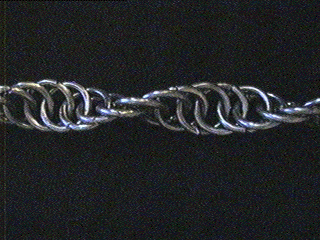
This is one of the most interesting decorative
weaves. Called spiral, it forms a helix of rings.
This makes it radically different from any of the
other decorative designs. However it will only
hold its shape if the end of the chain are solidly
anchored to something. Otherwise you must twist
it into shape each time you put it on.
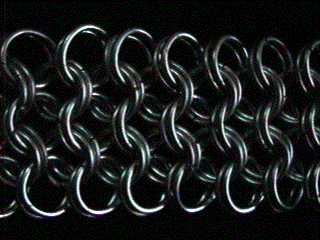
This variation of 4-1 is called king. It has the
same properties as the European family of weaves.
(You might call it 8-2.) It is good for bracelets and
chokers, as well as being usable for large designs.
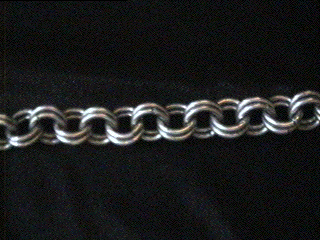
The simplest decorative pattern, the standard idea
of a chain (in this case with the links doubled).
This is a good pattern for anyone who want
something not too complex. The variation of this
design is almost infinite.