Page 3

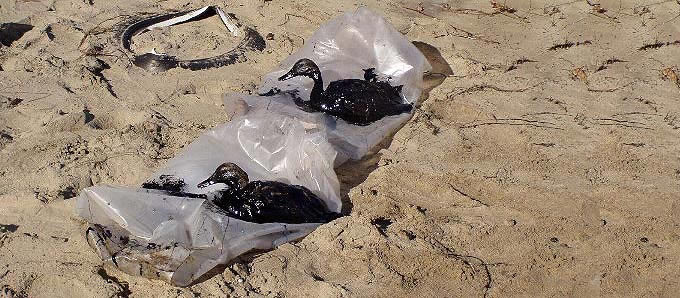
The problem is that oil is harmful to the environment and you need to try to keep the oil in one place. After the spill, we had a few days of very bad weather. The water began moving very fast and carried the oil farther downstream and into smaller streams along the river. Oil is very harmful to animals like fish and birds. Fish can suffocate and die because they can't get enough air. Water birds who land in the oil get soaked with the oil and their feathers become coated and too heavy to fly. Even plants aren't able to get enough air through their leaves when they get coated with oil. They die, too.
One day I asked my mom, "Why don't they just clean it up?" My mom had me do this really cool experiment to see why they couldn't "just clean it up."
I put 2 tablespoons of cooking oil into a baking dish filled with water that was died blue. The object was to get all of the oil out without taking out too much water. At first, I tried to contain the oil with a piece of string with a loop in it. It worked okay at first, but when we stirred the water a little to make it like the movement of the water in the river, the oil began to get all over the surface. I tried using a medicine dropper to suck up the oil. The problem was it took in only a little bit of oil at a time. It also took in water and it was very time consuming. I used cotton balls, too. They sucked up a lot of water, but only a little bir of oil. A plastic spoon worked a bit. I could get a lot of oil, but I also got a lot of water. When I put a bit of soap in the water, all the oil rushed to the sides. I had trouble getting the soap out of the water! When I tried putting pencil shavings in the water, it soaked up the oil quickly. I thought I had found a solution! Instead, I had made a huge mess. I couldn't get the pencil shaving out of the water without spreading them everywhere.
Now I know that if I had this much trouble trying to get a few tablespoons of oil cleaned up, it is really hard to get a large oil spill cleaned up! It takes a long time to take oil out of water. In real life, some of the ways people use are similar to ones that I tried. They put down big buoys made of special absorbent material to try to contain the oil spill and clean some of it up. They also try to skim oil off the top of the water. None of these ways work really well. Scintists are always working on finding better ways to clean up oil from water. If you try this experiment and find any way to get most or all of the oil out without taking out the water, please tell me. Maybe one day one of us will discover a really good way to clean up oil spills!
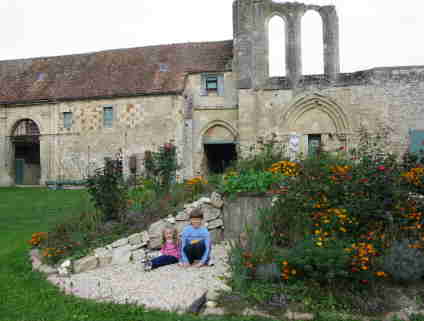
Romanesque:
* This style of architecture was built during the very early middle ages (around 700-1000)
* The designs were modeled after the building in the ancient Roman empire.
*Churches were most often built in the shape of a cross.
*The buildings had simple lines, columns and rounded arches and were much less detailed and fancy than the Gothic style.
Gothic:
*This style started in northern France in the 12th century (1100's) spread to other countries in Europe and was built for about 400 years.
*Gothic churches were built extremely large to make people feel in awe of God and feel small in comparison.
*Gothic churches often had elaborate carvings and sculptures and were made very fancy to remind people of how beautiful the City of God is.
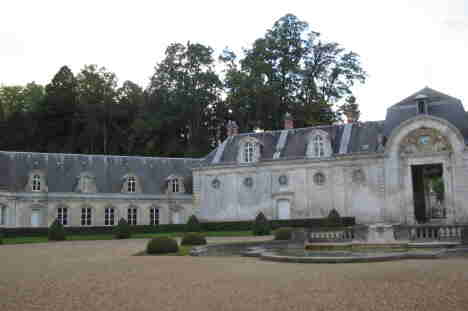
Renaissance:
*Renaissance architecture started in Italy during the 14th century (1300's) It overlapped some of the Gothic time, then spread throughout Europe through about the 17th century (1600's).
*The styles were a return to the classic forms of Roman architecture.
*The buildings were much less fancy at the beginning of the time period, but later decorations became more elaborate as the style turned more Baroque.