
happy Christmas      JAPANESE FURNISHINGS     happy Christmas
-  A WAY TO DISCOVER NATURE 
Home
Japanese Furnishings
Other Furnishings
Industrial Supplies
Electrical supplies
Furniture Fair
Contact Us
 
Tatami Mat
Tatami Bed
Shoji Screen
Fusuma Door
Lamp & Lanterns
Latex Foam
Futon Frame
Accessories
 
 
Japanese Home Furniture Source for Tatami Mat, Tatami Bed, Shoji Screen, Shoji Lamp & Fusuma Sliding Door; Futon Frame ....
Sleep in nature and get the quality of rest. Eco-friendly furnishings for healthy home.

The essential aspect of Japanese design is its simplicity.  The main feature of Japanese design is pure lines and uncluttered spaces. mankind lived a simple life in harmony with nature. To achieve Japanese design, use minimum items; place them independently, away from each other so that each item can be admired for its beauty. Achieve serenity by creating oneness with nature.

Our philosophy of living with nature extends to the home we furnish which is based on natural forms and materials, and is built based on renewable resources.


Tatami Mat
 
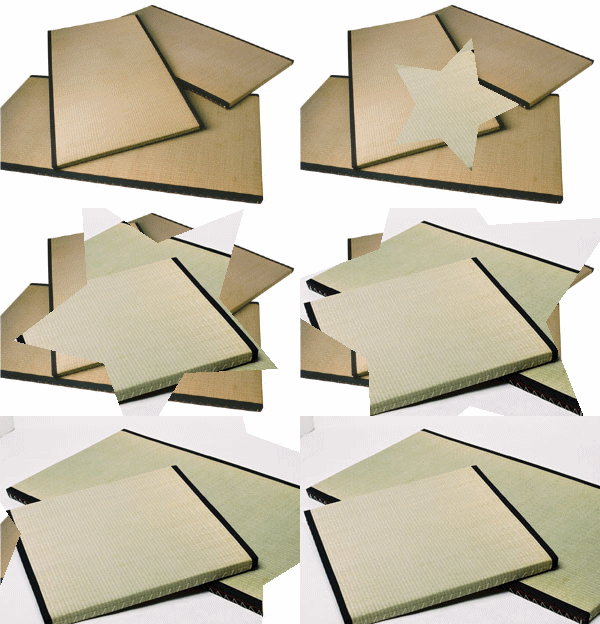
Tatami is made of rush. The kind of rush to make tatami is called igusa. If you look at the surface of tatami closely, you will find that tatami is woven out of rush. To weave and ame one surface of tatami, they use about four to five thousand pieces of rush. But the craftsperson doesn't use rush immediately after harvest. They sort rush by its use and grade before they use it. 


Shoji Screen
 
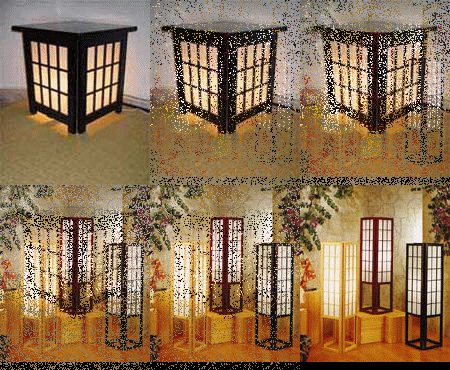
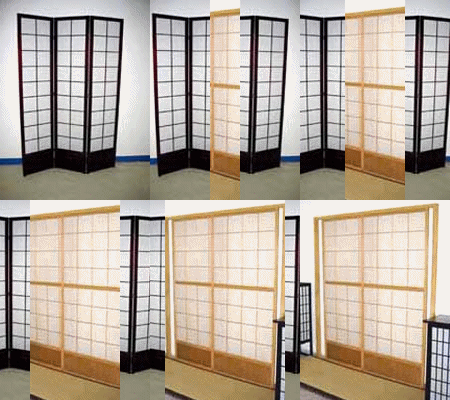
Japanese screens or shoji are typically made of lightweight wood and rice paper. They are used in tea ceremonies, as backgrounds for dances and performances, and as an architectural element in the home, restaurants and a variety of interior spaces. The typical shoji serves as a door or window and its paper is translucent. The byobu or folding screen is used as a room divider or decoration and is usually painted in sumi-e. Fusuma is a sliding door which is typically made of wood which has been covered in Japanese rice paper.
 
Fusuma
 
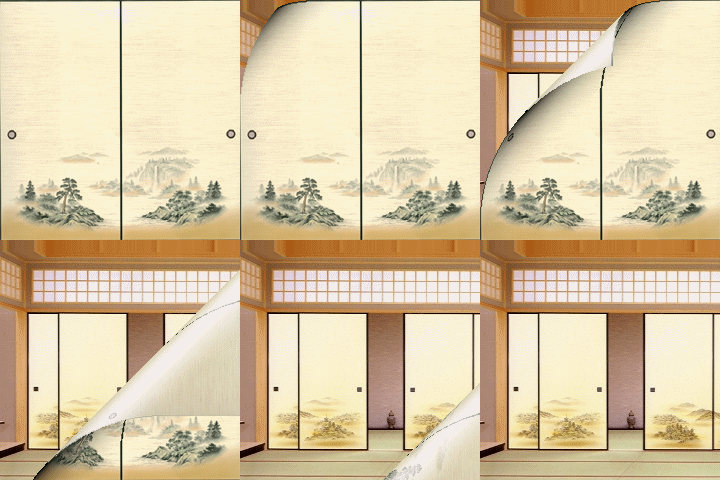
Fusuma-shoji are sliding doors used to separate rooms. Unlike the translucent akarishouji, they are opaque. They run in tracks along the top called "uwabuchi" and bottom called "shitabuchi." The vertical sides of the frame are called "mashibuchi." These frames offer anchorage, but the door can be easily lifted out. Fusuma are constructed of lightweight wood covered with decorative paper. Fusuma doors are trimmed with cedar, which is typically dark brown or black lacquer. Handles, called "hikite," are often quite elaborate and unique in shape, not necessarily circular. Tassels attached to the handles pulls are called "fusahikite."

  Gold Epicedge Sdn Bhd
5 Jalan Putri Jaya 10, Batu 9 Cheras, 43200 Selangor, Malaysia.  
Email:
[email protected]
Japanese Music

     
SEARCH FOR...

This page has been visited Counter times.
Copyright © 2004 Gold Epicedge Sdn Bhd. All Rights Reserved
Send mail to [email protected]  with questions or comments about this web site.
Created: 11/25/04
Hosted by www.Geocities.ws

1