|

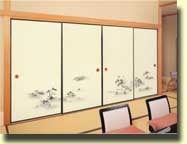
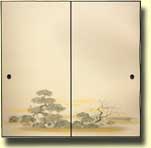
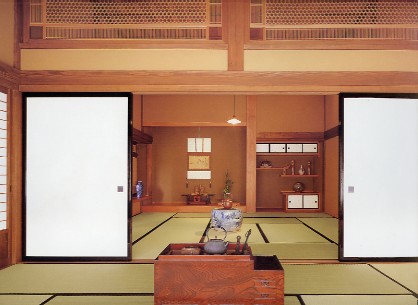
Fusuma-shoji
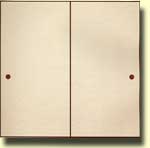
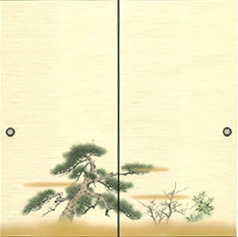
are sliding doors used to separate rooms. Unlike the translucent akarishouji,
they are opaque. They run in tracks along the top called "uwabuchi" and bottom
called "shitabuchi." The vertical sides of the frame are called "mashibuchi."
These frames offer anchorage, but the door can be easily lifted out. Fusuma are
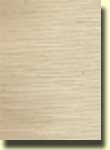
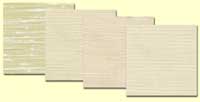
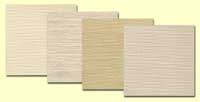
constructed of lightweight wood covered with decorative paper. Fusuma doors are
trimmed with cedar, which is typically dark brown or black lacquer. Handles,
called "hikite," are often quite elaborate and unique in shape, not necessarily
circular. Tassels attached to the handles pulls are called "fusahikite."
Fusuma
first appeared in the Muromachi period (1392-1565). They were used to close off
large spaces and as closet doors. Prior to that, during the Nara period
(645-794) and the Heian period (794-1185) byobu
folding screens
were common. Sliding partitions did not develop until around 1300, typically
found in the homes of the upper class, and later in the houses of the working
class. They tended toward the ornate. High quality screens, nanakaeshi-bari, or
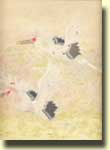
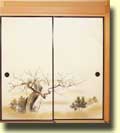
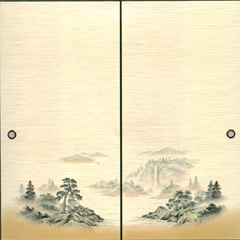
gokaeshi-bari, were made of silk or other cloth. Fusuma served as canvases for
ink drawings or colored paintings by famous artists, similar to the ones in the
first chamber of the Kuroshoin, Nijou Castle.
|
|
|
|
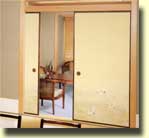
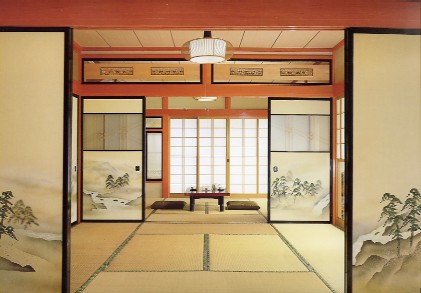
Japanese Room with Fusuma Sliding Door |
|
|



 JAPANESE FURNISHINGS
 - A WAY TO
DISCOVER NATURE
- A WAY TO
DISCOVER NATURE

 times.