 |
|
|
|
|
|
|
|
|
|
|
|
|
|
|
|
|
|
|
|
|
|
|
|
|
|
|
|
|
|
|
|
|
 |
|
|
 |
|
|
|
|
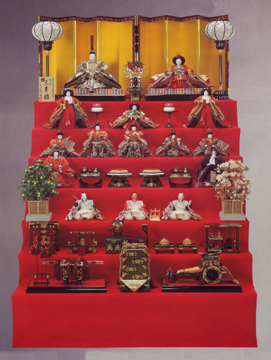
By the end of the Edo period displays in wealthy households had expanded dramatically, and typically had 15 figures arranged on a red covered tiered stand. The lord and lady stood at the top, backed with a pair of screens. Below them were arranged 3 ladies in waiting, 5 musicians, ministers of the right and left and 3 footmen, plus various other offering dishes and accessories. Other figures enjoyed brief periods of popularity, but failed to become part of the standard set seen today. |
|
|
|
|
|
|
|
|
|
Hina display, Shugetsu Doll Co, 2002 |
|
|
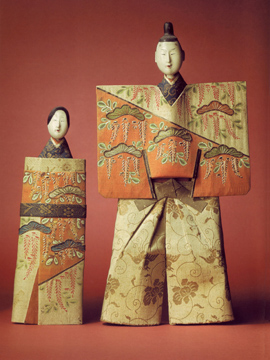
"Tachi-bina" Edo period, 18th Century |
|
|
|
|
|
|
|
|
|
|
 |
|
|
|
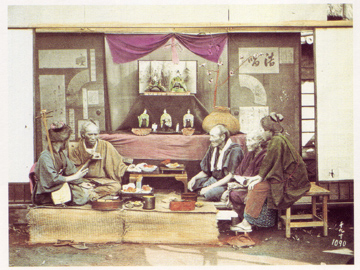
Celebration of girls' day, circa 1870's |
|
|
|
 |
|
|
|
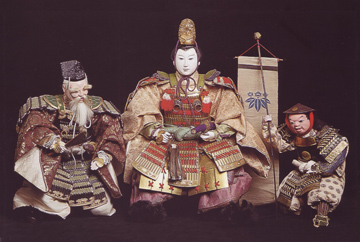
Warrior dolls, circa 1880 |
|
|
|
The festival known as boys' day, or in modern times childrens' day, also has its origins in a Chinese ritual. Medicinal plants were made into small dolls and hung on doors to absorb any evil forces, and then destroyed in the fields in the hope of ensuring a good harvest. In Heian period Japan it became fashionable to make elaborate balls from these herbs. After the establishment of the shogunal government in Kamakura a more martial aspect was introduced into the celebration. Games in which combatants beat the ground, and probably each other, with bundles of iris leaves as a means of purification became common. The display of grass models of warriors helmets also dates from this time. |
|
|
|
 |
|
|
|
 |
|
|
|
 |
|
|
|
Events and Exhibitions |
|
|
|
Members Resources |
|
|
|
|