 |
|
|
|
|
|
|
|
|
|
|
|
|
|
|
|
|
|
|
|
|
|
|
|
|
|
|
|
|
|
|
|
|
|
|
|
|
|
|
|
|
|
|
|
|
 |
|
|
 |
|
|
|
|
|
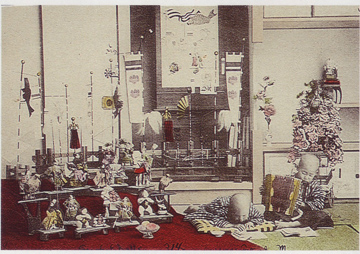
Celebration of boys' day, circa 1900 |
|
|
|
|
|
|
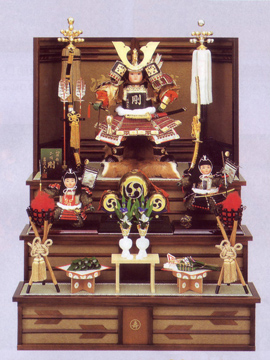
Boys' day display, Yoshitoku Doll Co, 2002 |
|
|
|
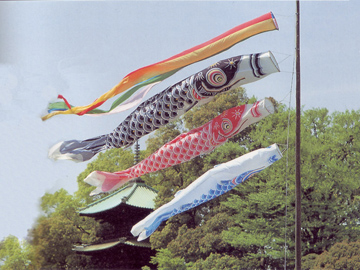
Small figures of famous warriors were originally introduced as accessories on the top of decorative helmets, but by the 18th Century the dolls came to be exhibited as stand alone items. They represented a wide array of celebrated martial heroes, as well as images from fairy tales and legends. Following WWII the holiday was renamed childrens' day. Warrior dolls are still popular but they look more like children playing dress up than hardened soldiers, probably the most visible part of the festival today is the display of carp banners swimming in the wind above homes with male children. |
|
|
|
 |
|
|
|
Modern carp banners |
|
|
|
Chronology |
|
|
|
Jomon period ca.10,000 - ca. 200 B.C
Yayoi period ca. 200 B.C - ca 200 A.D
Kofun period 200 A.D - 552
Asuka period 552 - 645
Nara period 645 - 794
Heian period 794 - 1185
Kamakura period 1185 - 1333 |
|
|
|
Muromachi period 1333 - 1573
Momoyama period 1573 - 1614
Edo period 1614 - 1868
Meiji period 1868 - 1911
Taisho period 1912 - 1926
Showa period 1926 - 1989 |
|
|
|
|
|
Bibliography |
|
|
|
Ningyo, The Art of the Japanese Doll. Alan Scott Pate, Tuttle 2005
Japan, Caught in Time, Great Photographic Archives. Edited Vitaly Naumkin, Garnet 1995
Introduction to Japanese Culture. Edited Daniel Sosnoski, Tuttle 1996
Japanese Crafts and Customs, A Seasonal Approach. Kunio Ekiguchi, Ruth S. McCreery, Kodansha 1992
Daruma Magazine, Vols 14, 17, 32 |
|
|
|
On the Web |
|
|
|
www.akanezumiya.com |
|
www.okura-art.com |
|
|
|
|
|
www.lasieexotique.com |
|
|
|
www.honeychurch.com |
|
|
|
|
|
www.jdollcollector.com |
|
|
|
www.yoshitoku.co.jp |
|
|
|
|
|
 |
|
|
|
 |
|
|
|
Events and Exhibitions |
|
|
|
Members Resources |
|
|
|
|
|