 |
|
|
|
|
|
|
|
|
|
|
|
|
|
|
|
|
|
|
|
|
|
|
|
|
|
|
|
|
|
|
|
|
|
|
|
|
|
|
Japanese Dolls |
|
|
|
The celebration of Boys' and Girls' Day festivals |
|
|
|
 |
|
|
 |
|
|
|
|
The Japanese doll is much more than a simple plaything or decorative object. It carries an ancient tradition of use in a wide variety of ritual practices promoting fertility, ensuring contentment in the afterlife, purifying and cleansing the individual and conferring blessings on the home. The girls' day and boys' day festivals, celebrated March 3rd and May 5th respectively, both derive from much earlier Chinese observances for cleansing and protection from evil. |
|
|
|
|
|
|
|
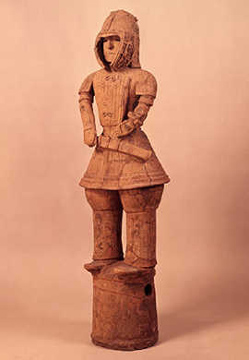
"Haniwa" warrior figure |
|
|
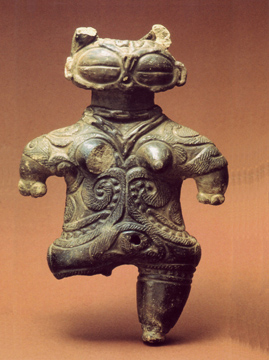
"Dogu" figure, late Jomon period |
|
|
|
|
|
|
The earliest "ningyo" ( literally meaning 'human shape' ) date to the Jomon period. Abstract and primitive they were designed to be symbolically broken and are assumed to have been associated with fertility rites. Haniwa figures from the Kofun period were used as substitutes for real people in funerary rites. |
|
|
|
 |
|
|
|
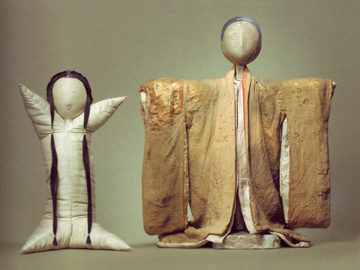
"Hoko" and "Amagatsu" pairing |
|
|
|
The "hoko" and "amagatsu" forms were both used as protective talismans to guard infants from unseen malevolent forces and disease. Whereas the amagatsu is generally percieved as a male figure, the softer hoko is seen as female. In the pairing of the dolls we see the early origins of the most prominent figures of the girls' day display. |
|
|
|
The development of the "tachi-bina" style marks the beginning of the celebration of girls' day in the way we know it today, with a matched pair of dolls being displayed. Originally made from paper they evolved into much more sophisticated forms with beautiful textiles and "gofun" ( oyster shell lacquer ) faces. |
|
|
|
Court practices, economic imperatives, government restrictions and popular attitudes all played a role in the development of the enigmatic figures. Dolls, like their owners,were subject to the sumptuary laws of feudal Japan, but despite this there was a gradual transition from a spiritual festival to one more concerned with a lavish display. |
|
|
|
 |
|
|
|
 |
|
|
|
 |
|
|
|
Events and Exhibitions |
|
|
|
Members Resources |
|
|
|
|