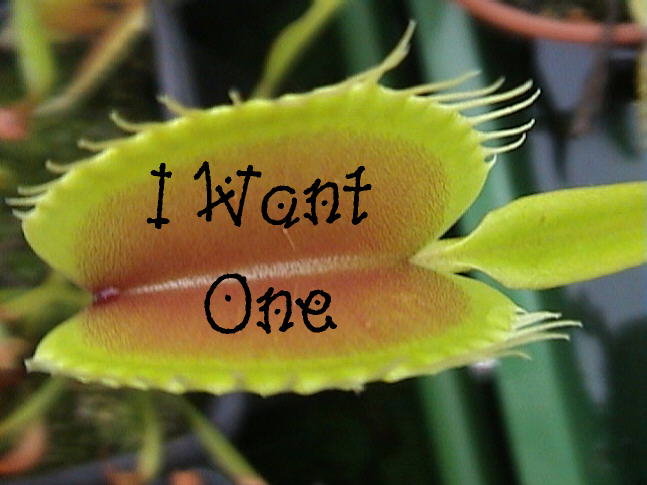
Venus Fly Traps - Dionaea
This has got to be the best known CP that nature has to offer. Many growers begin a collection with this.
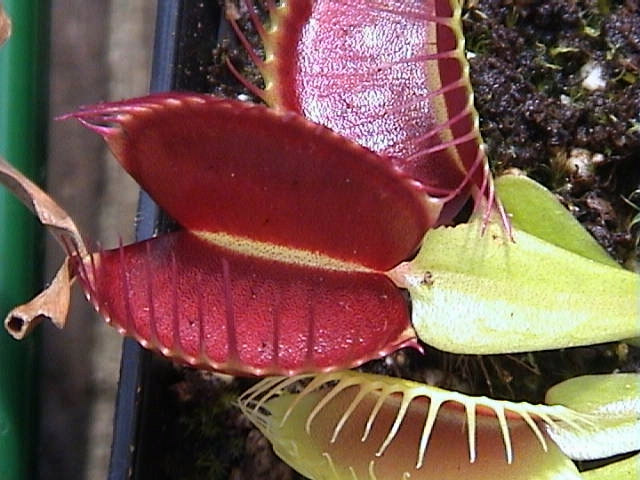
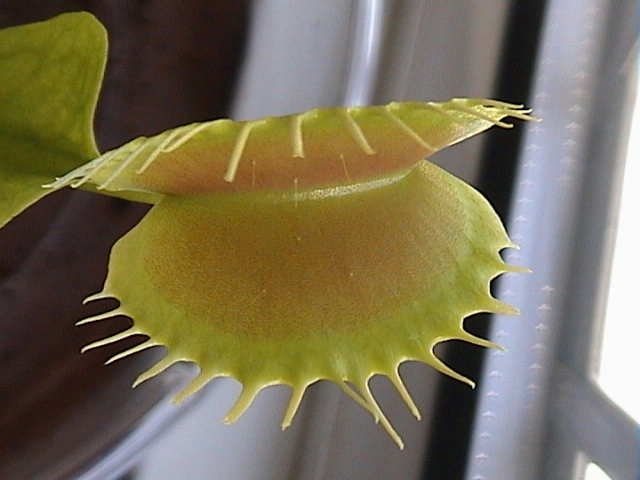
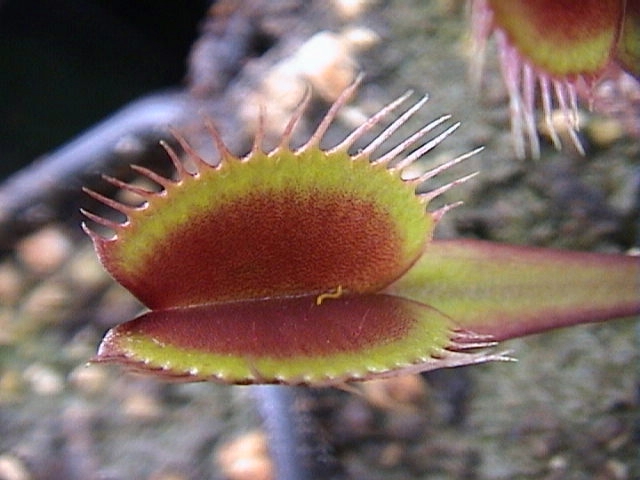
This plant is a 'Steel Trap Mechanism' type, in which the trigger hairs on the inside of the lobes of the trap must be triggered twice (Twice on one trigger hair, or once on two trigger hairs) for the trap to close. The time in which the trap closes varies from 1 second to 30 seconds dependant on how much sun the plant stands in. If the weather is cloudy and cold, the trap will slow down considerably.
The leaf will often die off if you continually coax the trap manually as it is only meant to close a few times in its life time. The leaf will also die off if it has caught 4 insects in succession. However, new growth will appear within a matter of days. If the trap closes on inanimate objects (ie. rain), the trap should reopen within 24 hours.
During early Spring, a flower grows from the center of the rosette. It is usually 30 cm high and once fully grown produces white flowers. It is quite hard to self pollinate these plants, so it is better if you wish to pollinate one, to have two of these. Sometimes two or three flower stalks are produced, simply cut the tops off them and preserve the plants energy.
If you want your plant to produce the largest traps it can, or if you just want the plant to keep its energy, I would cut all flower stalks off. This it what I always do unless I am planning on harvesting seed.
Keep moist at all times but always allow the water to totally evaporate before topping up. Try only to water with rain water, as this plant dislikes the chemicles found in ordinary tap water. It must be kept in acidic soil such as Sphagnum Moss Peat. Many Engligh garden centres sell a product called 'Shamrock Irish Moss Peat,' this works a charm with all CPs!
Feed living flies - the plant will need to be triggered twice more once the trap has closed to reassure the itself that it has caught a fly and not inanimate object such as a twig.
|