UIAA Mountain Medicine Centre Information Sheet
Climbing At Extreme Altitude Above 7000 Metres
The physiological problem
The amount of oxygen in air decreases linearly with ascent and there is about half of sea level oxygen present at 5500m, fallling to roughly one third at the summit of Everest. The partial pressure of oxygen at the summit of Everest is very close to the limits at which human beings can survive at all. Permanent human habitation ceases - due to lack of oxygen, not terrain - above 5400m. Whilst acclimatised man can survive for several weeks or months at 6000m, deterioration is taking place steadily, by the apparent reversal of the very process of acclimatisation that has enabled ascent possible to these altitudes.
Around 6000m acclimatised climbers may expect to feel well, have reasonable appetites, sleep normally and be capable of carrying loads of 20-25 kilos on easy ground.
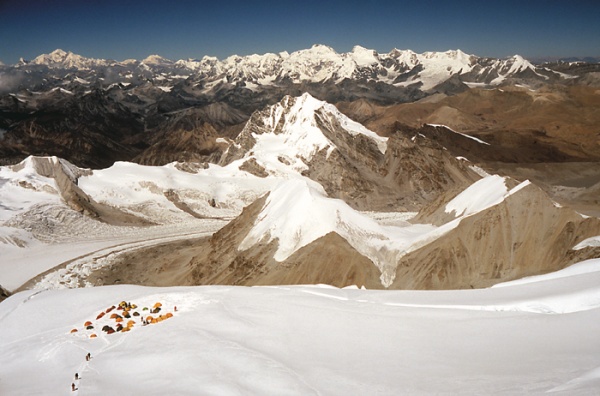
Above 7000m, the situation changes: the feeling of tiredness and lethargy increases, continuous exercise becomes impossible and climbing even easy slopes becomes a painstaking, breathless achievement. Ascent rates will vary enormously depending on terrain and the climbers' physiology, but 300-400m a day is a very reasonable achievement.
Deterioration becomes increasingly apparent after several nights at 7000m. The feeling of tiredness increases and more importantly, appetite falls; even foods that were popular at lower altitudes appear tasteless and unpalatable. Weight loss is profound and lethargy also sets in, adding to the difficulties of cooking, which usually takes many hours even in ideal circumstances. Sleep becomes intermittent and due to the lack of oxygen, the cold is felt more even in the warmest of sleeping bags.
The effects of deterioration become increasingly marked after 4 or 5 days and unless trapped by weather it is advisable not to stay much above 7000m for longer periods. There is little to be gained from attempting to set an altitude duration record by waiting for several days for weather to clear, because it is unlikely that you will have the energy in reserve to make use of it. Recovery from high altitude deterioration is a gradual process that can only take place at altitudes well below 6000m, so base camp should be below or as near 5000m as possible.
Illnesses at extreme altitude
Any illness at extreme altitude tends to be much more serious than at sea level. Sore throats and persistent coughing are common, a product of the dry air and cold, and notoriously difficult to treat. Any chest infection is potentially dangerous and needs urgent treatment by descent and antibiotics, as it may be impossible to distinguish between an infection and pulmonary oedema.
Frostbite is usually a product of several factors and it is frequently avoidable. The treatment of serious, established frostbite is dealt with elsewhere, but descent is essential. The occurrence of frostbite almost always means the end of any serious climbing for the victim on the current expedition and much extra work for colleagues. Drugs are of little use.
The possible long-term effects of climbing at extreme high altitude have attracted much publicity. Whilst severe lack of oxygen undoubtedly causes damage to the nerve cells in the brain, there is no clinical evidence of "brain damage" or intellectual impairment in the many climbers who have spent time over 7000 metres. The main danger in climbing the highest peaks in the world lies in death by accident, or unrecognised illness - usually a combination of the snow conditions, cold and the effects of lack of oxygen.
Adapted from: "The Death Zone" on www.8000m.com