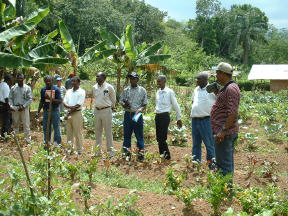
Although this program has been modified since its initiation in 1982, it continues to be the principal focus of the center, with the objective of educating high school level students in sustainable agriculture for a period of two years. Typically, the students finish their final two years of secondary schooling in the Rio Limpio public school while studying sustainable agriculture and rural development in the center. The students receive scholarships to cover the cost of attending the school, and live with families in the Rio Limpio community. Students from any region of the country are welcome to study in CREAR, but in recent years an effort has been made to recruit students from the border region. When the students finish their studies, many look for work as technicians in the many NGOs active in the region, some continue their agronomy studies at the university level, while others decide to apply their knowledge to their family´s land in agricultural production.
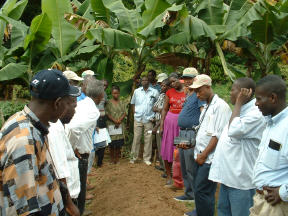
CREAR offers one to four week courses in the technical aspects of soil conservation, agroforestry, animal husbandry, and intensive horticulture. The course participants are provided with food and lodging in the center's facilities, and many are sponsored by governmental and non-governmental institutions such as Peace Corps and the Dominican-Hatian Embassy, to name only a few. Recently, training courses organized by the Dominican-Hatian Embassy to bring Haitian farmers to CREAR have proved very fruitful, and it is expected that these types of cross-border exchanges will continue in the future.
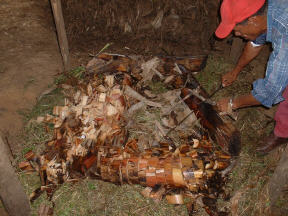
CREAR maintains its diverse areas of production for both its education and training programs, with the objective of demonstrating the best possible methods in sustainable agriculture and natural resource use. The investigation program, which is carried out within the farm's production, helps to continue the process of refining the methods and knowledge base in its organic production. In recent years, due to the economic struggles of the center, this program has lost some of its direction and staff dedicated to carrying out the studies. However, given the current reorganization of the center and the recognized importance of continuing these on-farm studies, this program is expected to be strengthened in the near future.