







EPPING PRESBYTERIAN CHURCH - Corner of Bridge
Street & Rawson Street - EPPING - New South Wales - AUSTRALIA
| History | |||
1916-1920 SNIPPETS FROM THE PAST TAKEN FROM MINUTES OF SESSION AND CONGREGATIONAL MEETINGS 31.3.1916 Epping separated from Eastwood and formed a separate parish 18.5.1916 Terms of call for new minister. Salary £25 pounds (car). Collections £3 pounds per week. Thanks expressed to Moderator for his attendance at unveiling of the Roll of Honour. 25.9.1916 Induction of Rev. J.B. McKissock 27.11.1916 If no gas is available the evening service will be held at 4 o'clock on Sunday, 3rd December. 3.12.1916 Communion Service, 82 communicants, comprising 76 members and 6 visitors. 18.12.1916 The Minister's Bible Class commenced with 16 and now has 22 members. 24.10.1917 Letters of sympathy on death of Lieut. A. de V. Kidson, 26.11.1917 W. Findlay killed in Action, C.R. Macintosh killed in action October, 1917, L. Hazlewood killed on active service, August, 1916. 29.1.1919 In view of Government proclamation regarding the influenza epidemic special services are postponed till further notice. 6.5.1920 Considering purchase of block of land in Bridge Street, between Rawson and Victoria Streets, 661 x 1651 at £8 per foot. 14.6.1920 Letter from Epping Congregational Church asking for co-operation in urging Local Band to play only sacred or classical selections on Sundays. 2.8.1920 Ballot re Church Union for 150 members and 100 adherents. 31.8.1920 Result of Ballot. Members and Adherents Yes 115, No 12. |
|||
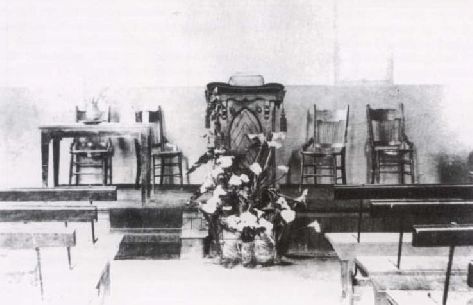
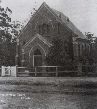 View Gallery of Old Photographs View Gallery of Old Photographs |
|||
PRESBYTERIANISM was originally based on the early practice of appointing elders (or presbyters, from the Greek word presbyteros) as described in the New Testament. Paul and Barnabas appointed elders for them in each church and, with prayer and fasting, committed them to the Lord, in whom they had put their trust. - Acts 14:23 ELDERS (or presbyters) are all considered to be equal in rank and function as two groups: A Teaching Elder is the Minister of a congregation, whose role is to preach, teach and administer the sacraments of Baptism and Holy Communion. Teaching Elders are ordained by the Presbytery (appointed to the office of the Holy Ministry and invested with ministerial functions) when they are first called (invited) by a congregation following graduation after completing appropriate theological studies. Ordination involves the taking of certain vows as laid down by the Church and the laying on of hands by the Ministers of the Presbytery and is for life. A Ruling Elder is a lay person who is elected by the congregation to oversee the conduct of the Church. Ruling Elders assist the Minister in the distribution of the elements (bread and grape juice) at Holy Communion. They are also responsible for visiting, four times a year, a certain number of communicants (adult people who have confirmed their baptism by making a public profession of faith and are thereby admitted by the Session into the full membership of the Church). Ruling Elders are ordained by the Minister when they are first elected by a congregation. Ordination involves the taking of certain vows as laid down by the Church and is for life. A DEACON'S COURT or COMMITTEE OF MANAGEMENT is responsible for managing the temporal (worldly) affairs of the congregation, including property. A Deacon's Court comprises lay persons elected by the congregation and ordained in a similar manner to Ruling Elders. A Committee of Management comprises lay persons elected annually by the congregation. They are not ordained. Elders are ex-officio members (automatically members by virtue of their office) of the Committee of Management. A DEACONESS is a female lay person who undergoes training at the Theological College in like manner to a student for the ministry and then is set apart to work in a congregation under the direction of the Minister or to do social work in the community such as hospital chaplaincy. KIRK is the Scottish name for Church. A SESSION is the lowest court in the Presbyterian Church. It functions within a particular congregation and comprises the Minister (Teaching Elder) and all the Ruling Elders elected by that congregation. Since the Minister is called by the congregation and the Ruling Elders are elected by the congregation, the composition of the Session is determined by the congregation. This is the basis of the Presbyterian form of government. A SESSION CLERK (pronounced "Clark" in Australia) is one of the Ruling Elders charged with the keeping of the minutes of Session meetings, advising the congregation of meetings of the congregation and attending to correspondence. The Session Clerk is elected by the Session. The title MODERATOR can be applied to the Chairman of any court of the Presbyterian Church. A PRESBYTERY is the middle court in the Presbyterian Church. It oversees a certain geographic area in which there are many Churches. It comprises the Minister and one Elder from each Church. The Elder is elected by the Session annually. Additional Elders (one from each Church) may be elected to make up the numbers of Elders. A Presbytery theoretically has equal numbers of Ministers and Elders. Each retired minister is a member of Presbytery as a Minister Emeritus (meaning retired or honourably discharged from active duty, but retained on the rolls). The STATE GENERAL ASSEMBLY is the highest court of the Presbyterian Church in that state. It comprises all the Ministers in the state plus one Elder from each congregation, and meetings are held annually. A MODERATOR of the State General Assembly is elected annually, based on votes from all the Presbyteries. He is given the title "Right Reverend" during his term of office. The GENERAL ASSEMBLY OF AUSTRALIA meets every three years and is the highest court of the Presbyterian Church in Australia. It comprises ministers and Elders elected by all the Presbyteries in the country. A MODERATOR-GENERAL is elected by the General Assembly of Australia, based on votes from an Assembly Committee. He serves for three years and is given the title "Right Reverend" during his term of office, and "Very Reverend" when he completes his term. The formation of the Presbyterian Church was largely influenced by John Calvin and John Knox. JOHN CALVIN (1509-1564) was a religious reformer and theologian born in France who led the Protestant Reformation in Geneva, Switzerland.He taught doctrines and church practices (now called Calvinism) which emphasised the sovereignty of God, predestination, the authority of the Scriptures, Presbyterian polity and strict church discipline. JOHN KNOX (1513-1572) was leader of the Protestant Reformation in Scotland. |
 A summary of Epping Presbyterian Church History
In 1891 (in July) Mr James Hope Stewart bought 5 acres 22 perches of land in Stanley Road,
Carlingford (now Epping) for £95. That property is now located at 32-38 Stanley Road, Epping.
In 1894 (on July 8) the first Presbyterian Church service in Epping (formerly Carlingford) was held by
Rev James Marshall in the Stanley Road home of James Stewart.
In 1897 (on February 20) the original church building on the corner of Bridge Street and Rawson
Street was opened as East Carlingford Church. The cost of construction was £290.
In 1899 the suburb name of Epping was suggested by William Midson (1849-1924), after a town
near Epping Forest in Essex, where Midson was born. He once held 31 acres of land bounded
by Chesterfield Road, Kent Street, Wyralla Avenue and Rawson Street.
The word "Epping" is said to mean "People of the Upland" or "People of the Lookout Place"
(referring to the vantage point of an iron age fort on a ridge in Epping Forest).
"Epping" replaced "East Carlingford" as the name of the railway station and the post office.
The areas of Epping, West Epping (located within Epping) & North Epping (a separate suburb)
contain several churches. Presbyterian services in the vicinity of Epping were conducted by
Rev Charles Crane in the Thornleigh Hall, in private homes or in Richard Walker's Dolphin Hall
in Oxford Street.
In 1903 East Carlingford Presbyterian Church became Epping Presbyterian Church.
In 1913 (at 3:30pm on February 1) the church was re-opened with four new bays added to the
existing two bays of the church for the sum of £892 15s 3d.
In 1924 a hall was opened on the opposite side of Bridge Street & Rawson Street for £2,395 7s 9d.
In 1937 extensive interior alterations were carried out in the church, including a pulpit in memory
of Margaret Holmes and choir stalls in memory of Ann Nicholas, at a total cost of £881 17s 11d.
In 1964 (on May 24) the current church hall in Rawson Street was dedicated. It is located at the rear
of the church and was constructed at an approximate cost of $70,000.
In 1967 the front facade of the church was extended, with the provision of a mezzanine gallery.
In 2000 the hall in Bridge St was sold and demolished.
In 2001 (the turn of the millennium):
The population of Epping was well in excess of 20,000.
75% of Epping residents were born in Australia.
About 80% of dwellings were owned or being paid off.
Historical reference sources:
"Epping Presbyterian Church 1894-1994" Centenary Booklet
"Carlingford - Epping : Partners in History" by Alex McAndrew - Published 1999
"An ABC of Epping" by Alex McAndrew - Published 2001
A summary of Epping Presbyterian Church History

In 1891 (in July) Mr James Hope Stewart bought 5 acres 22 perches of land in Stanley Road,
Carlingford (now Epping) for £95. That property is now located at 32-38 Stanley Road, Epping.
In 1894 (on July 8) the first Presbyterian Church service in Epping (formerly Carlingford) was held by
Rev James Marshall in the Stanley Road home of James Stewart.
In 1897 (on February 20) the original church building on the corner of Bridge Street and Rawson
Street was opened as East Carlingford Church. The cost of construction was £290.

In 1899 the suburb name of Epping was suggested by William Midson (1849-1924), after a town
near Epping Forest in Essex, where Midson was born. He once held 31 acres of land bounded
by Chesterfield Road, Kent Street, Wyralla Avenue and Rawson Street.
The word "Epping" is said to mean "People of the Upland" or "People of the Lookout Place"
(referring to the vantage point of an iron age fort on a ridge in Epping Forest).
"Epping" replaced "East Carlingford" as the name of the railway station and the post office.

The areas of Epping, West Epping (located within Epping) & North Epping (a separate suburb)
contain several churches. Presbyterian services in the vicinity of Epping were conducted by
Rev Charles Crane in the Thornleigh Hall, in private homes or in Richard Walker's Dolphin Hall
in Oxford Street.
In 1903 East Carlingford Presbyterian Church became Epping Presbyterian Church.
In 1913 (at 3:30pm on February 1) the church was re-opened with four new bays added to the
existing two bays of the church for the sum of £892 15s 3d.
In 1924 a hall was opened on the opposite side of Bridge Street & Rawson Street for £2,395 7s 9d.
In 1937 extensive interior alterations were carried out in the church, including a pulpit in memory
of Margaret Holmes and choir stalls in memory of Ann Nicholas, at a total cost of £881 17s 11d.
In 1964 (on May 24) the current church hall in Rawson Street was dedicated. It is located at the rear
of the church and was constructed at an approximate cost of $70,000.
In 1967 the front facade of the church was extended, with the provision of a mezzanine gallery.
In 2000 the hall in Bridge St was sold and demolished.

In 2001 (the turn of the millennium):
The population of Epping was well in excess of 20,000.
75% of Epping residents were born in Australia.
About 80% of dwellings were owned or being paid off.

Historical reference sources:
"Epping Presbyterian Church 1894-1994" Centenary Booklet
"Carlingford - Epping : Partners in History" by Alex McAndrew - Published 1999
"An ABC of Epping" by Alex McAndrew - Published 2001
 PRESBYTERIAN CHURCH
TERMINOLOGY
PRESBYTERIAN CHURCH
TERMINOLOGY