![]() |
| HOME | FRANCE | CHINA | KOREA |
CHINA![]() ![]() |
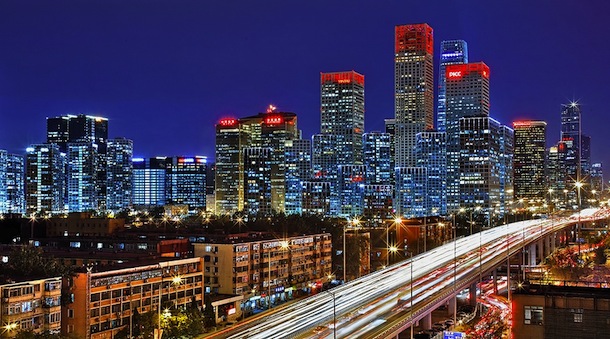
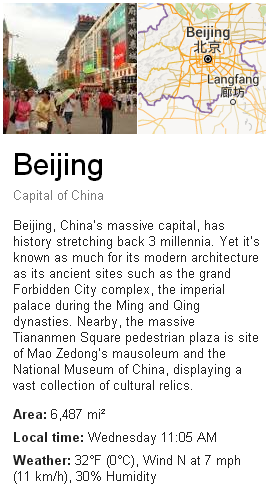
BEIJING![]() Beijing is the capital of the People's Republic of China and one of the most populous cities in the world. |
ABOUT BEIJING Its total population in 2013 was
21,150,000. The city proper is the 3rd most populous in the world. The
metropolis, located in northern China, is governed as a direct-controlled
municipality under the national government with 16 urban, suburban, and rural
districts. Beijing Municipality is surrounded by Hebei Province with the
exception of neighboring Tianjin Municipality to the southeast; together the
three divisions form the Jingjinji metropolitan region and the national capital
region of China. Beijing is the second largest Chinese city by urban population after Shanghai and is the nation's political, cultural and educational center. It is home to the headquarters of most of China's largest state-owned companies, and is a major hub for the national highway, expressway, railway, and high-speed rail networks. The Beijing Capital International Airport is the second busiest in the world by passenger traffic. The city's history dates back three millennia. As the last of the Four Great Ancient Capitals of China, Beijing has been the political center of the country for much of the past eight centuries. The city is renowned for its opulent palaces, temples, parks, gardens, tombs, walls and gates, and its art treasures and universities have made it a center of culture and art in China. Encyclopædia Britannica notes that "few cities in the world have served for so long as the political headquarters and cultural centre of an area as immense as China." Beijing has seven UNESCO World Heritage Sites – the Forbidden City, Temple of Heaven, Summer Palace, Ming Tombs, Zhoukoudian, Great Wall, and the Grand Canal. Beijing hosted the 2008 Summer Olympics and was chosen to host the 2022 Winter Olympics, which will make it the first and only city to ever host both events. |
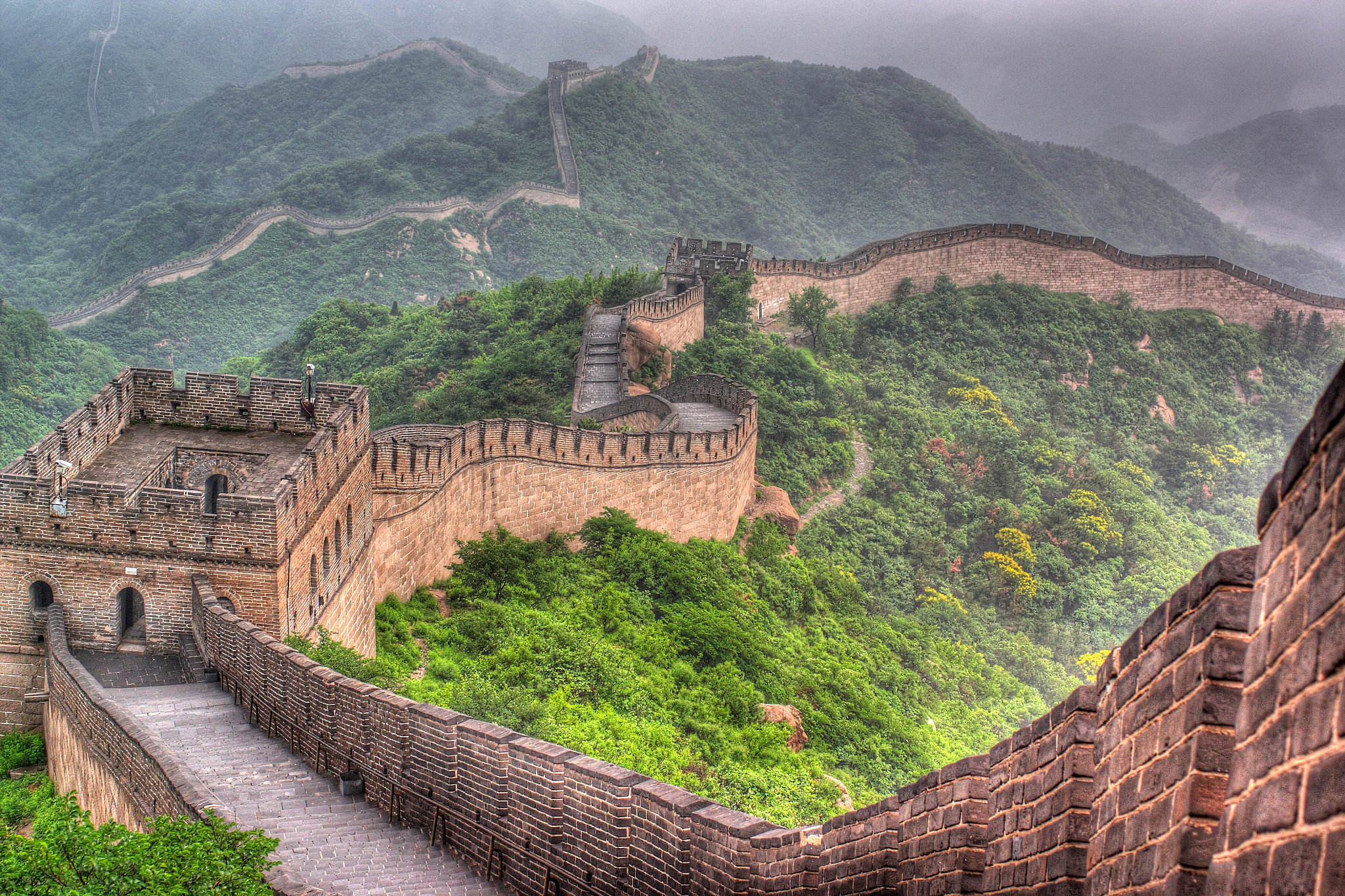
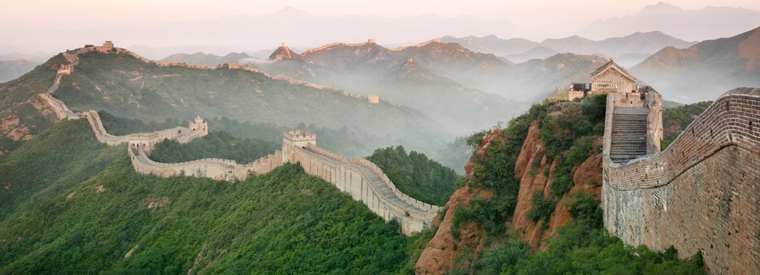
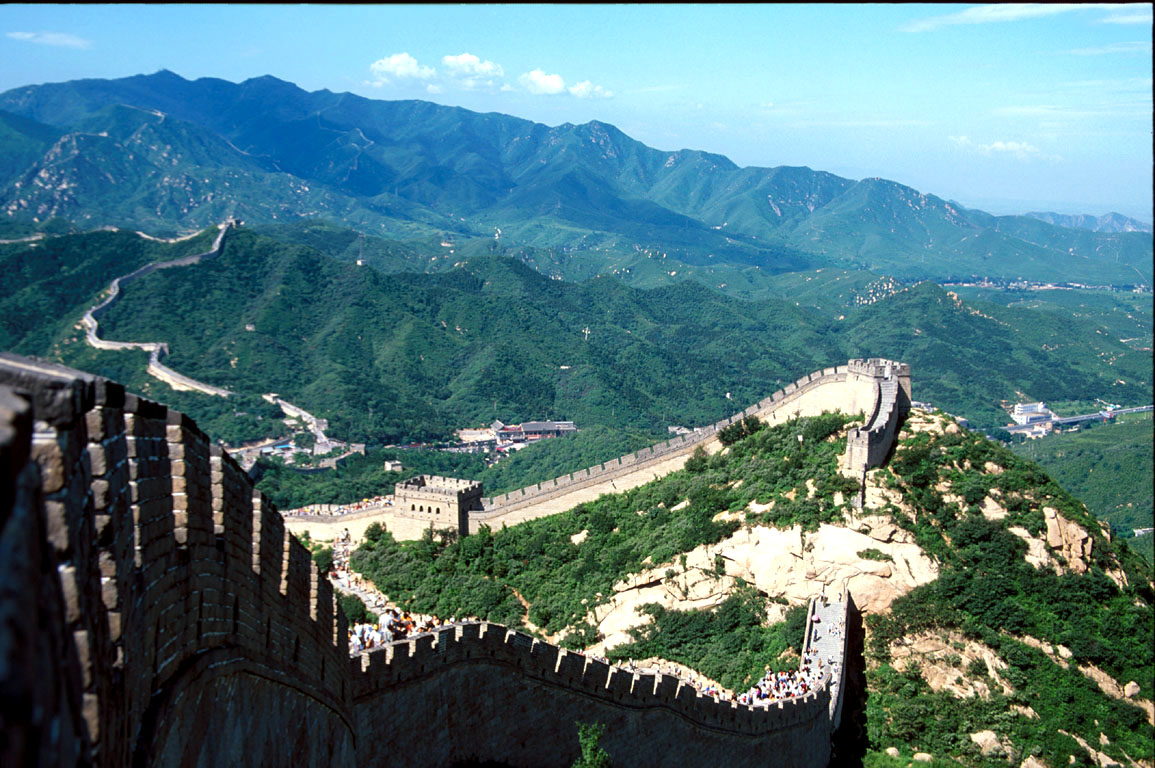
THE GREAT WALL OF CHINA ![]() The Great Wall of China is a series of fortifications
made of stone, brick, tamped earth, wood, and other materials, generally built
along an east-to-west line across the historical northern borders of China to
protect the Chinese states and empires against the raids and invasions of the
various nomadic groups of the Eurasian Steppe. Several walls were being built
as early as the 7th century. These, later joined together and made
bigger and stronger, are now collectively referred to as the Great Wall. |
| HISTORY |
The Great Wall of the Han
The Chinese were already familiar with the
techniques of wall-building by the time of the Spring and Autumn period between
the 8th and 5th centuries bce. During this time and the subsequent Warring
States period, the states of Qin, Wei, Zhao, Qi, Yan, and Zhongshan all
constructed extensive fortifications to defend their own borders. Built to
withstand the attack of small arms such as swords and spears, these walls were
made mostly by stamping earth and gravel between board frames.
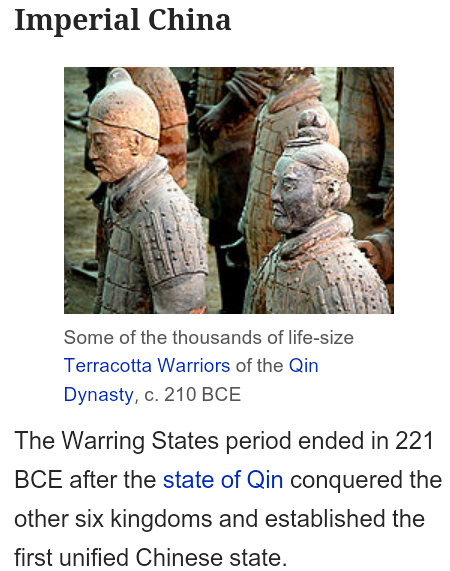
King Zheng of Qin
conquered the last of his opponents and unified China as the First Emperor of
the Qin dynasty ("Qin Shi Huang") in 221 bce. Intending to impose
centralized rule and prevent the resurgence of feudal lords, he ordered the
destruction of the sections of the walls that divided his empire among the
former states. To position the empire against the Xiongnu people from the
north, however, he ordered the building of new walls to connect the remaining
fortifications along the empire's northern frontier. Transporting the large
quantity of materials required for construction was difficult, so builders always
tried to use local resources. Stones from the mountains were used over mountain
ranges, while rammed earth was used for construction in the plains. There are
no surviving historical records indicating the exact length and course of the
Qin walls. Most of the ancient walls have eroded away over the centuries, and
very few sections remain today. The human cost of the construction is unknown,
but it has been estimated by some authors that hundreds of thousands, if
not up to a million, workers died building the Qin wall. Later, the
Han, the Sui, and the Northern dynasties all repaired, rebuilt, or expanded
sections of the Great Wall at great cost to defend themselves against northern
invaders. The Tang and Song dynasties did not undertake any significant
effort in the region. The Liao, Jin, and Yuan dynasties, who ruled Northern
China throughout most of the 10th–13th centuries, constructed defensive walls
in the 12th century but those were located much to the north of the Great Wall
as we know it, within China's province of Inner Mongolia and in Mongolia
itself. |
|
Ming Era The Great Wall concept was revived again
under the Ming in the 14th century, and following the Ming army's defeat by
the Oirats in the Battle of Tumu. The Ming had failed to gain a clear upper
hand over the Mongolian tribes after successive battles, and the long-drawn
conflict was taking a toll on the empire. The Ming adopted a new strategy to
keep the nomadic tribes out by constructing walls along the northern border of
China. Acknowledging the Mongol control established in the Ordos Desert, the
wall followed the desert's southern edge instead of incorporating the bend of
the Yellow River. |
![]() |
THE NAMES OF GREAT WALL The collection of fortifications now known
as "The Great Wall of China" has historically had a number of
different names in both Chinese and English. In Chinese histories, the term "Long
Wall(s)" (長城, changcheng) appears in Sima Qian's Records of the Grand Historian,
where it referred to both the separate great walls built between and north of
the Warring States and to the more unified construction of the First
Emperor. The Chinese character 城 is a phono-semantic compound of the "place" or
"earth" radical 土 and 成, whose Old Chinese pronunciation has been reconstructed as *deŋ.
It originally referred to the rampart which surrounded traditional Chinese
cities and was used by extension for these walls around their respective
states; today, however, it is much more often simply the Chinese word for
"city". Because of the wall's association with the
First Emperor's supposed tyranny, the Chinese dynasties after Qin usually
avoided referring to their own additions to the wall by the name "Long
Wall". Instead, various terms were used in medieval records, including
"frontier(s)" (塞, sāi), "rampart(s)" (垣, yuán), "barrier(s)" (障, zhàng), "the
outer fortresses" (外堡, wàibǎo), and "the border wall(s)" (t 邊牆, s 边墙, biānqiáng).[13]
Poetic and informal names for the wall included "the Purple Frontier"
(紫塞, Zǐsāi)
and "the Earth Dragon" (t 土龍, s 土龙, Tǔlóng). Only during the Qing period did "Long Wall"
become the catch-all term to refer to the many border walls regardless of their
location or dynastic origin, equivalent to the English "Great
Wall". |
![]() |
CHARACTERISTICS
The Great Wall at Mutianyu, near Beijing Before the use of
bricks, the Great Wall was mainly built from rammed earth, stones, and wood.
During the Ming, however, bricks were heavily used in many areas of the wall,
as were materials such as tiles, lime, and stone. The size and weight of the
bricks made them easier to work with than earth and stone, so construction
quickened. Additionally, bricks could bear more weight and endure better than
rammed earth. Stone can hold under its own weight better than brick, but is
more difficult to use. Consequently, stones cut in rectangular shapes were used
for the foundation, inner and outer brims, and gateways of the wall. |
![]() | ![]() | ![]() |
![]() | ![]() | ![]() |