 |
 |
 |
 |
 |
 |
 |
 |
 |
 |
 |
 |
 |
 |
 |
 |
 |
| ..:: Buying Drums ::.. |
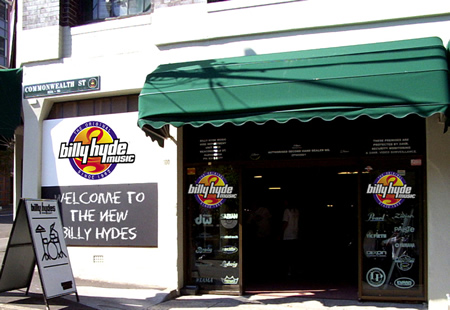
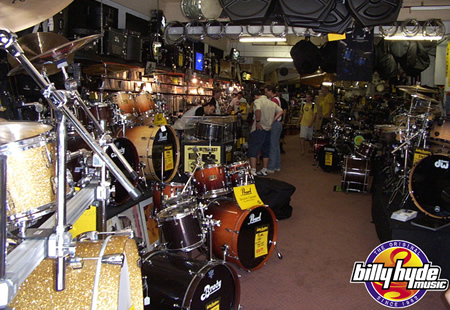
| The single most important piece of advice I can offer you in regards to buying equipment is to find a good store or dealer. Someone who will offer you senseible advice before buying, offers a good range of gear, good prices and after sales service so that you'll go back and upgrade or add something to your kit. Billy Hydes in the city and the bigger stores also in the city are the best place to go to buy a kit, not Eagle or Mall Music. |
|
 |
 |
|
| Secondly, get some idea on what you want and how much you are able to spend. Magazines such as Rhythm and Modern Drummer are great for reading reviews on equipment, getting some idea on how much gear costs and what deals are going. Go for quality not quantity. No matter what style of music your playing, 99% of the time you are playing the bass drum, snare drum, and a hi-hat or ride cymbal. Having numerous toms and cymbals and other bits around your kit will not compensate for the fact that your basic "tools" sound like rubbish. Get the basics good, before adding extras.
A quick word on second hand gear. There are some good bargains to be had via the likes of ebay, and classifies ads etc. But be careful, you really need to know what you are dealing with and make sure you don't get ripped off. ALways inspect the gear carefully before buying. Check for signs of damage that may include cracks in cymbals, uneven bearing edges. |
|
| Most drums and drum kits fall into three main categories; budget/starter, mid-price/semi-pro and top of the range/pro.
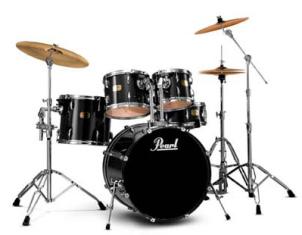
Budget/entry level There are a host of budget/starter kits on the market. My personal advice would be to go for a kit marketed by a "name" drum manufacturer. In doing so you might pay a little more, but you will be garanteed of a certain level of quality plus you stand a far better chance of getting a good price if you ever want to sell the kit to move into something better. Save some of your budget on good quality drumheads. Most budget kits come with poor quality heads and their sound can be drastically improved by fitting 2-ply or damped heads such as Remo Pinstripes. |
 |
 |
| ..:: Drums ::.. |
|
| ..:: Cymbals ::.. |
|
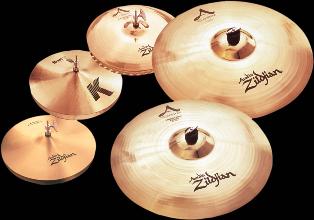
If you thought the range of drums available was confusing, then the world of cymbals will make you go crazy. Cymbals are either sheet (several cymbals cut or stamped from one large sheet of metal) or cast (each individual cymbal is made in a seperate cast or mould). The metal used to make most cymbals is a bronze alloy comprising of copper, tin and silver. The levels of each component of the alloy affect the overall sound properties of the finished cymbal.
For a long time the cymbal market was dominated by the "big three" or Zildjian (USA), Sabian (Canada) and Paiste (Switzerland). In recent years however several other names have become known for producing high quality cymbals. These include Meinl, Bospherus, Istanbul and Ufip. |
|
|
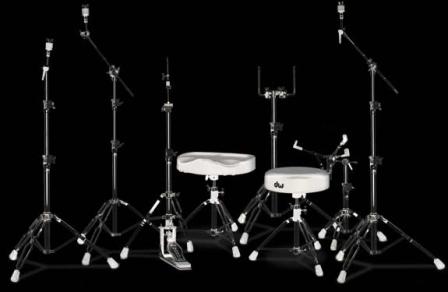
| Virtually all of the main drum companies offer a wide range of hardware in addition to their other prodcuts. There are some companies such as Gibraltar that specialise in just hardware. Here are a few things to bear in mind:
Spend as much as you can afford on the most important pieces of hardware. For my money, that means in order: a bass drum pedal, hi-hat stand and throne (stool). Good pedals can make a big difference to your playing and sitting comfortably and correctly helps both your playing and your health. Don't go for heavyweight, double-braced stands just for the sake of it. Remember you going to have to carry your gear around and typically your hardware case will be the single heaviest item you will have to pick up. |
 |
| ..:: Hardware ::.. |
| Cymbals
Remember when shopping for a quality cymbal that you are buying a hand finished precosoon instrument and as such, no two are identical. A dozen Zildjian 20" K Custom ride cymbals will all sound slightly different. Try as many as possible and let your ears decide again what is right for you. The right cymbal if played correctly and cared for will last you a very long time. |
| Mid-Price/Semi-Pro
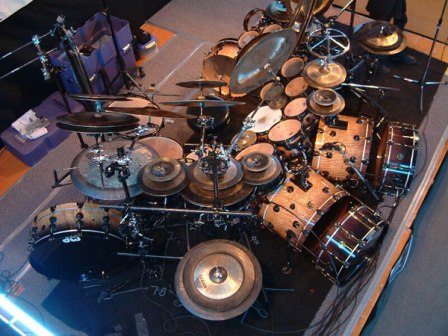
These days there are some very good mid-price kits that are more on the pro side of semi-pro so to speak. I would personally go for a company that offers 100% Maple or 100% Birch shells, but it's all down to personal tastes though. What I highly advise is the DW Pacific range. It is manufactured by one of the world's best drum manufacturing companies DW, and features a lot of the pro features, and has a very reasonable price. Top of the Range/Pro Once you get into this category of kit you have to expect skies the limit when it comes to price. Most kits at this level are 100% Maple or Birch shells. Maple drums have a reputation for great resonance and projection ideal for live work. Birch shells offer a more focused sound favoured by many studio drummers. As I said it's all about your personal tastes; but play them all and let your ears be the judge for what's best for you. As well as Maple and Birch many manufacturers are offering alternatices by using Beech, Mahogany and Oak. Most manufacturers also offer a wide range of finishes for both drums and hardware. |