
4.18 Earth Science Synthesis - Stuart Fordyce
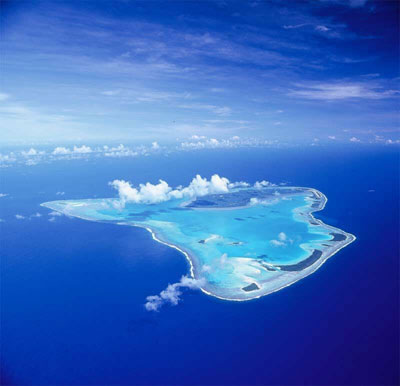

This webpage aims to describe and illustrate the processes by which volcanism initiates the evolution of islands, and the following carbonate reef formation. The destruction of the islands by erosion and subsidence will also be analysed. This issue has wider implication than a purely geological case study: many of the islands are inhabitant, forming some of the world's smallest countries, and their people may become homeless with a rise in sea level resulting from climate change.
Finally, the geographical remoteness of the Pacific Islands led to their use as a nuclear weapon testing area throughout the 'Cold War' in the late 20th Century. This has led to local environmental problems, which will affect the wider Pacific Ocean for thousands, if not millions of years to come