Ritual aspects of the Symposium Aside from being a social
occasion, the Symposium also included several elements of ritual
that, while perhaps less important in later years, was maintained
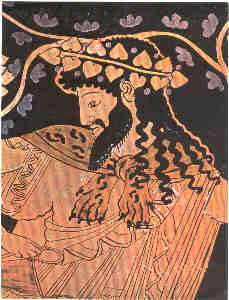
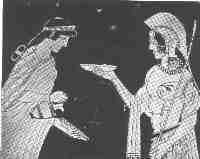
as a matter of tradition. Xenophanes speaks of those at the drinking-party being wreathed with 'woven garlands'. These Garlands werse probably fashioned of Ivy, which was associated with festival occasions dedicated to Dionysos. It was believed that Dionysos gave his followers ivy wreaths as its coolness would help extinguish the heat of the wine. A flask of the perfume Myrrh was also passed around the group. Xenophanes goes on to describe the food and wine prepared for them before coming to the altar, that was draped in flowers, with songs filling the house. Three libations of wine were poured, as was customary on every occasion on which wine was drunk ( as it was also the case to pour libations to start off any meal ). Accompanying prayers were sung as the libations were poured., first to the Olympian gods, then to the heroes ( especially to the heroes of their polis, or better still to their families heroes ), and finally to Zeus Teleios. The libations were poured from three separate mixing-bowls. The prayers usually took the form of Hymns sung to the aulos or diaulos (a single or twin stemmed flute). Paeans, another type of hymn, were often sung after the libations to Apollo ( the healer) and to Dionysos and Zeus. Other ritual songs might be sung throughout the evening, such as hymnoi, which were a form of musical address to the god that quoted all of his or her names and epithets and all the reasons why the request should be granted, before making the request itself. The Dithramb was also popular at the symposium, a style of song that was started buy the poet Arian in Corinth in the 6th century BC. The hymn was always to Dionysos and defined parts of his life and his deeds, and was the inspiration behind Attic tragedy. Following the symposium itself, ritual revelling took place in the form of the komos. The symposiasts would maraud through the streets as revellers, acting out the Dionysiac madness that accompanies drinking his wine. It was far from uncommon for passing citizens to be insulted, jostled and even injured in the melee, from which comparisons can be drawn with the larger religious festivals such as the Anthesteria. On Choes, the second day of the festival, the men would parade through the streets on wagons insulting the people that they passed in their state of ritual inversion (Acting out unacceptable behaviour to reinforce what is acceptable.) Jennifer Benyon and Hannah Ross |
|||