Click on any of the areas listed below to visit those pages. Thank you.
*
HOME
*
MESSAGE BOARD
*
HISTORY
*
WICCAN LAWS
*
TERMS (DICTIONARY)
*
LINKS
*
TRIPLE GODDESS & GOD
*
SABBATS (HOLY DAYS)
*
CELTIC TREE ASTROLOGY
*
POWERS OF THE MOON
*
ELEMENTS & QUARTERS
*
SPIRITS, ALLIES, & FAMILARS
*
SACRED SPACE & RITUAL TOOLS
*
BOOK OF RITUALS
*
BOOK OF SHADOWS (SPELLS)
*
BOOKS/RESOURCES
*
GODS & GODDESSES OF MYTHOLOGY
*
HERB MAGICK
*
GEM MAGICK
*
SUPERSTITIONS
*
FAIRIES
*
ART WITH WORDS
*
DRAGONPOET'S POETRY
*
CREATURES OF MYTH & FANTASY
Like to be the featured artist on this page with a link back to your pages, then please send the imformation to
dragonpoet
and I will add you here. The artwork must be pagan based or displaying some aspect of paganism from Goddesses ro Gods or more. In the future I plan on adding an archive for past featured artist, so that the links will remain.
I would also like to add a featured website, so if you are interested in having your pagan/wicca based website featured here then please email me at
dragonpoet
.
"My thanks I freely offer to all who visit and pause amongst my humble pages, and may the Lord and Lady bestow upon you a blessing."
Imbolg
Feb 2
Other names:
Candlemas
Oimelc
Brigid's Day
Imbolg
Lady Day
Feast of Pan
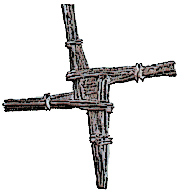
St. Brigid's Cross
Click here to visit a site
with instructions on making your own St. Brigid's Cross.
St. Brigid's Ribbon
Bride's Bed:
Links to Imbolg Crafts:
*
Imbolg Crafts
-
Lemon Pomander, Clay Sun, Wacky Grass-head, & Recipes for Imbolg Feast
*
Candlemas Candle Wreath
*
Imbolg Cross-Stitch
*
Brighid's Cross
Links to Imbolg Rituals:
*
Imbolg Ritual
*
Apythia's Imbolg Ritual
*
Imbolc Rite for Solitaire
Imbolg is the first of the Spring holidays that ring in the festivals for fertility. Imbolg is the celebration of things yet to be born for the new year. Those things that are hidden under winters last snows. It is a time for preparation. Look over your supplies for the coming year and make a list of what you might need. It is a time to take stock. For this festival, lavender and white candles are burned to represent the divine (white) rebirth and preparation for ones spirituality (the lavender). In traditional ceremony Imbolg is the festival of the Goddess aspect of the divine spirits. The Goddess Brid or Bridget, the bride who is waiting for the return of her groom, the sun God. In original Celtic traditions, it is the preparation for the rebirth of the sun God. Today the Irish know this festival as St. Bridget's Day.
Much of our Imbolg lore has its roots in the ancient Celtic Ireland were it was not a Sabbat but a special day to honor the Great Mother Goddess Brigid. Among her many interests were fertility, creative inspiration, metalsmithing, medicine, protectress, healer and a guardian of children. One of the traditons associated with Imbolg is the making of grain dollies woven into human or symbolic form. These dollies are kept thoughout the year in a cradle known as a bride's bed, from the name of Goddess Brigid which is spelled Brid (pronounced breed) in Gaelic. The figure is usually dressed in white at this Sabbat, or in something else related to marriage, with her garb updated as the Wheel of the Year carries her on into cronehood. Imbolg is also the Sabbat where magickal wells (cauldron images) are visited and coins thrown in them in Brigid's name to grant wishes. To practice this custom go to any well or body of deep water when you can be alone and throw in three coins while stating and concentrating on your wish for the coming year. Before you leave ask the guardian spirits of the well to look after the energies you have left behind and to bless them until they manifest . In Ireland straws were often woven into an equilateral cross known today as Saint Bridget's cross, but is actually a sun wheel sacred to the God Lugh. Brigid's cross or the sun wheel is also represented by a perfect intersection or crossroad. Crossroads figure prominently in this Sabbat. This is a night when the spirits of the dead are said to walk among the living. A protective ritual to practice is to go out on the eve before this Sabbat to bury negativity at a crossroad so it can't escape. Imbolg is a festival of lights. Candles are lit in profusion and even worn in crowns on women's heads intended to be a representation of the virgin aspect of the Goddess. Since spring is not far away at Imbolg, the lights act as a sympathetical magickal draw for the sun and it's warmth, a call for the return of the God Lugh.
Brigid, which means "one who exaults herself," is Goddess of the Sacred Flame of Kildare (derived from "Cill Dara," which means "church of the oak") and often is considered to be the White Maiden aspect of the Triple Goddess. She was Christianized as the "foster-mother" of Jesus Christ, and called St. Brigit, the daughter of the Druid Dougal the Brown. She sometimes also is associated with the Romano-Celtic goddess Aquae-Sulis in Bathe. Brighid's festival is Imbolc, celebrated on or around February 1 when she ushers Spring to the land after The Cailleach's Winter reign. This mid-Winter feast commences as the ewes begin to lactate and is the start of the new agricultural cycle. During this time Brigid personifies a bride, virgin or maiden aspect and is the protectoress of women in childbirth. Imbolc also is known as Oimelc, Brigid, Candlemas, or even in America as Groundhog Day. As the foundation for the American Groundhog Day, Brigid's snake comes out of its mound in which it hibernates and its behavior is said to determine the length of the remaining Winter. Gailleach, or White Lady, drank from the ancient Well of Youth at dawn. In that instant, she was transformed into her Maiden aspect, the young goddess called Brigid. Wells were considered to be sacred because they arose from oimbelc (literally "in the belly"), or womb of Mother Earth. Because of her Fire of Inspiration and her connection to the apple and oak trees, Brighid often is considered the patroness of the Druids
Traditional Ritual Herbs: Myrrh & all yellow flowers Bay Benzoin Angelica Basil Celandine Heather Altar Decorations: Crown of 13 red Candles Sprig of Evergreen Triple Goddess Figure Witch's broom or Besom Incense: Basil Myrhh Wisteria Gemstones or Jewels: Onyx Turquoise Amethyst Garnet Sabbat Deities: Brigid (Celtic goddess of Fire,Wisdom, Poetry, and sacred wells, she's also associated with Prophecy, Divination and Art of Healing Aradia (Daughter of Diana, and "founder of the Witch cult on earth") Candle Colours: White Red Pink Brown Foods: Seeds Poppy Seed Bread Cakes Herbal Teas
As the Shamrock is associated with St. Patrick, the small cross made of rushes is linked forever to St. Brigid of Ireland. Brigid died in 524 and among the many things and great charity for which she is known, it was while explaining the Passion to a dying pagan that she wove her famous cross. It is believed that the St. Brigid cross protects homes from evil and want.
There was also customs associated with 'rib�n Br�ghid' (St. Brigid's ribbon) whereby a silk ribbon was placed on the windowsill during the night in honour of the Saint. The general belief was that the Saint going about the country on the Eve of her feast, would touch the rib�n and endow it with healing powers. Some believed that the healing powers only improved with age and that its healing power was greatest after it had been kept for seven years. As well as relieving illness, it could cure barrenness, help women in childbirth and ward off evil influences. There is also a tradition, which believes that hoarfrost, gathered from the grass on the morning of St. Brigid's day, is an infallible cure for headache. Many people also brought water from a well dedicated to the Saint and sprinkled it on the house and its occupants, farm builders, livestock and fields, invoking the blessing of the Saint.
Celts would often dress grain dollies, representations made from dried sheaves from the previous harvest, as brides, and set them in a place of honor within their homes. They were usually placed in cradles called Bride's Beds, and nuts, symbols of male fertility, were tossed in with them.