Click on any of the areas listed below to visit those pages. Thank you.
*
HOME
*
MESSAGE BOARD
*
HISTORY
*
WICCAN LAWS
*
TERMS (DICTIONARY)
*
LINKS
*
TRIPLE GODDESS & GOD
*
SABBATS (HOLY DAYS)
*
CELTIC TREE ASTROLOGY
* POWERS OF THE MOON
*
ELEMENTS & QUARTERS
*
SPIRITS, ALLIES, & FAMILARS
*
SACRED SPACE & RITUAL TOOLS
*
BOOK OF RITUALS
*
BOOK OF SHADOWS (SPELLS)
*
BOOKS/RESOURCES
*
GODS & GODDESSES OF MYTHOLOGY
*
HERB MAGICK
*
GEM MAGICK
*
SUPERSTITIONS
*
FAIRIES
*
ART WITH WORDS
*
DRAGONPOET'S POETRY
*
CREATURES OF MYTH & FANTASY
Names of the Moon:
Like to be the featured artist on this page with a link back to your pages, then please send the imformation to
dragonpoet
and I will add you here. The artwork must be pagan based or displaying some aspect of paganism from Goddesses ro Gods or more. In the future I plan on adding an archive for past featured artist, so that the links will remain.
I would also like to add a featured website, so if you are interested in having your pagan/wicca based website featured here then please email me at
dragonpoet
.
Powers of the Moon
Moon Symbols
The Legend of the Moon Festival
Originally named the Mid-Autumn Festival, the Moon Festival is one of the most important holidays celebrated by Chinese communities around the world.
Traditionally, it is celebrated on the fifteenth day of the eighth lunar month in observance of the bountiful Autumn harvest. Although old rituals are no longer followed, families continue to gather for a day to relax and eat moon cakes. Upon this occasion, the legend of the Moon Goddess, CHANG-O, is often told to children.
Click here to view more on this legend & Festival.
Arianrhod
Artemis:
The Moon Goddess
To view more on Goddesses please visit the Gods & Goddesses section of these pages. Thank you.
Selene
Lunar Magic
Affects of the Moon:
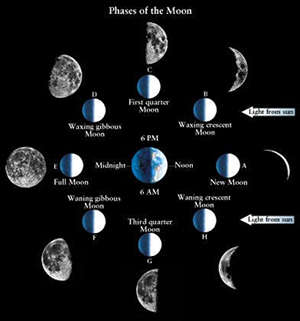
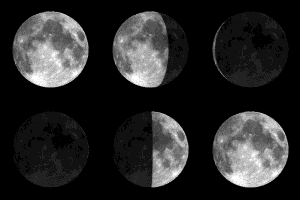
Lunar Magic deals primarily with the timing and phases of the moon. Most used the standard phases which are: Full, New, Waxing, Waning, and Dark, however some have expanded this and used more advanced phases then the main ones listed above.
New Moon Magic
Things to work for include:
* Beauty, health, & Self improvement
* Farms & Gardens
* Job Hunting
* Love & Romance
* Networking
Crescent Moon Magic
First Quarter (Waxing) Moon Magic
Gibbous Moon Magic
Full Moon Magic
Disseminating Moon Magic
Last Quarter (Waning) Moon
Dark Moon Magic
Moon Void of Course:
Please click on any of the following to view these areas:
* Magical Days
* Moon Conjunctions
* Moon Sextiles & Trines
* Moon Square or Opposite
These areas will be forthcomming !!!
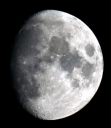
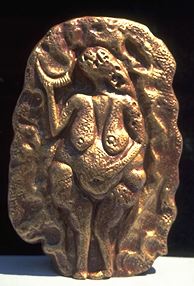
Since the beginings of mankind the moon has been a visible mystery in the night sky and knowledge of its moon power dates back to the early religious history. The moon has always been associated with the Goddess. The craving of the Great Goddess of Laussel, who is one of the most ancient Goddess statues dates back to about 20, 000 B.C.E., show the full bodied Goddess holding a bison horn with thirteent marks on it. These marks are thought to represent the thirteen moon months in a year, The first calendars were based on the menstruation cycles of women, cycles that follow the moon phases. Although ancient cultures used the sun's yearly cycle of the rise and fall of light for argicultural and long-term projects, they all depended upon the monthly phases of the moon to set a more accurate dates for religious holidays or meetings.
The moon has influences in our lives even in this modern age for the moon controls the tides and even affects us since our bodies are predominantly made up of water. Knowing the influences the moon has in our lives can assist us in knowing how to avoid or take advantage of a situation. The full moon has been linked to crime, suicide, mental illness, disasters, accidents, birthrates, fertility, and werewolves, among other things. Folklore and tradition: Many lunar myths are rooted in folklore. For example, an ancient Assyrian/Babylonian fragment stated that "A woman is fertile according to the moon." Such notions have been turned into widespread misconceptions about fertility and birthrates. For example, Eugen Jonas, a Slovakian psychiatrist, was inspired by this bit of folklore to create a method of birth control and fertility largely rooted in astrological superstitions. The belief that there are more births during a full moon persists today among many educated people. Scientific studies, however, have failed to find any significant correlation between the full moon and number of births (Kelly and Martens 1994; Martens et al.1988 ). In 1991, Benski and Gerin reported that they had analyzed birthdays of 4,256 babies born in a clinic in France and "found them equally distributed throughout the synodic (phase) lunar cycle" (Kelly, et al. 1996: 19). In 1994, Italian researchers Periti and Biagiotti reported on their study of 7,842 spontaneous deliveries over a 5-year period at a clinic in Florence. They found "no relationship between moon phase and number of spontaneous deliveries" (ibid.).
In the phase the sun and moon energies are combined giving strength to new projects. Legends has it that in this phase, Diana, disguised herself as a cat and coerced her brother Lucifer into her bed and that the the Queen of Witches, Aradia was the result of their union. As the new moon signifies the conception of Aradia, she is a willing participant in the magic of her children. Now, is the time to give thanks for workings both long and short term that have been successful. Offerings of milk and honey, or water laced with fertilizer for the plants outside is appropriate during the growing season, and if the cold season set out food for small animals. Other Goddesses employed are Diana, Artemis, Astarte, and Ana.
Colonial American: January: Winter Moon February: Trapper's Moon March: Fish Moon April: Planter's Moon May: Milk Moon June: Rose Moon July: Summer Moon August: Dog Day's Moon September: Harvest Moon October: Hunter's Moon November: Beaver Moon December: Christmas Moon Chinese: January: Holiday Moon February: Budding Moon March: Sleepy Moon April: Peony Moon May: Dragon Moon June: Lotus Moon July: Hungry Ghost Moon August: Harvest Moon September: Chrysanthemum Moon October: Kindly Moon November: White Moon December: Bitter Moon English Medieval: January: Wolf Moon February: Storm Moon March: Chaste Moon April: Seed Moon May: Hare Moon June: Dyan Moon July: Mead Moon August: Corn Moon September: Barley Moon October: Blood Moon November: Snow Moon December: Oak Moon Native American (Cherokee): January: Cold Moon February: Bony Moon March: Windy Moon April: Flower Moon May: Planting Moon June: Green Corn Moon July: Ripe Corn Moon August: Fruit Moon September: Nut Moon October: Harvest Moon November: Trading Moon December: Snow Moon Native American (Choctaw): January: Cooking Moon February: Little Famine Moon March: Big Famine Moon April: Wildcat Moon May: Panther Moon June: Windy Moon July: Crane Moon August: Women's Moon September: Mulberry Moon October: Blackberry Moon November: Sassafras Moon December: Peach Moon Native American (Dakotah Sioux): January: Moon of the Terrible February: Moon of the Raccoon, Moon When Trees Pop March: Moon When Eyes Are Sore from Bright Snow April: Moon When Geese Return in Scattered Formation May: Moon When Leaves Are Green, Moon To Plant June: Moon When June Berries Are Ripe July: Moon of the Middle Summer August: Moon When All Things Ripen September: Moon When The Calves Grow Hair October: Moon When Quilling and Beading is Done November: Moon When Horns Are Broken Off December: Twelfth Moon Neo Pagan: January: Ice Moon February: Snow Moon March: Death Moon April: Awakening Moon May: Grass Moon June: Planting Moon July: Rose Moon August: Lightening Moon September: Harvest Moon October: Blood Moon November: Tree Moon December: Long Night Moon Celtic : January: Quite Moon February: Moon of Ice March: Moon of Winds April: Growing Moon May: Bright Moon June: Moon of Horses July: Moon of Claiming August: Dispute Moon September: Singing Moon October: Harvest Moon November: Dark Moon December: Cold Moon Source of information: http://home.hiwaay.net/~krcool/Astro/moon/moonnames.htm
The crescent moon faces the west and is home of the Calliech and the gates of death and rebirth. The crescent is the symbol of the Goddess, a ladle of love, manifestation, and abundance. It is the holy cup of her hand, containing the mysteries to be showned upon her children. In the world, this is the time of gathering information, ideas, and laying a foundation for any projects you may have planned. Since the crescent faces West, the aid of Aphrodite, Marianne, Themis of Tiamat can be aspected, as well as the ancient power of the Magdalens. In this phases things to work for are: * Animals * Business * Change * Emotions * Matriarchal strength
The waxing moon is the process of building up, and now is the time to add a little extra to things you wish to push toward manifestation. Sunset is the primary time for the waxing moon, and dusk is auspicious for fairies and their energy. Altar devotions and offerings for the fairy folk in return for a favor work especially well during this moon phase as well as any work with the triple Goddess aspect. This to work for in this phase are: * Courage * Elemental magic * Friends * Luck * Motivation
This phase is for the Goddess of the night such as Nuit. This is the times to catch up on any loose ends or to make any necessary changes. Things to work for in this phase: * Patience
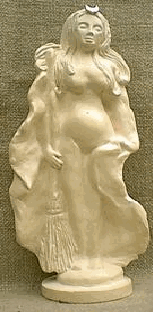
Aradia Greek/Roman. Queen of Witches. Strong, lovely and charismatic, Aradia is the daughter of moon goddess Diana. She is a timeless spiritual entity, embodying Kore in her power, Aphrodite in her beauty, and Diana in her courage and love of wild places. She was sent to Earth as prophetess of the religion of witchcraft, with the mission of protecting women from the oppressions of feudalism. With her broomstave of power, her cloak of mystery, and her knowledge of every plant, Aradia taught women how to invoke the full moon at midnight, sprinkling salt from a red bag while asking favors of the Goddess.
All rituals of balance in life or a situation are done at this time, for the full moon the time where white candle magic or all purpose magic works best. Protection and prophecy magic are strongest at this time and totems such as the raven are called upon to bestow their gifts of divination. Goddesses like Isis, Ashera and Selene are called upon as well as the sisters of the Wyrrd, the Norns, and other goddess and Gods of fate. The full moon is also the time of legends-reading them, studying them, and making your own. Those who are talented in arts find the full moon a great time for creativity. Things to work for in this time are: * Artistic endeavors * Beauty, Health, & Fitness * Change & Decisions * Children * Competition * Dreams * Families * Healing * Knowledge * Legal undertakings * Love & Romance * Money * Motivation * Protection * Psychism * Self-improvement
Moon Symbols Certain Symbols have been associated with the Moon and Moon deities for thousands of years. Many symbols recur in diverse cultures with no contact with each other. Ancient spiritual leaders knew how to communicate with the collective unconscious, which is the storehouse of all knowledge, and hear the deities' voices which speak there. Using these symbols in meditation, ritual, or spell-working may intensifyyour connections with the archetypal powers of the Moon. Examine theentriescarefully and decide what is appropriate for the situation, be it simplemeditation of a full-blown ritual.
This is the phase where Banishment magic works best. If you wish to get rid of a bad habit, banish illness or negativity this is the time to begin. This is the time for the Goddesses, Bast, Kore, Ceres, Demeter or other Earth Mothers. Things to work for in this phase are: * Addiction * Decisions * Divorce * Emotions * Stress * Protection
Ambrosia: The feminine mysteries of the menstrual cycle; the re-creative power of menstrual blood. Called soma among the Hindus, red claret of the faeries, and wise blood. Bat: A creature of frequent association with the Moon and darkness. In China, bats were symbols of good fortune and happiness; in Europe, a companion creature of the Goddess Hel. Christians made the bat evil and demonic in order to disengage people from the Goddess. Blood: The words "blessing" and "blood" are related. Red has always been considered the color of life. It is also the color of the Mother aspect of the Triple Goddess, indicative of Her fruitfulness through menstruation and birth. Smudging and staining the hands and feet with henna was practiced by followers of Hecate, Anath, and many Hindu Goddesses. Altars and people were consecrated by sprinkling with blood in these ancient times. Today, objects and people are sprinkled with salted water. Boat: The Moon was called the Boat of Light by the Babylonians. Egyptians depicted the Crescent Moon with the horns turned upward either as part of the lunar deities headdress or carved sky-boats, such as the ones pictured in the temple of Isis. Bull: Originally the lunar symbol of the Great Mother with the horns representing the Crescent Moon, the bull later came to represent the Sun Gods. However, it was often still connected with a Moon Goddess such as Cybele or Attis. Cat: To the Egyptians especially, the cat was a Moon creature, and sacred to such Goddesses as Isis, Bast, Artemis, Diana, and Freyja. When Diana became known as Queen of Witches in the Middle Ages, the cat was associated with Witchcraft and Goddess worship. Circle: The circle was symbolic of the Moon long before being seized by the Sun Gods. In Scotland, the Orkney Islands are still called Temples of the Moon. The ancient Greek divinatory tool known as Hecate's Circle was a gold sphere with a sapphire in its center, and was hung on a thong of oxhide. Color: Primary Moon deity colors are white, red, or black, depending on Moon phase. The Hindu Goddess Kali and many European Triple Goddesses specifically used these colors to designate their various aspects: white - maiden; red - mother; black - crone. Cow: Feminine symbol of both Moon and the Earth. Egyptian Moon Goddesses connected with the cow were Isis, Hathor, Neith, amongst others. Crescent: The New Moon; marking the change from the Dark Moon, it is the very first sliver of Moon. Old European designs portray the lunar cycle by a right crescent, a circle, and a left crescent. At times, the circle was replaced with a large snake coil. Semicircles also symbolized the crescent, as did bull horns. U-shaped marks not only represented crescents, but were also combined with dots to symbolize owls - Moon birds. The croissant, or any crescent-shaped cake is sacred to Moon deities. Crow: This bird was frequently associated with the Dark Moon Goddesses such as the Morrigan, due to its black color. Crystal: This stone most often represents the Full Moon and its divinatory powers. Dew, Rain: Many cultures associate these forms of condensation with the Moon. The early dew after a Full Moon is said to heal and improve beauty if rubbed into the skin. Certain phases and signs of the Moon are purported to be conducive to rain. Dogs: Canines have long been associated with Moon deities, especially Crescent New Moon Goddesses. Managarmr (Moondog) was the mightiest of all dog-wolf supernatural beings according to a Norse story. Dragon: Dragons are primarily associated with solar eclipses, but are also associated with the Moon and lunar eclipses. The idea of dragons and eclipses was held in China, Northern Asia, Finland, Lithuania, North Africa, and Persia. Legend dictates that dragons often fly about in the moonlight. Eye: Often associated with the Moon, especially in ancient Egypt. Many little Eye Goddesses have been found in Mediterranean and European sites. Fan: Among the ancient Asiatic and Oriental cultures, the fan represented the phases of the Moon. Fish: Some cultures symbolized the Moon with a fish instead of a snake. Some Moon Goddesses were depicted with fish-tails, akin to mermaids. Frog: Many times a lunar symbol; sometimes called a toad. Hekat the frog Goddess was connected with birth in ancient Egypt. Grotto, Garden: It was common to worship a Moon Goddess or God in a grotto or garden. These sacred spaces usually contained a Moon tree such as an olive, a sacred stone, or a spring, or all of these. Groves: Groves of trees were often sacred to the Moon Mother, especially if they held springs, pools, or lakes. Ceremonies of drawing water and pouring it were part of her rituals. If a grove contained a grotto where water came directly out of a rock, it was especially sacred. Hare or Rabbit: Many cultures around the world, including Tibet, China, Africa, Ceylon, and some Native Americans, said that a hare lived on the Moon along with the ruling Moon deity. Especially associated with lunar Goddesses. Horns: Bull or cows horns have always been connected with the Moon and Moon dieties. Cattle and bison horns have been recovered that have thirteen notches carved into them; the Great Goddess of Laussel is such an example. These notches represent the thirteen Moon months of a seasonal year. The Greek Hera was also called Keroessa ("Horned One") in her aspect of Io, the Moon Cow. Horseshoe: A crescent Moon symbol and also a yonic emblem. Hounds, Dogs: Packs of hounds, such as Alani of Diana, represent the dangerous energies of the Moon. Labrys, Double Axe: A Goddess and Moon symbol, said to have been one of the weapons preferred by the Amazons. A thunderbolt was said to have been given in this shape to the Amazons by Hera. In Crete and at Delphi, both originally Goddess centers, the labyrs was a ceremonial scepter. Lamp: The Moon is called by many the lamp of the night. Their close connection with the Moon's light is demonstrated by the additional titles attached to Goddess names such as Juno Lucina , and Diana Lucifera. Mirror, round: The Moon is called the heavenly mirror in Central asia and many other parts of the world. The mirror is a Goddess symbol sometimes called a soul-carrier or soul-catcher. Some cultures believed that the souls of the dead went to the Moon to await reincarnation. Moonstone: A feldspar gemstone with a white, cloudy form. It is said to contain the image of the Moon. The Hindus said it was formed from the congealing of the Moon's rays. Pope Leo X (1475-1521 CE) was said to own a moonstone that waxed and waned in brilliance with the Moon. The stone is said to cure nervousness and bring luck to the owner. Old Man, Old Woman: The markings on the Moon surface are often called the Old Man or Old Woman in the Moon. Some cultures such as the Asians, Mayans, or Aztecs, called these markings the hare, frog, or toad. Owl: A night hunter possessing large eyes, the owl has long been associated with the Moon. The Egyptians considered the owl a symbol of death, night, and cold. To the Greeks, however, it was an emblem of wisdom and the Goddess Athena. Its staring eyes connected it with the Eye Goddesses, Lilith, Minerva, Blodeuwedd, Anath, and Mari, among others. The owl has long been associated with the Moon, wisdom, sacred lunary mysteries, and initiations. Ox: In Greece and Rome, this animal was seen as a lunar animal. Pomegranate: Due to its blood-red juice and its many chambers and seeds, the pomegranate is symbolic of blood, the Dark Moon deities, and the land of the dea. Pillar, Cone: The earliest representation of the Moon; sometimes this stone was a meteorite. Often it was grouped with a circular stone which represented the Full Moon. Some pyramids fall into this category. Raven: A black bird associated with the Dark Moon Goddesses such as the Morrigan and Rhiannon. Scythe, Sickle: A symbol of the Crescent Moon. Used by the Amazons and women who worshipped Moon Goddesses, particularly Crone deities. Even the Druids used a Moon-shaped sickle for their sacred ceremonies. Semicircle: The semicircle represents the Crescent Moon in symbology. Shell: A symbol of the Great Mother and related to the Moon. Silver: This metal has long been regarded as the Moon's metal. Silver was used for divinatory cups. Snake: As a Goddess symbol, the snake is the same as the spiral when it is coiled. Each turn of the coil marks a day in the lunar calendar. Zigzag lines represent snakes. Serpents were associated with the Dark Moon because they were considered related to the Underworld. Some Dark Moon Goddesses were depicted with snakes as hair. There are pictures showing Cybele offering a cup to a snake. In the mythology of Mexico are tales of the woman serpent (Moon) who is devoured by the Sun, a description of an eclipse or the phases of the Moon. Soma: A sacred liquid connected with the Moon. In India it was called soma;the Persians knew it as haoma, and the Celts as red claret. See Blood. The Chinese Goddess Ch'ang-O drank this sacred liquid, then fled to live on the Moon. Sow: The white sow has been associated with Moon dieties from the Celtic lands to the Mediterranean. It was connected with Astarte, Cerridwen, Demeter, Freyja, and the Buddhist Marici. Spiral: The spiral, whichever way it turned, represented an aspect of the Great Goddess, and also the Moon. The upward and downward spiraling, or in and out, can be compared with the waxing and waning of the Moon. The Greek Crane Dance, probably originally performed in Crete by the bull-dancers, was danced around a horned altar which was part of the labyrinth. Spirals appear on some ancient Goddess statues, primarily replacing what would be eyes. Toad: Some cultures saw a toad, instead of a hare, in the Moon. In some parts of Asia, Africa, and North America, the toad is a symbol of the Moon and fertility. Tree: Frequently a tree, called a Moon tree, was an emblem of the Moon. Many Assyrian pictures portray this. Sometimes, it is more like a maypole with ribbons hanging from it rather than an actual tree. Often the Moon tree was guarded by animals. Triple Symbols: Many groups of triple symbols represent the three phases of the Moon. Hecate Triformis is an example of the Triple Moon Goddess, as is the Celtic Morrigu. The tripod, triangle, and trident are all connected directly with the three phases of the Moon Goddesses, or with Gods who are consorts of these Goddesses. Wishing Well: There is an Icelandic charm of this name which has four Crescent Moons as dippers about its edge. The Moon has long been associated with water and the granting of wishes or prayers. Several Goddesses, such as the Greek Demeter and the celtic Brigit, had sacred Moon wells where rituals, large and small, were held for the granting of desires. Willow: A Moon tree sacred to such Dark Moon Goddesses as Hecate, Circe, and Persephone. The willow (helice) gave its name to the Helicon, abode of the nine muses, the orgiastic abode of the Moon Goddess. Wings: Long before the Persians adopted the winged disk as a symbol of their Sun God, the Moon Goddess was shown with wings. Sometimes the Moon itself, whether Crescent or Full, was pictured with wings. Certain birds, such as doves and pigeons, were associated with the Moon. Wolf: Many Gods and Goddesses who had connections with the Moon, also had the wolf as their symbol. The wolf howls as the Moon, as do dogs; they hunt and frolic by moonlight. The Moon priestesses of many cutures were adept at astral travelling and shape shifting, both talents usually practiced at night. They also practiced rituals, dancing and singing, outdoors under the Moon. A Roman festival, the Lupercalia, was in honor of the wolf Goddess Lupa or Feronia. The Norse believed that the giant wolf Hati dogs the courses of the Moon, and in the final days will eat this celestial body. Yin and Yang: This Chinese symbol represents the joined powers of the male and female, positive and negative; in other words, a cyclical alternation of duality. At one point in ancient Chinese history, this design symbolized the phases of the Moon, the light and dark cycles. Much of the ancient world spoke of the Two Ladies or Two Mistresses of the Moon.
The crescent shape here turns eastward, with her arms open and rising toward the sun. This is the time for releasing any negativity, continuing banishment work or minor attacks to support banishment, a realm of healing, or banishing tumors, cancers and other such things. Things to work for toward this phase are: * Addictions * Divorce * Health & Healing * Stress * Protection
This phase is most famous for cursing, chaos magic, and bringing justice to bear. The Goddesses here are Kali, the Morrigan, the Calliech, Lilith, and Hecate. It is also a time to move within self, to explore our darkness recesses and understand our angers and passions, steering them to work for us in a positive way, and dealing with an attack is best in this time. Things to work for during this phase are: * Addictions * Change * Divorce * Enemies * Justice * Obstacles * Quarrels * Removal * Separation * Stopping stalkers & Theft
The rule of thumb is do nothing of any importance during this phase. This is the time when the moon is between worlds, in a time that is not a time, in a space that is not a space- it is in a celestal void where positive or negative energies do not behanve normally. The effects of the void moon vary, but some people say that the energy is scattered, that they do not feel like themselves, and their may mood swings and irrational thoughts during this time frame. One should avoid performing any magic or making any decisions during this phase. This is a time of relaxation, of taking a break.
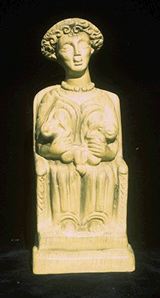
Arianrhod is the Mother aspect of the Triple Goddess. She embodies the Mother and is forever a Virgin. She can birth children but is by no means obligated to any man. She represents silver, wheels and a sheaf of wheat. She is the Goddess of Moon, Fertility and Fate. Her name literally means "Silver Wheel". She is the Goddess of reincarnation and over sees the dead between their incarnations and protects us between as we leave this life and move into the next life. The ancient astrologers in Wales took their forecasting from the Moon�s position and her relationship to the stars �Arianrhod�, as we know as the "Milky Way." Her spirit has an eternal quality, no beginning and no end. A lady of destiny. She symbolizes dreams and prophecy.
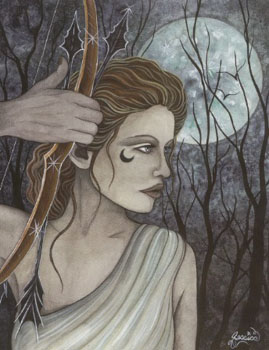
Artemis is one of the principle Goddesses of Greek mythology. She was the daughter of the God Zeus and Leto. She was chief hunter to the Gods and Goddesses. Goddess of hunting and wild animals especially bears. Artemis was also the Goddess of childbirth, of nature, and of the harvest. As the Moon Goddess, she was sometimes identified with the Goddess Selene and Hectate.
Indeed She, for She is the Great Moon Goddess! The Great Mother! And She, the moon, was worshiped in primitive societies much earlier than the sun. She is known in many cultures under many names. In Egypt She is known as Isis. In Mesopotamia She is Ishtar. The Mayans call Her Ixchel and the Incas name Her Mama Quilla. She is known in Hawaii as Hina and worshiped in India as Kali. She is Xochiquetzal to the Aztecs and Freya to the Norse. In Greece She is Aphrodite, Artemis, and Hecate, while in Rome She is Venus, Diana, and Luna. Bastet, Pasht, Bendis, Demeter, Ceres, Juno, Frigga, Ursala, Sedna, Ngami, Pe, Nanna, and Morrigan are among her many other sacred names. But no matter by which name you invoke Her, She represents the same things. The Moon Goddess is also the Triple Goddess represented in the moon as Maiden, Mother, and Crone seen in the phases of the waxing moon, the full moon, and the waning moon. So She is seen as changeable. She rules over the tides and the sea, over magick and childbirth. She reigns over wisdom and serenity. She represents the cycles of life from birth to death to rebirth and Her mystical animals are serpents and bulls. She presides over emotions, healing, and meditation. And She is the protector of women. She is also the Goddess of Fertility, so look to Her when you wish for a bountiful garden, a lush flowerbed, or the joy of a new child. Now that it is October, those of us in the Northern Hemisphere are thinking of the harvest and the coming of the winter. The Goddess�s full moon at this time of the year is known as the Harvest Moon, the Hunter�s Moon, Falling Leaf Moon, Moon of the Changing Season, and Blood Moon. This is the time when the Goddess will shine down over our bountiful harvests and bless our feasts. It is also the time of year when the Mother aspect of the Triple Goddess turns Her face to the Crone who will preside over the dark cold months to come. As you turn from your garden for the night, remember the power and beauty of the Moon Goddess. Perhaps some of Her ancient energy still influences you and this world.
Selene, the moon goddess, is known for her countless love affairs. The most famous of her loves is the shepard Endymion. Other affairs of Selene's include involvement with Zeus with whom she had three daughters, and Pan who gave her a herd of white oxen. Some sources report that the Nemean lion, which fell to the earth from the moon was the result of an affair of Zeus and Selene. She was involved in many love affairs, however, not as many as her sister, Eos, the dawn. She resembles a young woman with an extremely white face who travels on a silver chariot drawn by two horses. She is often shown riding a horse or a bull. Selene is said to wear robes, carry a torch, and wear a half moon on her head. She was not one of the twelve great gods on Olympus, however she is the moon goddess. After her brother Helios completes his journey across the sky, she begins hers. Before Selene's journey across the night sky she bathes in the sea. Selene's parents are the Titan Hyperion, the sun god, and Theia, the sister of Helios. Some sources report that she is the daughter of the Titan Pallas, Helios, or Zeus. Helius, who is the sun god as well as his father Helios, is the brother of Selene. Eos, the dawn, who is known for her numerous love affairs is the sister of Selene. The seduction of Endymion is the love affair that brings Selene the most fame. She fell in love with the shepard, Endymion, and seduced him while he lie sleeping in a cave. Some sources say Endymion was a king or a hunter, rather than a shepherd. Her seduction of Endymion resulted in the birth of fifty daughters, one of which was Naxos. Since Selene was so deeply in love with Endymion she asked Zeus to allow him to decide his own fate. Zeus granted Selene's request, and Endymion chose never to grow old and to sleep eternally. However, Endymion's eternal sleep did not prevent him from Selene giving birth to his daughters. Endymion was visited by Selene every night and kissed by her rays of light. Selene is a favorite of many poets, especially love poets. A moonlit night brings the feeling of romance. It is said that Selene's moon rays fall upon sleeping mortals, and her kisses fell upon her love, Endymion.